When the 6th floor is fully involved, what’s your first move? In this episode of Fully Involved, we head to Westchester County, NY, where Deputy Chief Chris Johnson breaks down their transitional attack strategy.
Why Westchester County advocates for transitional attack.
When to use a ground monitor vs. deck gun and other equipment decisions.
Water mapping strategy for the most coverage possible.
When to aim up and hit the ceiling vs. aim down with an aerial.
E2: Garage Fire Testing in New York
When a garage fire is growing fast, how do you stop it from spreading to the house? In this episode of Fully Involved, we head back to Westchester County, NY, where Deputy Chief Chris Johnson breaks down their approach to tackling fast-moving garage fires.
Why Westchester County advocates for a ground monitor for garage fire attack.
Which ground monitor is the best for garage fire attack.
When to use a smooth bore vs. fog nozzle.
E3: High Rise Fire Attack in New York
What if you could tackle your next high-rise fire like a New York expert? In this episode of Fully Involved, a crew from Yonkers, NY walks us through five critical phases of high-rise fire operations—from water supply to ventilation.
How Yonkers supplies water for a high-rise attack.
What role each firefighter plays during stairway advancement and standpipe connection.
How to coordinate with the truck company’s search. Key steps for effective suppression and ventilation.
Atlanta
E4: Exposure Protection in Atlanta
What if your crew’s exposure protection tactics are based on outdated training? In this episode of Fully Involved, we head to Cobb County, Georgia, where Captain Sean Gray challenges traditional thinking with research-backed strategy, high-flow attack setups, and portable monitor precision during defensive operations.
What common myths about exposure protection may be hurting your fireground effectiveness.
Why attacking the fire building itself is the most efficient way to protect exposures.
How Cobb County uses portable monitors, tip size selection, and water supply strategy to hit big fires hard.
How to apply FSRI findings to real-world defensive operations.
E5: Strip Mall Fire Tactics in Atlanta
What if your crew’s water placement is missing the mark on the fireground? In this episode of Fully Involved, we head to Atlanta, Georgia, where Captain Sean Gray breaks down the most common mistakes made in strip mall fire attacks—and how to fix them with the right strategy, nozzle angle, and gear setup.
What mistake most crews make when placing water in a strip mall fire—and why it fails.
How Captain Sean Gray uses the BlitzFire to target fire at floor level with maximum impact.
Why strip malls require a different approach than residential fires—and what changes first.
How to choose the right monitor for knockdown speed, staffing levels, and structural layout.
E6: Exterior Attack Tactics for Residential Fires in Atlanta
Is your crew still hesitant to “push fire” or “steam your firefighters?” In Episode 6 of Fully Involved, we travel to Cobb County, Georgia, to answer one of the most common—and controversial—questions in residential firefighting. When should you use an exterior attack, and how do you do it right?
Why exterior attack isn’t “pushing fire”—and what actually happens
Sean Gray’s go-to nozzle setups for 160, 300, and 500 GPM knockdown
When to use a BlitzFire, handline, or deck gun—based on fire volume and access
Step-by-step tactics for both first-floor and second-floor exterior attack
What to say to critics of exterior streams (based on FSRI-backed research)
E7: Window-Initiated Search (VES, VEIS, EVIS) in Atlanta
Does your crew view “window entry” as a last-ditch move or a smart, fast search tactic? In Episode 7 of Fully Involved, we travel back to Cobb County, Georgia, to unpack one of the most misunderstood and underutilized rescue tactics in residential firefighting: Window-Initiated Search. When is it the right move to enter through a window, and how do you do it safely and effectively?
Sean Gray’s step-by-step process for identifying, isolating, and searching target rooms through windows
When to ladder, enter, isolate, and search—with an emphasis on victim survivability and crew safety
How exterior water application supports the search without harming firefighters or victims
Cobb County’s go-to nozzle choice
What to say to critics of window-initiated search (with FSRI research to back you up)
Connecticut
E8: Low-Staff Fire Attack & Hallway Control in Connecticut
When the 6th floor is fully involved, what’s your first move? In this episode of Fully Involved, we head to Westchester County, NY, where Deputy Chief Chris Johnson breaks down their transitional attack strategy.
Pete Morotto’s 6-step method for residential fire attack with low staffing
Why water mapping beats nozzle whipping — and how it reduces fatigue
The hallway as a tactical chokepoint and how to control it for safety and momentum
How to pre-stage smart, read fire conditions fast, and apply water where it matters
Recommended setup: 1¾″ line with 7/8″ tip smooth bore at 160 GPM
What to say to critics who think “low-staff = low success”
E9: Exterior Water Application in Connecticut
When a garage fire is growing fast, how do you stop it from spreading to the house? In this episode of Fully Involved, we head back to Westchester County, NY, where Deputy Chief Chris Johnson breaks down their approach to tackling fast-moving garage fires.
Pete Morotto’s 3-phase approach to resetting fire from outside
Why a straight-stream hit through the window can create tenable space for the search crew
How to control the stairwell and hallway for flow path management
Why smooth bore nozzles help both new and seasoned firefighters apply this tactic
How to answer critics who say exterior water equals passive firefighting
E10: Second-Floor Application in Connecticut
In Episode 10 of Fully Involved, the crew returns to the Connecticut Fire Academy where instructors Pete Morotto and Brian Hurst tackle a key challenge: advancing to a second-floor bedroom fire while conserving energy and water.
Using water mapping techniques, they show how nozzle angle, stream control, and limited motion can cool spaces faster and push crews farther with less staffing. The episode also demonstrates how proper staging and stream placement can make stairwell advancement safer and more efficient.
Pete Morotto’s sequence for cooling the stairwell before the push
How water mapping helps crews see where their stream really lands
Why smooth bore nozzles improve control and reduce fatigue
Brian Hurst’s take on managing stairwell flow paths for safety
How stream angle determines effectiveness in hidden spaces
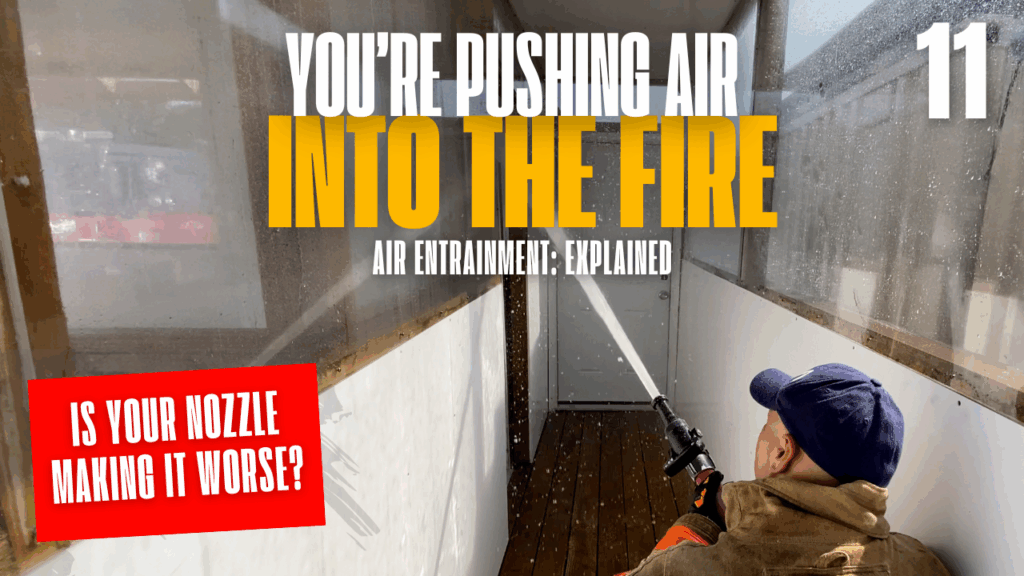
E11: Air Entrainment and Flow Path Control in Connecticut
In Episode 11 of Fully Involved, the crew returns to the Connecticut Fire Academy for the final installment in this four-part training series with instructors Pete Morotto and Brian Hurst.
This session focuses on one of the most misunderstood fireground factors: how nozzle movement and air entrainment influence ventilation and interior conditions.
How fog and smooth-bore streams behave in vent-limited versus ventilated fires
Why excessive nozzle motion increases turbulence and feeds fire gases
Pete Morotto’s three principles: position, stream, and controlled movement
How to slow the environment down and stay in control of the exhaust
When and how to use fog or Vortex patterns for hydraulic ventilation after knockdown
Louisville
E12: Firefighting Tactics with Louisville Fire Department
Louisville crews face tight camelback homes with just 3–4 feet between exposures and fire already lapping into the neighbors. With limited access and high extension risk, the engine company stretches fast, deploying a 3-inch line and BlitzFire for exposure protection while pushing interior. This is about controlling spread before it owns the block—see how they make that call.
Why early exposure line placement can outweigh immediate interior push in tight setbacks
When to prioritize dual water supply and multiple engines on working residential fires
Using hose management and ground monitors to confine fire between closely spaced homes
Avoid pushing fire conditions by misapplying streams into the main fire building
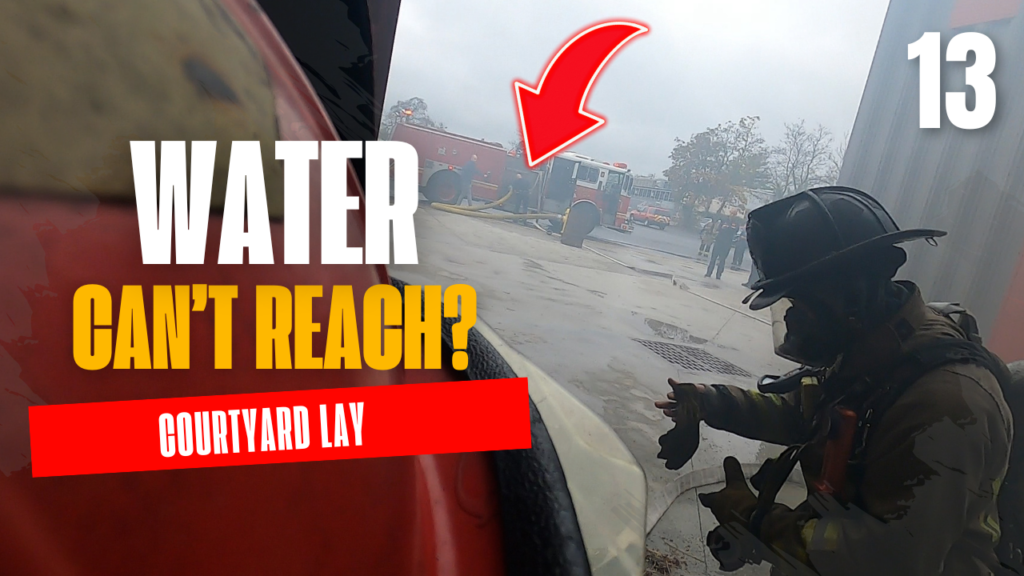
E13 - The Stretch That Breaks Most Crews
Courtyards. Offset alleys. Setback apartments. Louisville firefighters explain how they move big water fast when the engine can’t get close, and where crews usually lose time before the line ever gets charged. From dropping the wye too deep to choking off your own stretch, these are the mistakes that can wreck a long lay before water ever flows.
How to deploy a gated wye without bunching hose at the courtyard entrance
Why apparatus positioning controls access, water supply, and incoming company movement
Deploy crosslays faster while maintaining clean hose management through alleys and courtyards
Adapt ventilation tactics to tight exposures and closely spaced residential buildings
Palm Beach Gardens
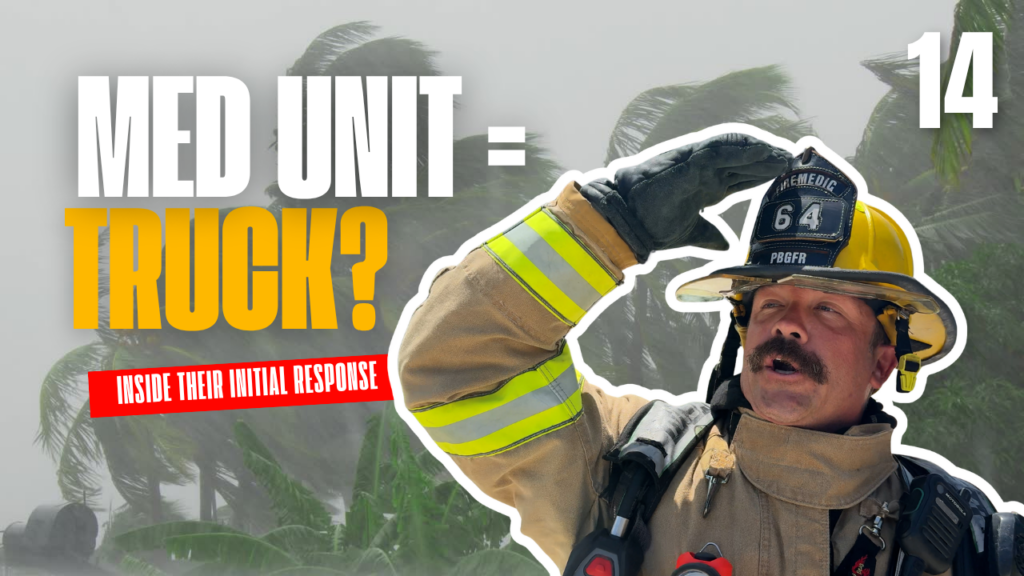
E14: Second-Floor Fire Attack With a 3-Man Engine in Palm Beach Gardens Florida
In Episode 14 of Fully Involved, Palm Beach Gardens Fire Rescue tackles a second-floor bedroom fire with a three-person engine, a three-person rescue, and no extra hands to waste. Tight hurricane construction, limited visibility, stairwell pinch points, and fast-changing assignments test the crew’s hose management and role versatility. See how six firefighters divide the work and keep the attack moving.
How a six-person response divides fire attack, forcible entry, search, and water supply.
Why versatile staffing helps engine and rescue crews complete critical tasks without wasted steps.
Deploy a 200-foot preconnect through doors, stairwells, openings, and interior pinch points.
Using a portable ground monitor, protect exposures while the interior crew advances upstairs.
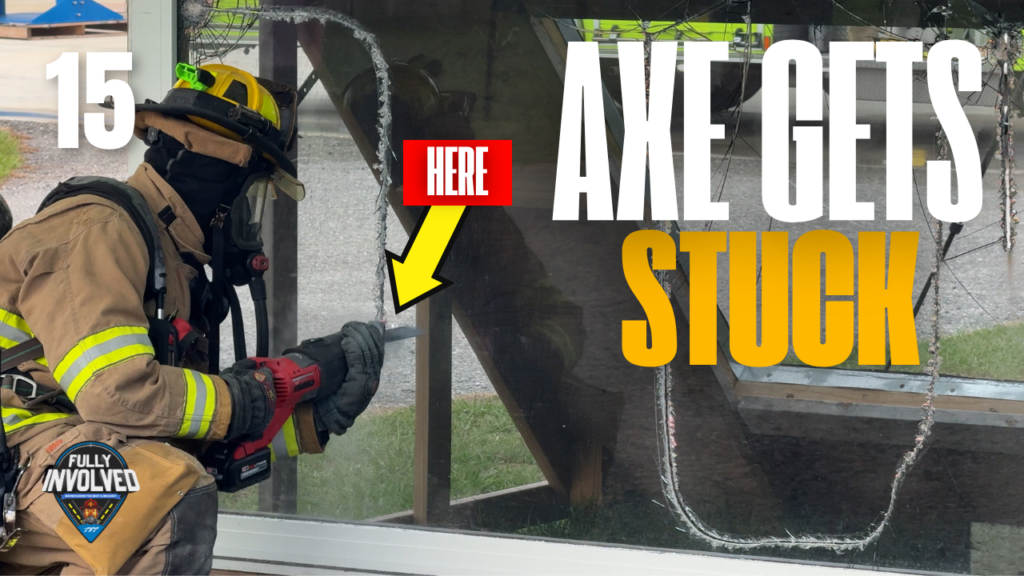
E15: How to Defeat Reinforced Windows
In Episode 15 of Fully Involved, Palm Beach Gardens Fire Rescue breaks down the challenges of hurricane glass and tightly built South Florida construction. Crews work through reinforced windows, heavy frames, second-floor ladder access, and vent-controlled conditions using Halligans, Sawzalls, and diamond-blade saws. See how the doggie-door cut can create a controlled opening for VEIS while keeping glass management and firefighter egress in the plan.
Adapt second-floor ladder operations when tool weight, access, and glass control become constraints.
When removing the window frame may provide a faster emergency escape than breaking glass.
What is Fully Involved?
Fully Involvedisn’t about telling you what to do—it’s about giving you a front-row seat to the raw, real, and relentless world of American firefighting.
We’re traveling the country to meet firefighters where they live and work—on their turf, where every tactic and philosophy is forged in real-world conditions. This series gives you direct insights from peers who train, fight fires, and respond to calls similar to yours—sharing their knowledge to help you perform at your best.
In This Series, You’ll Learn:
How fire departments across the U.S. tackle challenges with different tactics and flavor.
Real-world solutions for common problems.
Tips from experienced firefighters on the ground daily.
How to adapt regional firefighting methods to strengthen your department.
In the fire service, the term fully involved refers to a structure entirely engulfed in flames—demanding every bit of focus, skill, and teamwork to extinguish. But it’s more than just a technical term. It is a mindset. It’s about going all in—100% effort, no hesitation, no shortcuts. This series celebrates the passion, grit, and determination of the departments that live this mindset on every call.
When it comes to firefighting, no two departments are the same. That’s why we’re taking you coast-to-coast, showcasing the strategies, philosophies, and regional firefighting tactics that define aggressive fire departments.
WE’RE ON A MISSION TO CAPTURE
REGIONAL OPINIONS
We’re showcasing the most debated firefighting tactics and the philosophies that drive each crew. Think your department has an aggressive fireground strategy to share?
No one fights fires like your department. This is your chance to highlight your crew’s aggressive tactics and unique responses.
Do You Have a Thirst for MORE Water?
Mastering Strategies: Rural Water Supply
Learn How to Capture Water from Places You Didn’t Think Were Possible