00:00:00:00 – 00:00:02:16
Unknown
But why don’t we just slow
00:00:02:16 – 00:00:02:23
Unknown
stream
00:00:02:23 – 00:00:04:15
Unknown
What do you feel like is the biggest,
00:00:04:15 – 00:00:09:22
Unknown
misconception about remote application? I think the biggest misconception role application is you’re a coward.
00:00:09:22 – 00:00:11:20
Unknown
Facebook’s going to yell at you if you do it.
00:00:11:20 – 00:00:18:10
Unknown
transitional TAC is not sitting outside for 50 minutes putting water through a window. It’s quickly resetting and so we can move interior to fight the fire.
00:00:18:10 – 00:00:18:15
Unknown
here.
00:00:18:15 – 00:00:21:25
Unknown
Now if we darken that door really quick he’s going to start to move into that room. He’s
00:00:21:25 – 00:00:25:28
Unknown
we had, you know, eight people on a hose line, we could march through anything.
00:00:25:28 – 00:00:29:26
Unknown
But we know that’s not the reality. So we have to figure out what’s going to work for us and how it’s going to work.
00:00:29:26 – 00:00:39:13
Unknown
On this episode of Fully Involved, the crews investigating how Connecticut Fire Academy is helping low staffed crews put out fires faster.
00:00:39:13 – 00:00:43:03
Unknown
with instructors Pete Morano and Brian Hurst.
00:00:43:26 – 00:00:45:26
Unknown
Six questions we’ll ask
00:00:45:26 – 00:00:46:05
Unknown
just
00:00:46:05 – 00:00:51:23
Unknown
one. What does it look like to reset fire from outside without losing time?
00:00:51:23 – 00:00:52:07
Unknown
down,
00:00:52:07 – 00:00:56:14
Unknown
Two. How did you coordinate to make things better for the search crew?
00:00:56:22 – 00:01:01:14
Unknown
Three why does Captain Morale recommend a hand line and not a monitor?
00:01:01:24 – 00:01:06:05
Unknown
Number four what type of nozzle works best for this tactic?
00:01:06:20 – 00:01:11:02
Unknown
Five what nozzle technique problems do these guys see?
00:01:11:19 – 00:01:17:07
Unknown
And finally six how can low staffed crews get the most out of this training?
00:01:17:07 – 00:01:23:19
Unknown
Plus, a bonus tale board talk with author and CFA Director of Training P.J. Norwood.
00:01:23:19 – 00:01:28:00
Unknown
20 minutes of expert training coming your way right after this.
00:01:28:00 – 00:01:30:07
Unknown
You can cut this if it’s not the opinion of TFT.
00:01:30:07 – 00:01:32:01
Unknown
But I
00:01:47:23 – 00:01:48:29
Unknown
How are you? My name is Pete Morano.
00:01:48:29 – 00:02:00:27
Unknown
I’m in the fire service. For 30 years. I’ve been career for 25 years in city of Bridgeport. I’ve been a program coordinator here at the Canadian Fire Academy. Coming up on 20 years. We have very good opportunity today to get into some, hose work and
00:02:00:27 – 00:02:03:26
Unknown
nozzle work with the, great people from TFD.
00:02:03:28 – 00:02:06:08
Unknown
And, hopefully you guys enjoy what we’re talking about.
00:02:06:08 – 00:02:35:09
Unknown
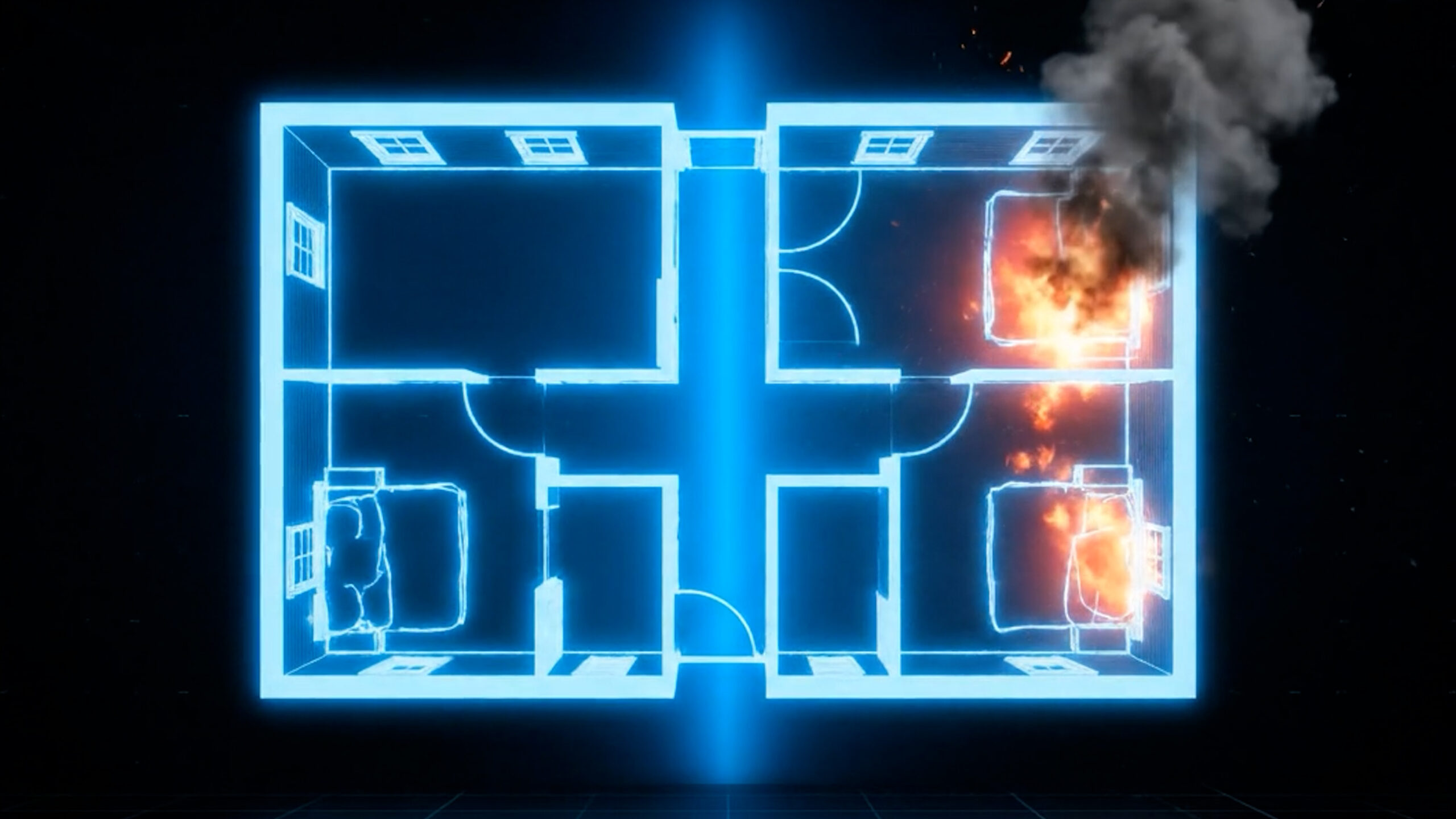
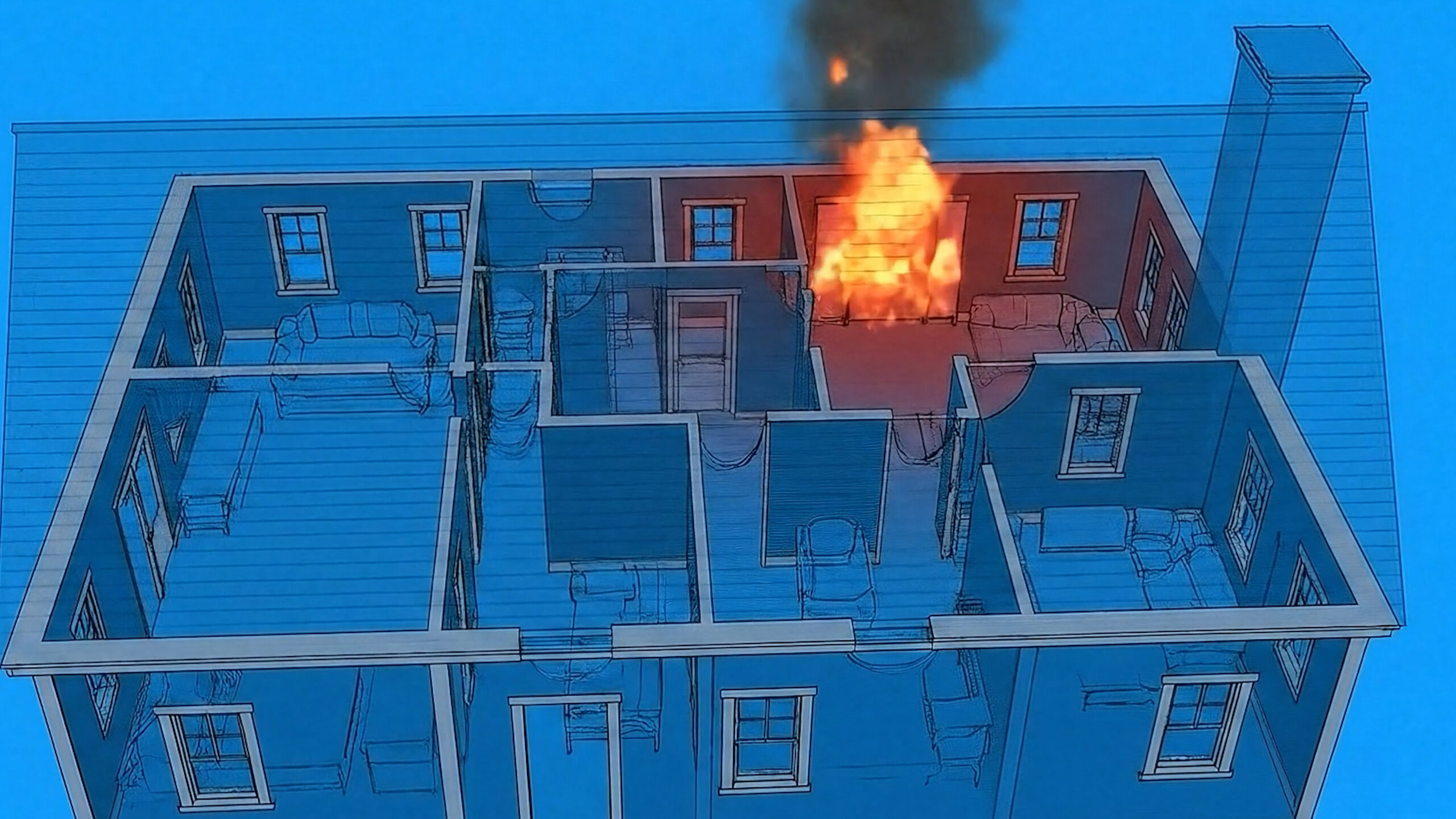
Time to set up the scenario. In episode eight, the crews simulated a low staffed response to a bedroom fire in the back of a house on the first floor. Now, in episode nine, the crew focuses on resetting a living room fire in the front of the house. Using exterior water application, the goal is to get upstairs to a second floor bedroom, which is what the crew will tackle coming up next in episode ten.
00:02:35:15 – 00:02:39:07
Unknown
So again this is just representing again pulling up to that residential structure.
00:02:39:07 – 00:02:41:28
Unknown
and I’m talking flashover heavily involved.
00:02:42:01 – 00:02:50:08
Unknown
I’m not talking, you know, a chair on fire. You’re sitting outside, put water through a window. I’m talking heavily involved, auto extending out, going up the front of the building.
00:02:50:08 – 00:03:00:03
Unknown
The crew gears up with an inch and three quarter line and a smoothbore nozzle with a 7/8 inch tip flowing in about 160 gpm.
00:03:01:11 – 00:03:07:22
Unknown
Time for question one. What does it look like to reset fire from outside without losing time?
00:03:07:22 – 00:03:19:09
Unknown
touching on remote water application or transitional attack. What is it again? Like I told you, transitional TAC is not sitting outside for 50 minutes putting water through a window. It’s quickly resetting and so we can move interior to fight the fire.
00:03:19:16 – 00:03:24:25
Unknown
So again, if we had conditions of heavy fire showing out of a window, maybe right next to the front porch,
00:03:24:25 – 00:03:35:08
Unknown
the front door might be open, might not. In this condition open. We’re starting to see the effects are already fire starting to roll out of the roof because we created that flow of starting light off.
00:03:35:08 – 00:03:36:17
Unknown
So now, quickly get up.
00:03:36:17 – 00:03:57:22
Unknown
You’re taking it. All right. He’s going to reset that room. What he’s going to do is a straight stream at the top of the window. I don’t know. Yeah. Go straight down. Transition here. Open up off the top. Oh, good. So now we quickly slow that fire down
00:03:57:22 – 00:03:59:08
Unknown
up. Gets in here.
00:03:59:08 – 00:04:22:15
Unknown
Now if we darken that door really quick he’s going to start to move into that room. He’s going to open up to the same thing. Crossing. If I slow down, go back and forth. Back and slow. Now, if you’re transitioning to a move, try, try, try again or set certain situations by himself.
00:04:22:18 – 00:04:38:02
Unknown
Open up. Over. Ceiling. Wall. Floor. I’m going to switch the floor. I’ll grab my slide and go. Open up.
00:04:38:04 – 00:04:41:27
Unknown
This.
00:04:41:29 – 00:05:01:13
Unknown
Nice job. So quickly and efficiently. He slowed the fire down from the exterior. Moving. Didn’t waste any time moving back in again. Control the flow path. Kept that common stairwell open. Kept the fire gases all over from heading out that way so crews can get above the do a search slit in this room. Put the room out. Really, really quick.
00:05:01:15 – 00:05:02:10
Unknown
Nice job.
00:05:02:10 – 00:05:11:22
Unknown
We’re just getting started. Here’s question two. While the exterior application is happening, how can you coordinate to make things better for the search crew?
00:05:11:22 – 00:05:26:01
Unknown
I think the biggest misconception role application is you’re a coward. And, you know, Facebook’s going to yell at you if you do it. So there’s a reality to it. Like I said, putting water through a window is not the answer. Putting water through the window is not your only tactic.
00:05:26:03 – 00:05:44:15
Unknown
It’s a tool to slow a situation down, to create a tenable positions. You can go in and put the fire out. And if you can understand that that has to be done and has to be done quickly and efficiently. Transitional attack or remote water application is not the enemy. It’s a friend of yours. All right. So again getting that line, slowing the common hallway down.
00:05:44:22 – 00:06:00:07
Unknown
Remember you have crews. They’re going to be following you. And behind the nozzle they’re going to go do what interior firefighters do. They’re going to do unprotected searches okay. If I could control the flow path the common area. And I can control the interior stairwell by slowing that heavy, heavily involved room of fire down
00:06:00:07 – 00:06:08:06
Unknown
Slow it down, as we did really quick with remote water application. Slide into the building. Transitioning to stream from a position
00:06:08:06 – 00:06:15:05
Unknown
of advantage stream usage, slowing that down, kicking it back into that affected area and then going ahead and sliding in.
00:06:15:11 – 00:06:17:29
Unknown
You saw how he did it nice and easy as one person,
00:06:17:29 – 00:06:25:05
Unknown
and I was able to get into that room, knock it out, sweep the floor and do what we do. That is my opinion on remote water application.
00:06:25:05 – 00:06:32:16
Unknown
Again, some may vary. You know, again, if we had, you know, eight people on a hose line, we could march through anything.
00:06:32:16 – 00:06:36:20
Unknown
But we know that’s not the reality. So we have to figure out what’s going to work for us and how it’s going to work.
00:06:36:27 – 00:06:42:01
Unknown
Time for question three. Why does Captain Morale recommend pulling a hand line
00:06:42:01 – 00:06:43:02
Unknown
and not a monitor?
00:06:43:02 – 00:06:47:22
Unknown
It’s like it’s not gun to nozzle, it’s not even ground monitor because you have to be in a lot of people.
00:06:47:22 – 00:07:00:09
Unknown
Right. You showed this nozzle transition transition transitional attack had to be, you know, not going to pull a larger line to pull an alley line. I’m going to go two and a half. Then I’m going to, you know, I’m going to drop down into three quarter. Yeah that’s great. And that’s a very for this part of the country.
00:07:00:09 – 00:07:03:04
Unknown
For the northeast. We do a lot of those type of fires in two and
00:07:03:04 – 00:07:16:23
Unknown
a half, three story frames where you might have the rear porches off when you get there. So a tactic is what we would call a long line, an alley line. We’d pull that two and a half to the rear flank those knock the porches down, and then drop down to an inch to a quarter and go ahead and fight fire.
00:07:16:25 – 00:07:21:05
Unknown
So it could even be just as we demonstrated here, a transitional tack can be done
00:07:21:05 – 00:07:32:28
Unknown
with just your initial hand right off the truck. It’s quick, it’s easy, it’s effective. It doesn’t have to be this long, drawn out process of that gun’s master streams. Pull up portable monitor. Absolutely not. And I think that’s what a lot of people thought it had to be first.
00:07:32:29 – 00:07:47:20
Unknown
Oh, I got to go. Master streamer. Defensive first. No, you’re not doing anything defensive. He all he did was suppress that fire as he was ready to mask up to go in. So yeah, technically it’s transitional tack, but technically it’s, it’s it’s a sound tactic that might need to be done. Yeah.
00:07:47:29 – 00:07:52:11
Unknown
Question four what type of nozzle works best for this tactic?
00:07:52:11 – 00:07:59:12
Unknown
What are the pros and cons of nozzle choice? The different options before you? How should people be thinking about that choice?
00:07:59:12 – 00:08:00:29
Unknown
Oh, that’s a trick question right.
00:08:00:29 – 00:08:09:16
Unknown
All right. So now so it comes down to it comes down to either a what you’ve used forever or what you’re feeling is you’re going to be very
00:08:09:16 – 00:08:14:02
Unknown
either Pro smoothbore or Pro Fog or Pro combination nozzle.
00:08:14:04 – 00:08:28:20
Unknown
There are benefits to both. Again, what are we going to get out of a solid stream? So if we truly look at what solid stream is, can you effectively do it from both nozzles? 100%. Okay. If you look at like we’re using a 7/8 tip with almost
00:08:28:20 – 00:08:35:02
Unknown
a medium sized tip, which gives you a nice, nice, a nice laser beam out of that tip.
00:08:35:04 – 00:08:53:09
Unknown
You know, some are fans of a shorter nozzle, some are medium, some like the long barrel nozzle. I like getting that laser beam stream, you know, out of a nice 7/8 tip. Gives you good reach. It gives you a nice stream, it gives you good penetration. Some departments again, it’s about water application at that point.
00:08:53:09 – 00:09:06:05
Unknown
So if you’re using a fog stream and that’s the way you want to go obviously for interior firefighting make sure it’s right to fight. It’s always on stream solid stream. But again it’s going to be a preference. I do like and only my opinion.
00:09:06:05 – 00:09:10:14
Unknown
You can cut this if it’s not the opinion of TFT. But I like
00:09:10:14 – 00:09:15:20
Unknown
a smooth bore as it sits because there’s less variables as far as checking your stream.
00:09:15:23 – 00:09:27:29
Unknown
If I don’t have adequately pump line and I open that line, or I have a series of kinks, I’m going to know immediately. Whereas with a fog nozzle or a combination style nozzle, I may not
00:09:27:29 – 00:09:35:17
Unknown
understand that I don’t have a workable stream as an inexperienced nozzle person, right? People with experience are going to understand like this how it should feel.
00:09:35:17 – 00:09:48:26
Unknown
This is what it should look like. But if you have somebody brand new out of the fire academy and they roll up and say, okay, yeah, I got water, I’m good, but they don’t have the gown. It’s needed for the job. It might be a problem with that nozzle. You’re going to tell right away because you’re not going to have stream.
00:09:48:29 – 00:09:51:27
Unknown
That’s so I am a fan of the smoothbore nozzle for that reason.
00:09:52:07 – 00:09:58:21
Unknown
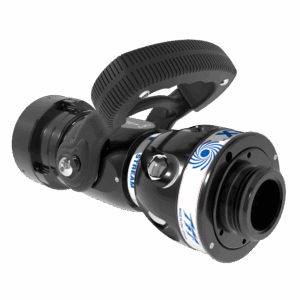
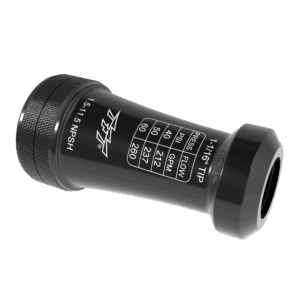
What if you could have smooth bore stream and gallon hinges, but with a fog pattern ready to go?
00:09:58:21 – 00:10:00:25
Unknown
There’s a lot of departments that are struggling,
00:10:00:25 – 00:10:12:26
Unknown
with an internal argument between going smooth border, staying fog and, this nozzle checks a lot of boxes. It gives you a disperse pattern. It’s low operating pressure, meaning low reaction force. It’s high
00:10:12:26 – 00:10:15:10
Unknown
volume. It’s a solid border stream.
00:10:15:13 – 00:10:23:16
Unknown
The fins can mechanically agitate foam. So if you’re using more of a Class-A foam, that’s going to be a friendly option for you versus trying to do a foam tube.
00:10:23:16 – 00:10:26:09
Unknown
So you’ve got a few things on the vortex that are unique.
00:10:26:09 – 00:10:33:27
Unknown
Do you want to learn more about the vortex nozzle or any other of our smooth bore suite? Check out tft.com/shop.
00:10:34:05 – 00:10:41:29
Unknown
Back in Connecticut, the crew tackles. Question five what nozzle technique problems do these instructors see out there?
00:10:41:29 – 00:10:48:20
Unknown
Everybody’s like they’re straight ahead. They’re straight ahead down. All the way down. Keep the nozzle up. Even if you’re gassed, exhausted pin yourself.
00:10:48:22 – 00:11:08:00
Unknown
That’s why we have that arm’s length or wherever you’re comfortable. Keep the nozzle up. The cooling happens up. It doesn’t happen at floor level. Keep it up. How common is it that people aren’t they get tired? Yeah. So when they get tired, bad habits start to happen. Or inexperience. Yeah, right. So inexperience is I’m just trying to do the best I can.
00:11:08:01 – 00:11:27:02
Unknown
Hold this line. And they go from a fire academy setting to where maybe the line is in pump. That proper pressure is because of we’re just it’s reset reflex and it’s repetition. Now you go to a job and you’re getting you’re no you’re getting real pressures on this line. It’s shocking for some initially to say, wait a minute, I don’t have three people on this line.
00:11:27:02 – 00:11:42:12
Unknown
I gotta figure it out, right? So that’s where I think we lose a little bit of of the sound practices of what we want to do because we’re struggling to hold the line, right? We know Gowans puts out fires. Yes it does, but if you can’t maneuver the line gallons does mean
00:11:42:22 – 00:11:45:25
Unknown
right? Doesn’t you have to be renewable.
00:11:45:28 – 00:12:04:15
Unknown
Okay, I’ve had this discussion in a play where where I work. Right. We don’t have a water problem. We have a maneuverability issue. I think most departments have maneuverability issue with the line because we’re not sure, as we don’t do it as much as we used to. We’re not comfortable and confident sometimes on the movements. But now you’re talking about remote water application, you know?
00:12:04:15 – 00:12:20:01
Unknown
So I got to just flow this line. But a lot of times as it’s creeping back, what’s it doing coming down. Yeah. Okay. So that’s where the tech comes into play. Keep that tick in their mass. Look up, look up. Look where the heat currents are going. For a look where the flow path is cool. The common area.
00:12:20:01 – 00:12:38:01
Unknown
an officer. You have to recognize when that nozzle firefighter is fatigue or can’t control that line. When he goes from this position to this. And then you see him actually sitting back on his legs. You know, he doesn’t have control of that line. He’s not maneuvering it. So you got to reset it. So basically it’s time to shut down, have Bill reset that line.
00:12:38:01 – 00:13:03:05
Unknown
Let’s move forward. Why we say why do we say have some water. Spurs are not even a half bale. I’m moving some water. And we kept it high a little bit sliding. Yeah it’s better. It’s better than nothing. Yeah. And nothing’s going to counter that. Reach the stream. If you get that laser beam stream down that hallway, you start do letting it do what it does and deflected off of things and truly watching the room at the water’s doing like you’ll see it in the water, mapping properly to truly watch what the water’s doing.
00:13:03:05 – 00:13:13:10
Unknown
He’s like, wow, he’s not even near that room. If there was a fire in that room would be completely out. So there’s something to it you’ve got to buy into to at least where the water needs to go,
00:13:13:10 – 00:13:18:21
Unknown
And question six how can low staffed crews get the most out of this training?
00:13:18:21 – 00:13:46:12
Unknown
Now you’re looking at mid-sized apartments and even, world apartments that may have, anywhere between three or less. So to basically advance a line to the second floor is going to take people. So that would be probably marrying up companies to do that. So your initial fire attack into, into a stairwell, could just be remote because you only have that one fire to fire on the nozzle and maybe his back, a person or officer, you know, get in the line.
00:13:46:15 – 00:13:53:02
Unknown
You know, stage, prestage and getting it operating as quickly as possible. And then when the rest of those troops come, now, you can start advancing to that floor.
00:13:53:02 – 00:14:10:23
Unknown
I talk about position of opportunity. The opportunity is what you see in front of you. The apparatus is parked in front of the building. You have fire on the side coming off the second floor. I’m charging hose line out here. Why not hit it and then start advancing the stairwell? If I’m advancing to the back of the building, that line’s dedicated to the back of the building.
00:14:10:23 – 00:14:11:06
Unknown
Now.
00:14:11:06 – 00:14:27:04
Unknown
There’s no way, man or minimal manpower is going to be able to retract that line back to the east side. If that’s your mean of entry. So, you know, you’re just going to just basically beat your firefighters down trying to do that. If you have low staffing. So like you get a position of opportunity, take advantage of that.
00:14:27:04 – 00:14:28:10
Unknown
Advance up the stairs
00:14:28:10 – 00:14:38:15
Unknown
you definitely get these like textbook examples of like, hey, he pulled up one scene, they put it in, they hit it with a duck gun for 10s to reset the firewall crew lay the line, and then they advance with the hand line.
00:14:38:15 – 00:14:57:22
Unknown
Absolutely. That’s fantastic. That might not be your everyday call. Yes. Yes. Like and again very you know rural settings you that might be. Yeah. You have two people on a rig. Yeah. You may have to do that to slow it down. Right. Again think about pulling up to a residential job. You know, you may have a car on your driveway, a garage fire a try and start on the exterior of the building that lit the vinyl siding on it.
00:14:57:22 – 00:15:06:09
Unknown
That looks like, you know, the end of the world when you pull up, but it’s nothing but an outside fire. It’s starting just to get in. So slow that down and get a good understanding of what you’re doing right.
00:15:06:09 – 00:15:13:26
Unknown
If it’s not a parent, if it’s not a couple windows when you arrive, right? And even so, could you have slid in there and just went into that room 100%?
00:15:13:26 – 00:15:30:03
Unknown
You could have. But what you did by just putting a quick hit on it was you stop the auto exposing to the upper floors, right? You’ve slowed it down a little bit. You’ve controlled that common area again for people passing. You were getting into the stairwell. Yeah. It might not be everybody’s tactic. There’s something you should have in your toolbox though, right?
00:15:30:03 – 00:15:31:01
Unknown
We can’t be. We
00:15:31:01 – 00:15:45:12
Unknown
have to be open to having different things for different staffing levels for sure. Right. And again, like I said, I was skeptical because I was taught one way on how to fight fires, right from a busy city department. This is the way you do it. For 25 years I’ve been doing it that way right.
00:15:45:14 – 00:15:50:02
Unknown
And teaching that way for years and years and years. But again, and I use
00:15:50:02 – 00:16:01:09
Unknown
this tagline all the time to be to be aggressive, I have to understand science, right? I want to be the best one on the fireground, as we all do. If you’re telling yourself you’re not a type A person fire service, you’re lying to yourself, okay?
00:16:01:09 – 00:16:17:27
Unknown
Everybody wants to be the best on the Fireground to do that, you have to understand the building that’s burning, how it’s constructed, how it’s trying to kill you. Okay, and how you can quickly and efficiently put the fire out. Yeah, you have to understand those. You have to understand fire behavior, fire behavior and building construction and save your life.
00:16:18:00 – 00:16:20:01
Unknown
That’s what I preach to all our new people.
00:16:20:09 – 00:16:29:16
Unknown
Now time for a bonus tale board talk with P.J. Norwood. He’s the CFA Director of Training, and he’s the coauthor of The Evolving Fireground.
00:16:29:16 – 00:16:46:08
Speaker 2
I don’t think it’s as controversial anymore, but is exterior water. You know, we were start talking about, you know, modern tactics and research based tactics. And we started to teach about exterior water. You would have thought the world was coming to an end, right? Because we’re not going to be aggressive firefighters anymore. We’re not going to be to go through the front door.
00:16:46:10 – 00:17:05:13
Speaker 2
And that’s not the case, right? Exterior water is not for every fire depending on your department. Depending on your resources, depending on the building construction, you may never utilize exterior water. However, it needs to be an option that you could default to when the right timing and the right situation because it’s only going to do good. Key States from FSR.
00:17:05:13 – 00:17:18:26
Speaker 2
I recently said in a podcast, the wetter the better, and the fire doesn’t know where the water is coming from. The goal of extinguishment is what? To get water into that environment as quick as possible. It doesn’t matter if it’s through a door, through a window, or down the hallway.
00:17:18:26 – 00:17:35:26
Speaker 2
When we go back to our basic fire behavior education, we have the fire tetrahedron. And there’s only one real way as firefighters that we can impact that, and that’s cooling the environment. Yes, we can decrease the amount of air we let into the building, but we can’t go up and put an envelope or a balloon around the building and take out all the oxygen, right.
00:17:36:02 – 00:17:51:15
Speaker 2
So water is the key thing for us. We have to get that into the environment. And you know, there’s a lot of firefighters that are concerned about that tactic. They’re concerned because they’ve always been taught the negative side of it. And there’s no negative, right. There’s a right way to do it and a specific way to do it.
00:17:51:15 – 00:17:54:03
Speaker 2
But there’s nothing negative. It’s only positive for the environment.
00:17:54:03 – 00:18:02:01
Speaker 1
tell me about the different decisions that you advocate when you’re choosing equipment. Transitional or external water?
00:18:02:07 – 00:18:19:07
Speaker 2
It’s actually interesting. You bring up, extra water in the blitz attack, right? That was something I was trained on and was always acceptable and was okay. And doing a little research with some Chicago firefighters, we found that that I was actually originated in Chicago in 1976, and they started applying it in the 80s in Chicago and growing up.
00:18:19:12 – 00:18:36:12
Speaker 2
That’s an accepted practice. Use the deck on, do a blitz attack, flood the building with water and she can get your hand lines in place. So it is okay to flow all those GPS from a deck gun from the exterior, but it wasn’t okay to flow 150 gallons per minute from an inch or three quarter hose line. It just those are the things that I don’t understand.
00:18:36:19 – 00:18:51:01
Speaker 2
So as far as equipment, you want a smooth water, straight stream, you don’t want to use fog when you’re applying that water. You don’t want to move that nozzle around. You want to keep it tight in that window. Steep, steady and then seconds until that environment starts changing.
00:18:51:01 – 00:19:00:02
Unknown
So we start talking about equipment and thinking about first arriving tactics. My focus would be depending on your crew size and the resources available.
00:19:00:04 – 00:19:20:00
Unknown
How can you deploy your equipment the quickest and get water on the fire? Whether that’s a deck gun, whether that’s an inch or three quarter hand line? Right. That’s going to be really dependent on your engine company and your secondary resources. And the thing that we also see often is many policies and procedures have the first two engine stopping at a hydrogen wrapping at a hydrant.
00:19:20:05 – 00:19:44:27
Unknown
Then going in that takes minutes. Many fires today don’t require that much water application if you’re doing it right. So I like to advocate now first to engine go to the fire. Start flowing water. Get that water flowing as quickly as possible into that environment. And depending on your resources, depending on your crew make up right. Make the best choices to get your equipment there the quickest that you can.
00:19:44:27 – 00:19:57:28
Unknown
If you choose an exterior water smooth walk or straight stream right? You don’t want to use fog. You want to keep that nozzle, that stream pattern tight. You don’t want to be moving around because you want to train as little air as you can into that environment.
00:19:58:05 – 00:20:08:21
Unknown
To find the right nozzle for your next residential fire. Head to Ft.com Slash shop and use the filter tools to get just the right one for you and your situation.
In Episode 9 of Fully Involved, the crews train with Connecticut Fire Academy instructor Pete Morotto. The scenario focuses on a heavily involved living room fire at the front of a residential structure. Pete walks through how an exterior reset, sometimes called remote water application or transitional attack, can buy time for the crew to push inside and protect the stairwell to the second floor.
Pete’s perspective comes from more than 30 years in the fire service, including decades of work in Bridgeport, Connecticut and with training outfits MissionCIT and Fire Training Innovations. His instruction in this episode centers on what has worked for him in low-staffing situations, and how he prepares crews to apply these tactics under real fireground conditions.
Pete acknowledges that one of the biggest misconceptions about remote water application is that you’re a coward if you do it or that social media will criticize you for it.
From his point of view, transitional attack is not sitting outside for 15 minutes spraying a window. It’s a fast reset that can slow fire growth and create a more tenable path for interior crews.
In this drill, Pete set up a scenario where fire was pushing out of the living room window at the front of the house. The crew stretched a 1¾-inch handline with a 7/8” smoothbore tip, flowing about 160 gpm.
From Pete’s perspective, the tactic looks like this:
Use a straight stream aimed high into the window.
Drive water down to knock back the fire quickly.
Move inside immediately to complete extinguishment and protect the stairwell.
The outcome: the fire is slowed, the flow path is controlled, and crews can advance upstairs to conduct a search.
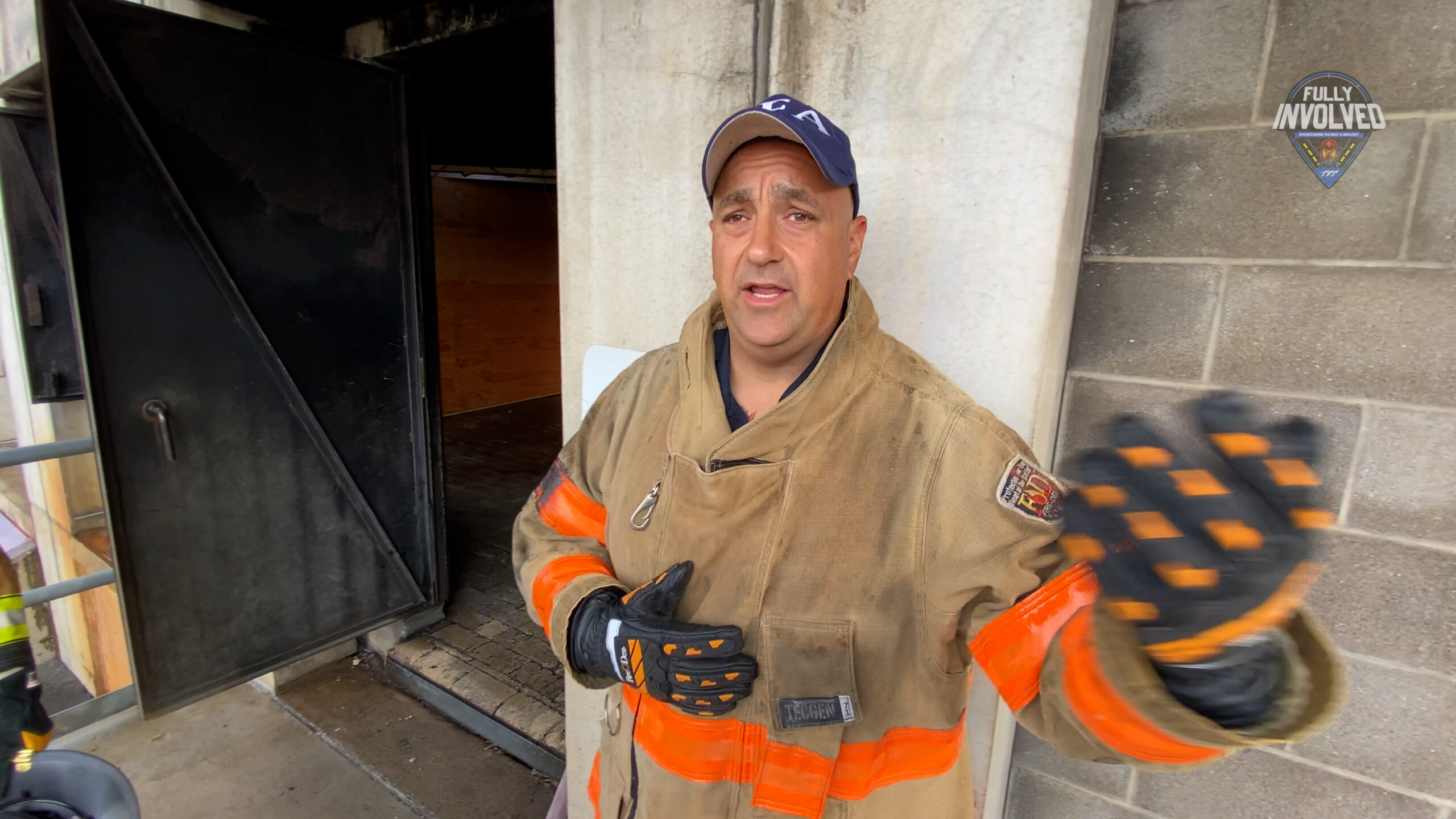
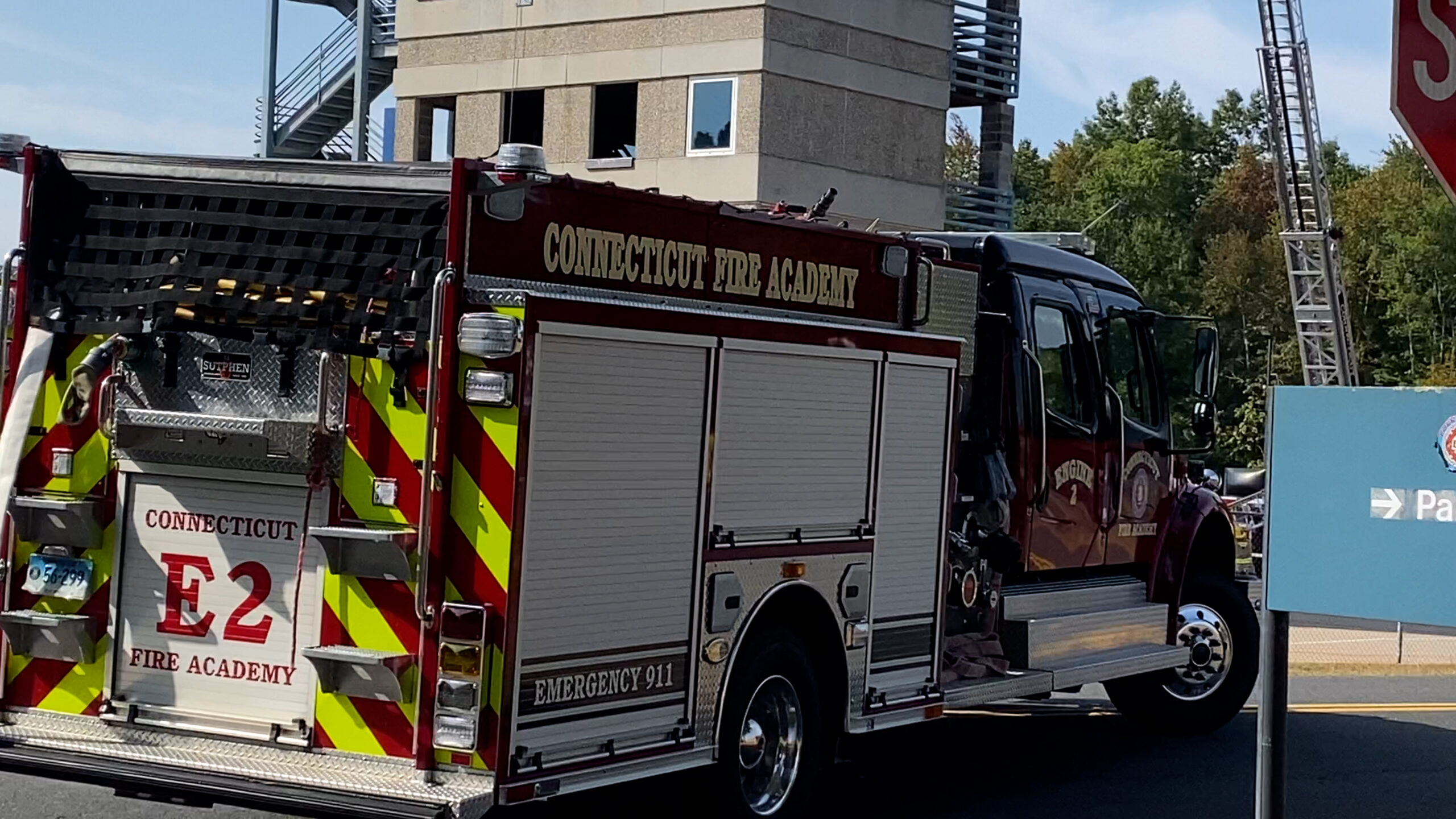
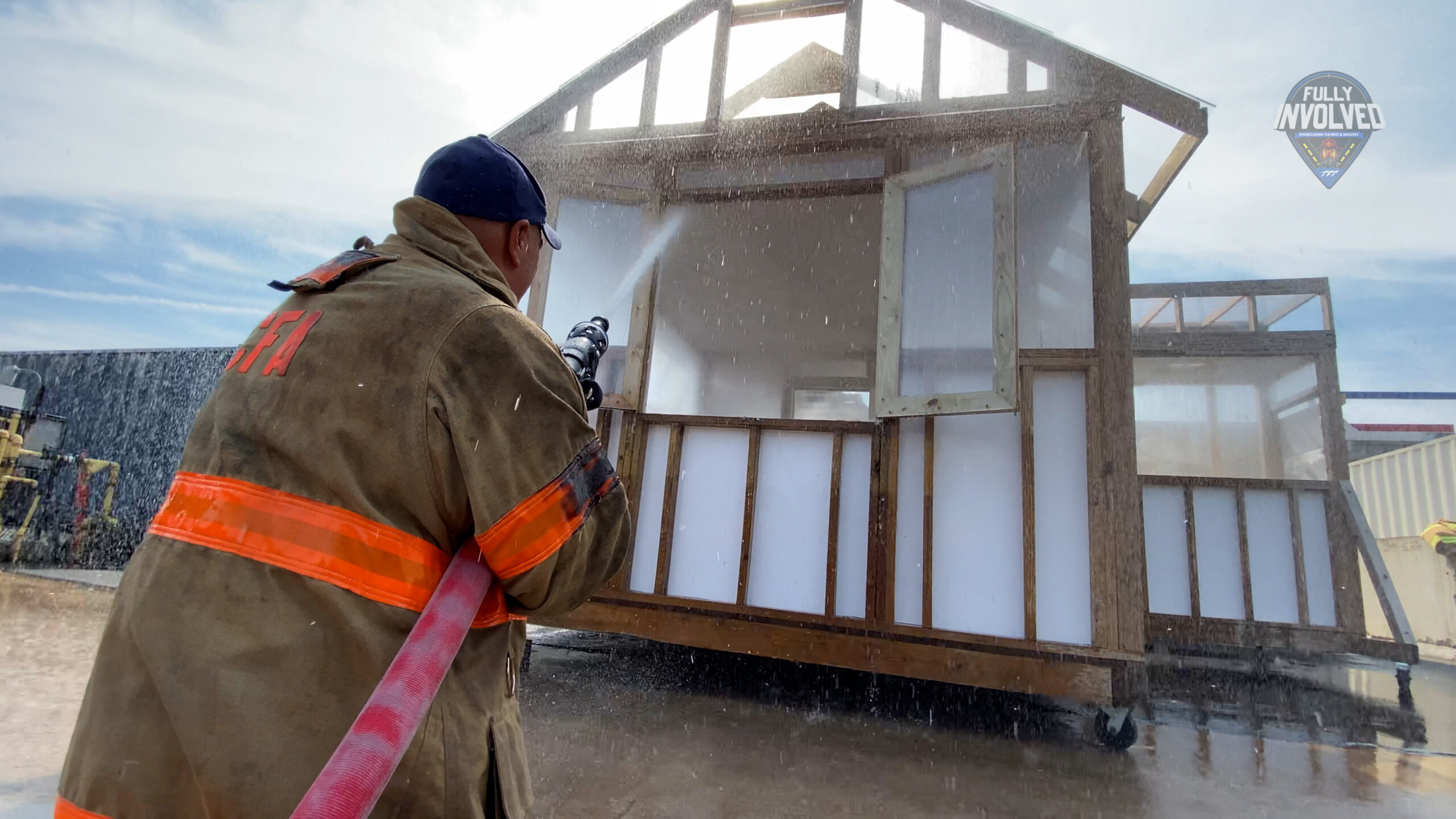
Pete shows that a quick straight-stream reset doesn’t waste time—it creates an opportunity for an interior push without delaying the attack.
According to Pete, hitting the fire early from outside protects the stairwell and hallway that search crews depend on. He views remote application as a tool to create tenable space, not a replacement for interior firefighting.
Pete explains that transitional attack can be done with the first handline off the rig. A monitor or master stream often requires more people and can slow deployment, which isn’t realistic in some low-staffing conditions.
Pete shares his preference for smoothbore nozzles because they give instant feedback, strong reach, and fewer variables for newer firefighters. He also discusses how some departments prefer fog or combination nozzles—and how nozzle choice often comes down to training and comfort.
Crews often drop the stream too low when fatigued.
Cooling happens overhead, not at the floor.
Inexperience with real pressures leads to mistakes.
Many departments face maneuverability issues, not water supply issues.
Pete emphasizes using the position of opportunity—hitting visible fire right away and advancing when help arrives. For him, exterior water is one way to slow the job down until additional staffing shows up.
Brian Hurst, Program Manager at the Connecticut Fire Academy, was also on scene for Episode 9. From his standpoint, exterior application is less about replacing the interior push and more about making conditions safer for the crews that follow.
He highlights that the hallway and stairwell are critical choke points.
If you don’t control that flow path of the common area, you may lose the hallway.
For him, a quick reset supports the search crew by reducing heat and keeping the path upstairs tenable. His view aligns with Pete’s demonstration: transitional attack is a tool to buy time, not a tactic to sit back on.
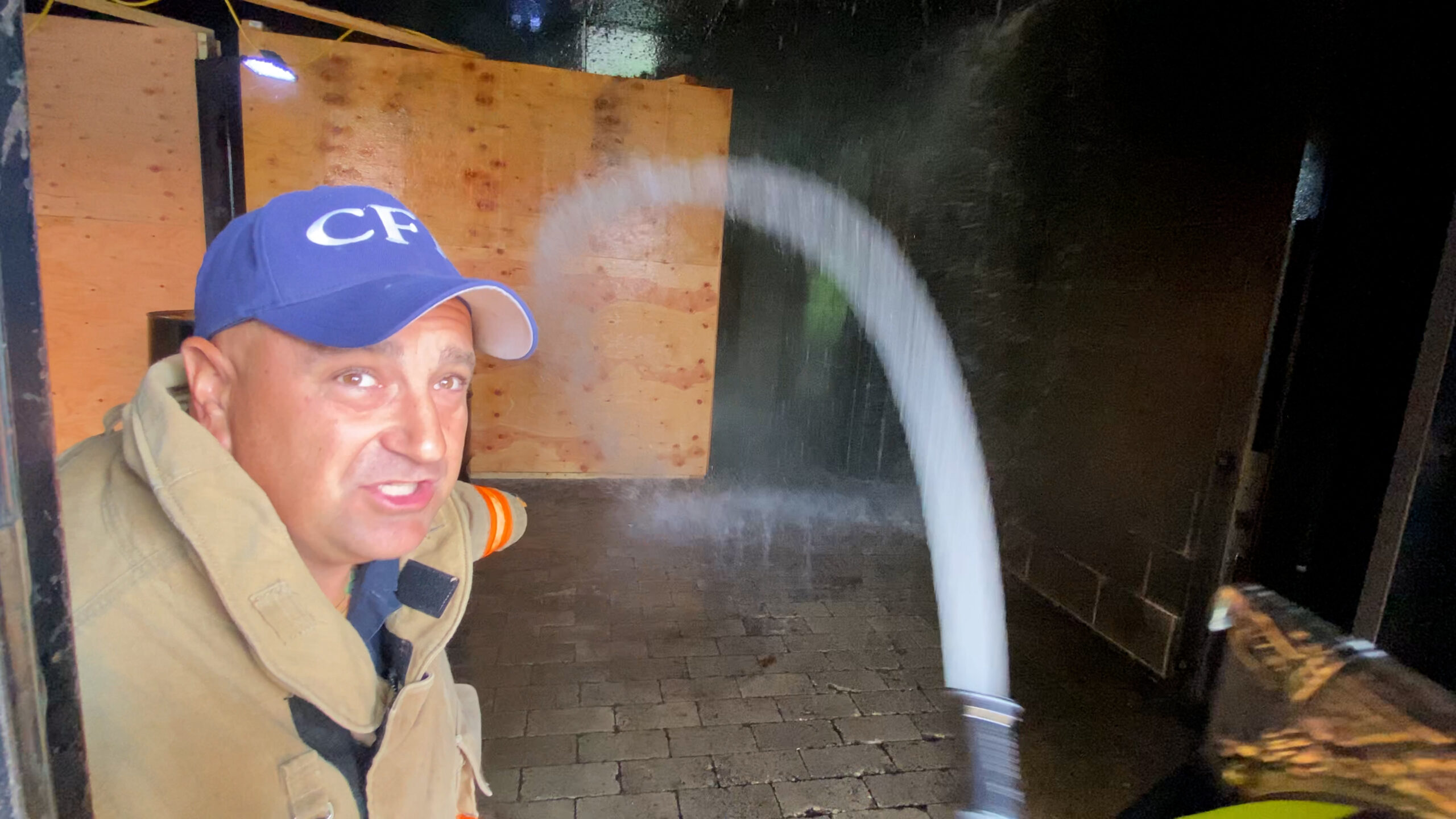
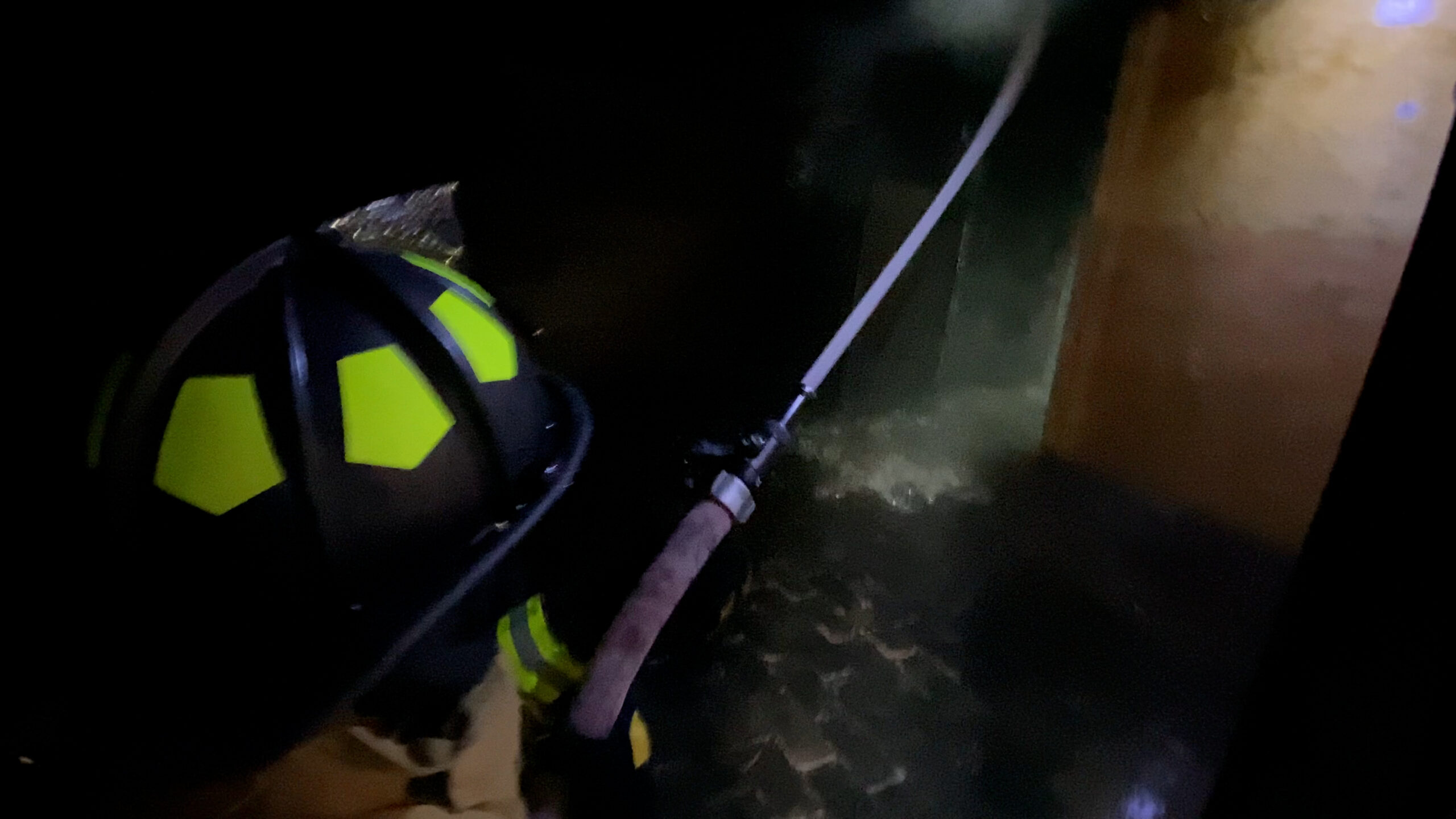
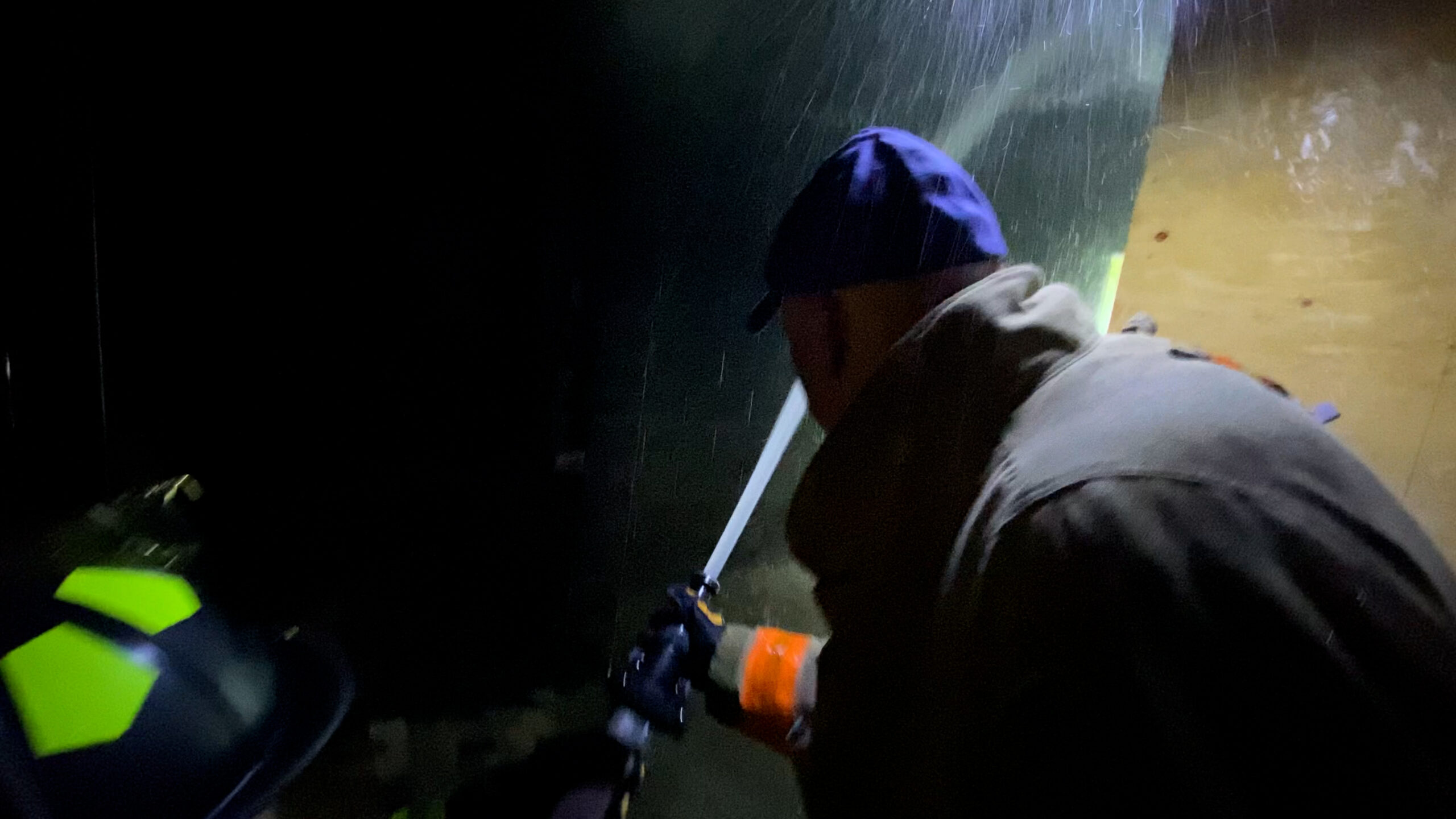
Pete teaches that exterior water application is most effective when crews keep equipment simple:
Line: First-due handline off the engine.
Nozzle: Smoothbore or straight stream pattern—avoid fog on exterior reset.
Flow: Enough gpm to cool the environment quickly without overcomplicating the advance.
As Pete puts it, the fire doesn’t care where the water comes from. What matters is getting it cooled as fast as possible.
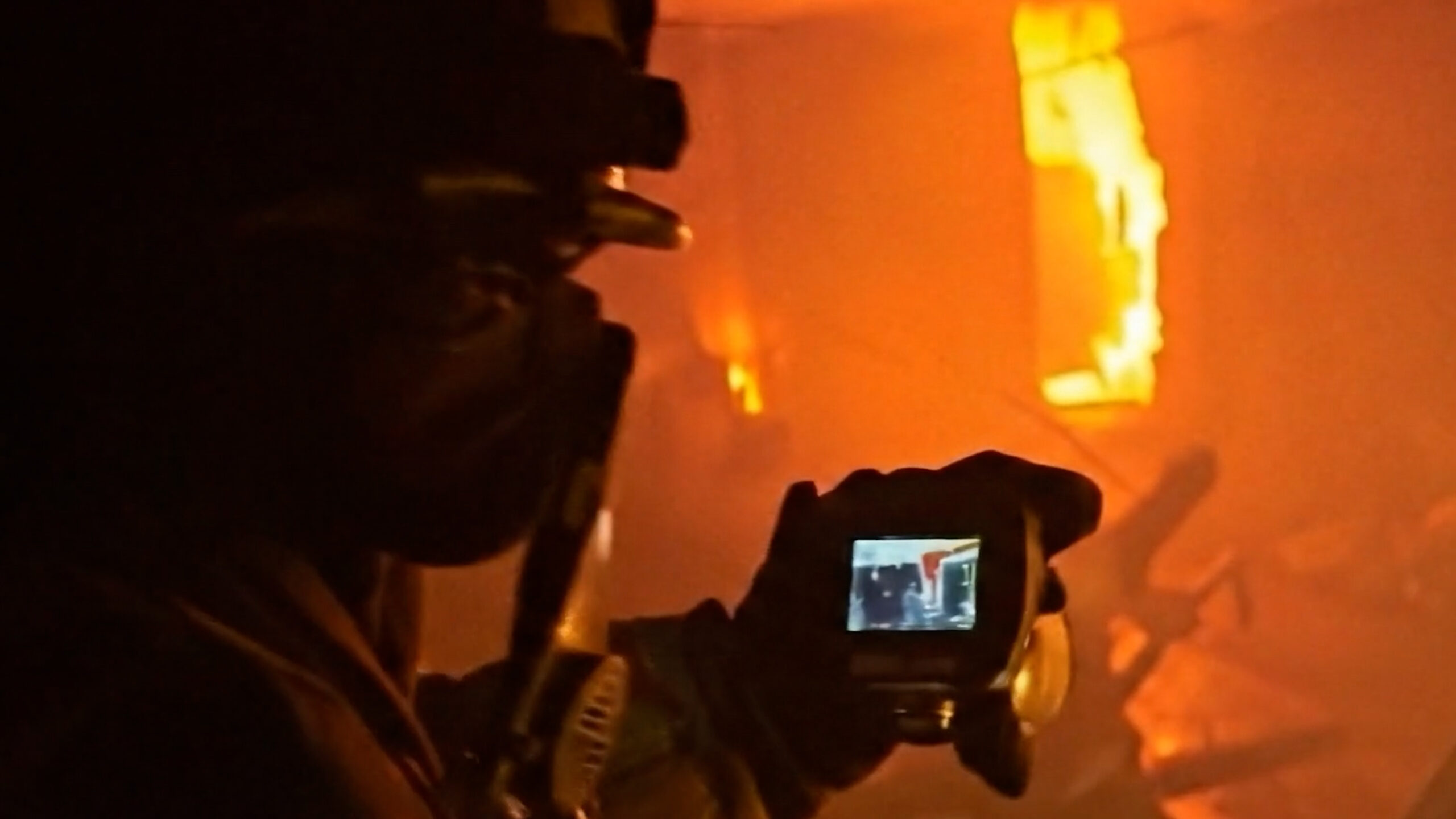
Pete frames transitional attack as something he was skeptical of at first, because of his traditional training. Over time, he saw that when staffing is limited, exterior water can make a difference.
Key points he stresses:
Exterior water is not new—it traces back to Chicago blitz attacks in the 1970s.
Aggressiveness isn’t about ignoring science; it’s about using building construction and fire behavior knowledge to stay alive.
Crews should build these tactics into their toolbox, so they’re ready when the fireground calls for it.
No one fights fires like your department. This is your chance to highlight your crew's aggressive tactics and unique responses.
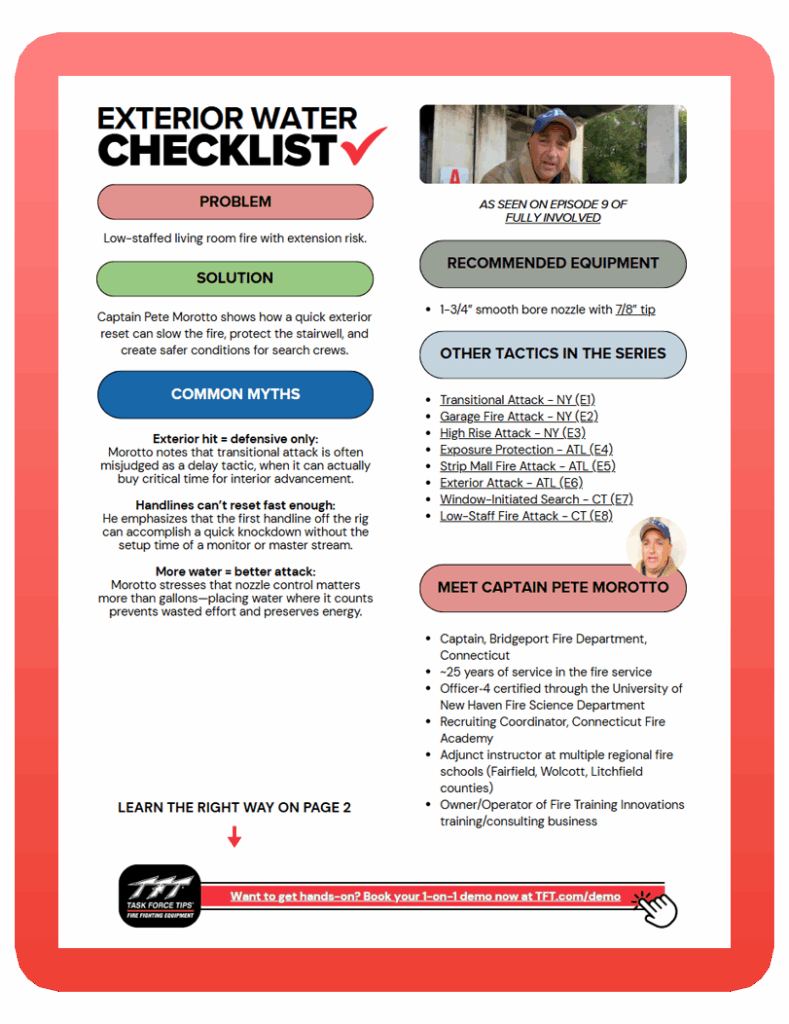
Download the step-by-step checklist your crew can use at the firehouse or in the field.
Be the first to catch new episodes. Get updates straight to your inbox and never miss insights into regional firefighting tactics.