00:00:00:21 – 00:00:02:23
Unknown
Reduced manpower situations, low staffing,
00:00:02:23 – 00:00:05:08
Unknown
we all don’t have the luxury of having 3 or 4 people on an engine,
00:00:05:08 – 00:00:08:10
Unknown
himself from a position of advantage.
00:00:08:10 – 00:00:12:00
Unknown
How can you be a better firefighter with less manpower?
00:00:12:10 – 00:00:15:19
Unknown
You learn from a 30 year veteran like Pete Murano.
00:00:15:19 – 00:00:16:22
Unknown
that’s a life saver.
00:00:16:22 – 00:00:23:00
Unknown
Pete, in the Connecticut Fire Academy training team are experts at getting more with less.
00:00:23:00 – 00:00:27:18
Unknown
It’s not efficient. It’s not quick. Make sense? All right, so let’s slide in a little bit.
00:00:27:18 – 00:00:35:13
Unknown
In episode eight, the fully involved crew tackles six critical phases to help you master your next residential fire.
00:00:35:13 – 00:00:38:18
Unknown
Number one pre staging. Where should you charge?
00:00:39:02 – 00:00:42:12
Unknown
Number two how do you master the stream check.
00:00:43:10 – 00:00:44:16
Unknown
Number three
00:00:44:16 – 00:00:47:03
Unknown
what should you look for when you open the front door?
00:00:47:25 – 00:00:51:27
Unknown
Phase four reading those tricky fire conditions.
00:00:51:27 – 00:00:55:27
Unknown
Phase number five. What nozzle technique does Pete recommend?
00:00:55:27 – 00:01:01:10
Unknown
And finally six. What can I do to control the hallway and put out the fire?
00:01:01:10 – 00:01:10:27
Unknown
This episode is about five times the size of normal episodes, so grab your popcorn or jump around to the phase that’s most helpful to you.
00:01:10:27 – 00:01:13:04
Unknown
We’re getting fully involved in Connecticut.
00:01:16:22 – 00:01:28:24
Unknown
My name is Pete Morano. I’m a career firefighter in Bridgeport, Connecticut. 25 years in the service, 30 years all together. Here today at Connecticut Fire Academy. Our program coordinated here for 20 years. We have a great opportunity today
00:01:28:29 – 00:01:39:17
Unknown
We feel we can get our message out about the use of, streams, water mapping and how to be safe and effective on the fireground. I hope you learned a couple things for it. Take a few tips, put it in your file cabinet. Thank you very much.
00:01:39:17 – 00:01:57:11
Unknown
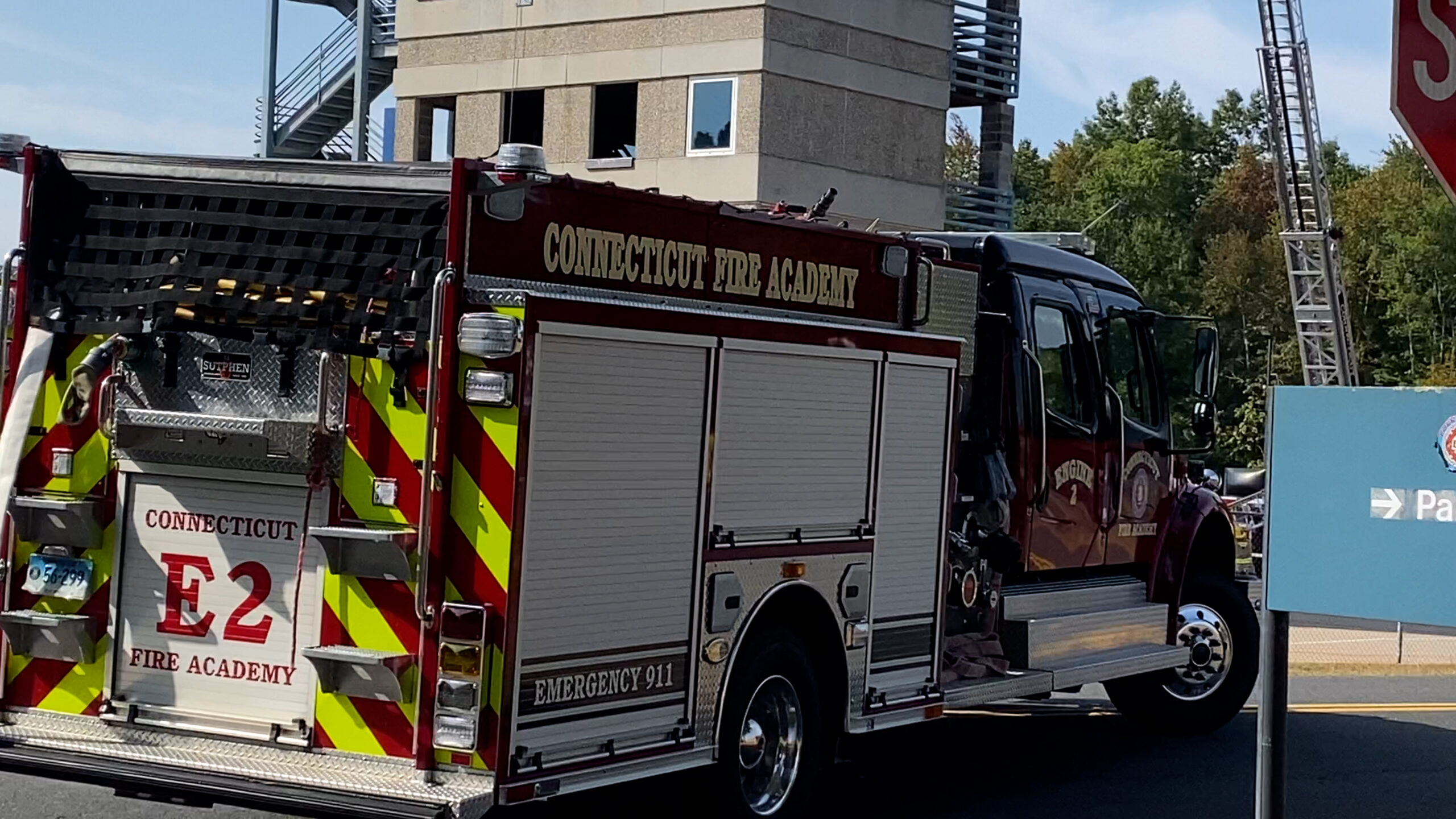
Connecticut is the fourth most densely populated state in the country. From Yale University to cities like Hartford to a larger rural area than you might think. Connecticut sure fits a ton into a small space with 300 departments and all.
00:01:57:11 – 00:02:00:14
Unknown
Here’s the scenario we’re tackling today in New England.
00:02:00:21 – 00:02:14:02
Unknown
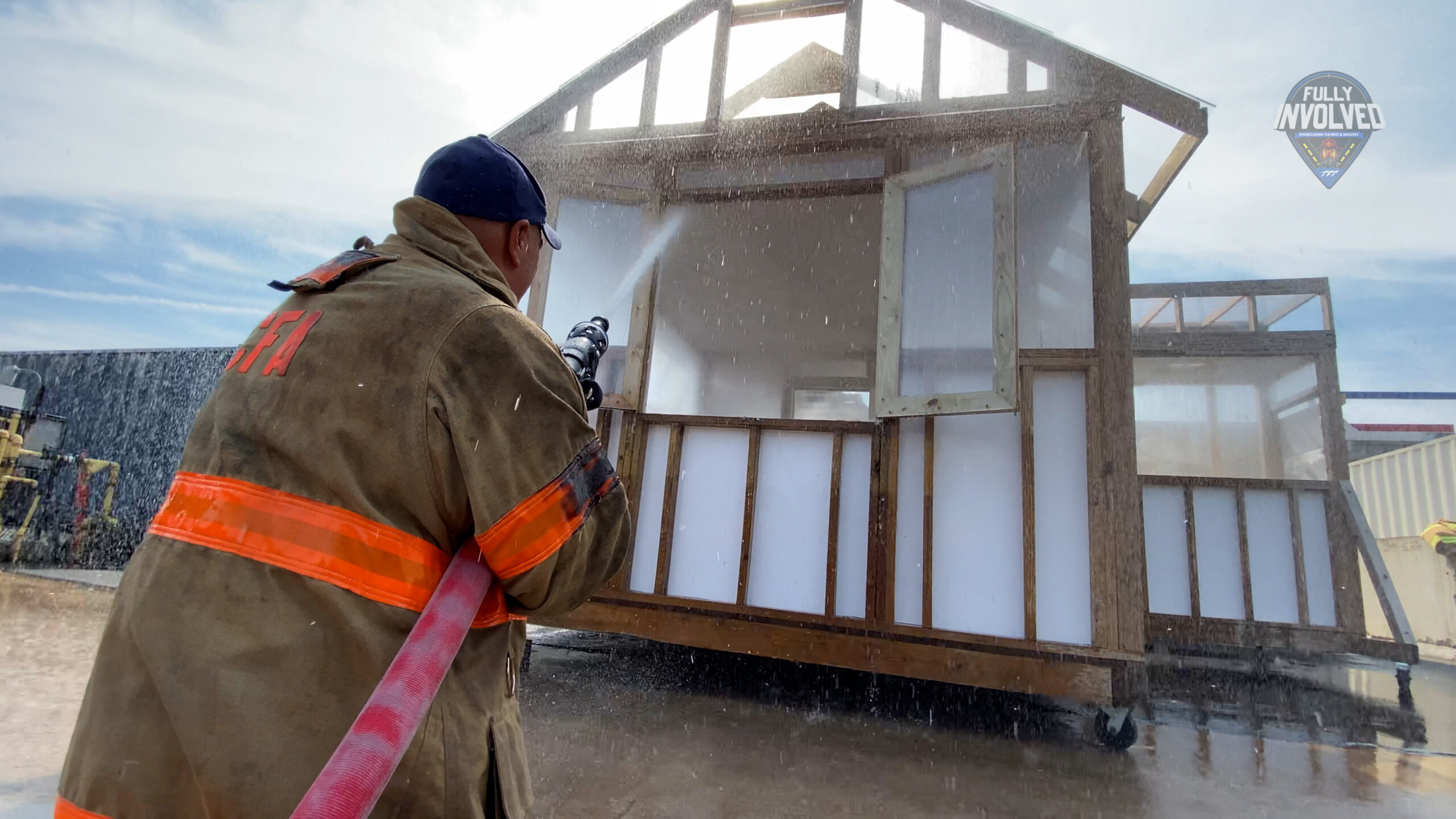
You see a lot of Cape Cod style homes. They’re compact. They’re symmetrical, and they’ve got a steep roof. There’s a fire in the back bedroom and the engine responding has limited manpower
00:02:14:02 – 00:02:22:05
Unknown
Getting to the door if the objective is going to be a first floor objective. We obviously have, this objective, we’re going to have fire on the first floor towards the rear of the building.
00:02:22:05 – 00:02:26:05
Unknown
For equipment, the crew chooses an inch and three quarter line
00:02:26:05 – 00:02:30:01
Unknown
and a smoothbore nozzle with a 7/8 inch tip.
00:02:30:15 – 00:02:37:01
Unknown
Phase one pre staging. Before you make the push inside, what steps can you take to be more successful?
00:02:37:01 – 00:02:48:03
Unknown
Know what the job is through your brief through your size up through your brief size up. Obviously your 360 and getting everything that encompasses with that. But understand what you’re doing for the job how much you need to be off.
00:02:48:03 – 00:03:00:23
Unknown
Residential dwellings, there’s going to be schools of thought on where do I charge? Why do I charge? My thought again is just my thought on it is a residential dwelling charge on the exterior of the building. Makes you have positive water before you move, and a lot of things can go wrong.
00:03:00:25 – 00:03:04:08
Unknown
Small compartments, lightweight construction. We all know what goes along with that.
00:03:04:08 – 00:03:15:01
Unknown
All right. You’ll notice here we have knobs on coupling. Here we have our first 50ft for any residential first floor dwelling. Most of the time that 50ft are going to be enough to get us at least moving and flowing.
00:03:15:03 – 00:03:20:22
Unknown
Reduced manpower situations, low staffing, we all don’t have the luxury of having 3 or 4 people on an engine, even though we
00:03:20:22 – 00:03:29:08
Unknown
do preach it when we teach recruits. Hey, we got three people nozzle backup, control. What’s the reality? Your fire department. Can you really. Can you really produce that? I work on a fire department.
00:03:29:11 – 00:03:45:09
Unknown
We do have a lot of staffing, so, even we can’t produce that sometimes. So we have to be smart about what we’re going to do with our nozzle. Work with our hose, work with our pre staging. So if we pre stage and we set off for success, there’s a better chance that we can get water to where it needs to be a lot quicker control situation and allow other jobs to be done.
00:03:45:09 – 00:03:52:17
Unknown
With getting into holding the nozzle. So again, we have control over that. And we have our crews. Right. We teach you how to open our bro.
00:03:52:18 – 00:04:13:21
Unknown
What’s more, what’s beneficial. That’s going to be varied depending on where you go, where you end up and where you work. It’s going to be depending on if you have a nozzle on a backup, who your backup is is the backup, the officers, your officer doing other things when they arrive. So you have to figure out now how the nozzle person can go ahead and operate this engine three core.
00:04:13:23 – 00:04:26:29
Unknown
Okay. That’s the key. And I know some will say, oh, it’s not a one person line. I’m not disagreeing with you. It’s not a one person line. But there are times that you’re going to have to get water on to the fire with one person, and we’re going to go over a little bit techniques and how to do that.
00:04:26:29 – 00:04:28:22
Unknown
Everybody’s a little bit different.
00:04:28:22 – 00:04:32:01
Unknown
And then we have a
00:04:32:01 – 00:04:34:27
Unknown
will go into our stream. Check. Why is the stream so important?
00:04:34:27 – 00:04:45:07
Unknown
An ineffective stream check, obviously. And we’ll see is an opening and a quick close. What are we really doing there? Right. You’re not doing anything. You’re not bleeding the air. Just waste your time. But what are we looking to do with a stream check?
00:04:45:14 – 00:04:57:23
Unknown
We’re looking to obviously bleed here. We’re looking to make sure we have workable stream. You open that line, especially here, operating with the smoothbore 7/8 tip. You’re going to know right away if you have a workable stream. If you don’t have enough water, you’re going to see it right away. You’re going to have a kink in the line.
00:04:57:23 – 00:05:15:11
Unknown
You’re going to have a crappy stream. Okay. Using a fog nozzle. Okay. A little bit more important because it is going to adjust a little bit to those pressures. So again, opening it, giving the pump operator chances. So pressure is the key to this right. Static water. Static water they can set in preset all they want. But if we have a series of kinks we don’t workable stream.
00:05:15:11 – 00:05:28:26
Unknown
We’re never going to know. She got a flow. So what we say here at the fire Academy is seven to 10s to stream check, right? In reality, if you do it for five, I’m good with it. But I have to get you to at least open that line, get the air out, give the pump operator a chance to get pressure.
00:05:28:28 – 00:05:46:03
Unknown
Another thing usually comes up where do I do it? How do I check my stream? Well, again, look at what you have. What’s what’s the scenario? What’s the job? Right? If I have a first floor fire here and it’s clearly indicated as I open the store, there’s fire active fire on that floor. Open your stream. Live stream. Check into the building.
00:05:46:06 – 00:05:59:23
Unknown
Okay. Too many times on a tight stoop. Or walking up to a building or in a tight stairwell. Charge and floor below. People are with the hose line. They’re like, oh, I got to turn around, do my stream, check, watch all. Brother, let me move the line. Okay, there’s fire on the floor. Guess what that little water you’re going to put into it.
00:05:59:23 – 00:06:15:10
Unknown
It’s not going to really do anything. Okay? You’re going multistory. You’re going to the third floor. Floor below. No fire on that floor. All right, get off to the side and check your stream. But let’s just, you know, be a little reality with this, right? You know, do what’s do what’s right, but without slowing us down. All right.
00:06:15:15 – 00:06:28:06
Unknown
So we’re gonna open our stream real quick. We’ll do our stream check. Everybody’s a little bit different. And then we have a look. All right? Yeah. Good. Yeah. Good. Break over the stream.
00:06:28:06 – 00:06:35:20
Unknown
We’ll get to the action in the hallway. Advance in just a bit first, though. Question three. Time to open the front door.
00:06:35:20 – 00:06:37:08
Unknown
And analyze what you see.
00:06:37:08 – 00:06:41:01
Unknown
opening this door a couple things. And again I’ll tell you, you know,
00:06:41:01 – 00:06:52:23
Unknown
a lot of things that I’m going to tell you are my way through experience. It’s not the way. So please don’t take it as such. It’s just my opinion. You take the door. We have reporter fire in the back of a residential dwelling.
00:06:52:25 – 00:07:17:09
Unknown
You open this door. Right? We’re creating a full path depending on the size of the box, how big the compartment is, what’s going on? It’s going to show us, you know, the turbulent smoke or however, we’re going to. We’re going to view that. So we open the door. If I can see that neutral plane defined right. Think about think about a building you go to if your bread and butter is, is, you know, keeps you know, you’re going to grandma’s keep everybody knows well layout of a cake.
00:07:17:11 – 00:07:31:09
Unknown
You pop a door and keep it fire on the first floor right away. It’s going to indicate to you as far as on the first floor, why small box? Okay. So you’re going to pop that door. You’re going to you’re going to get that intake. You’re going to get that exhaust. You’re going to create that flow path. You’re going to start to create that flow path.
00:07:31:14 – 00:07:48:15
Unknown
And if you weren’t sure where the fire was and then starting to indicate that neutral plane, whether if the box is small, that neutral plane might be a little bit lower. If it’s a deep seated or bigger area, it might be a little bit higher. But if you can see that the fine line of a neutral plane, there’s a good chance the fire’s on that floor.
00:07:48:17 – 00:08:03:08
Unknown
Okay, that’s a life saver. Okay. Especially in an industry where fires are not what they used to be as far as frequency. So for for younger nozzle people in the fire service, they might not get the opportunity to go to some fires that some of you may have gone to over the years.
00:08:03:17 – 00:08:05:24
Unknown
Question four. How can you read the
00:08:05:24 – 00:08:07:13
Unknown
fire conditions better?
00:08:07:13 – 00:08:24:06
Unknown
too many times. You know, over the years you come in, you know, come in behind the nozzle crew to do a search. And the nozzle man is sitting there with the nozzle just straight against a wall, not be really being effective. So for these techniques, that’s what we’re trying to to overcome to work smarter, not harder.
00:08:24:11 – 00:08:35:00
Unknown
I hate to say it like that because you know but it’s true, right? We’re can how can we work to be effective on the fireground to be quick and efficient. That’s what we want, quick and efficient movements.
00:08:35:00 – 00:08:40:29
Unknown
what I like to do for my nozzle person to is of get down on your belly really quick and look at the layout, okay?
00:08:40:29 – 00:08:57:13
Unknown
Because if we’re so worried about getting into front steps and getting water, doing our stream check and masking up. Okay, my opinion. I like you to get water, do your stream check. You should be comfortable and confident with your 25 seconds. You’ll be able to get your mask on quick. The whole putting your mask on you know while you’re flaking hose to me just never worked.
00:08:57:16 – 00:09:15:13
Unknown
You’re fogging up your max, really not getting a chance to see what you’re looking at. So if you can get down on your belly really quick and get a layout of the building, you can get a layout of the floor. Hey, I might be able to see, you know, a hallway, a doorway. Oh, there’s a tile floor. There’s carpet that’s going to kind of give me an understanding of, all right, maybe that’s the kitchen’s there.
00:09:15:13 – 00:09:19:01
Unknown
This or I can see where kind of I’m going instead of blindly
00:09:19:01 – 00:09:23:20
Unknown
So if I can get down and look and see a layout, I know. All right, I’m going right there. There’s the hallway I’m going.
00:09:23:23 – 00:09:40:15
Unknown
And as a as a nozzle person stretching by themselves, you know, or sliding down a hallway. And we’ll show you a little bit of how to pan and move. It’s going to be a lot quicker. Okay. One thing I like to do with the check some nozzle person, people don’t care if you’re the officer or you’re coming up, or you’re the number two guy coming up on the nozzle.
00:09:40:15 – 00:10:01:21
Unknown
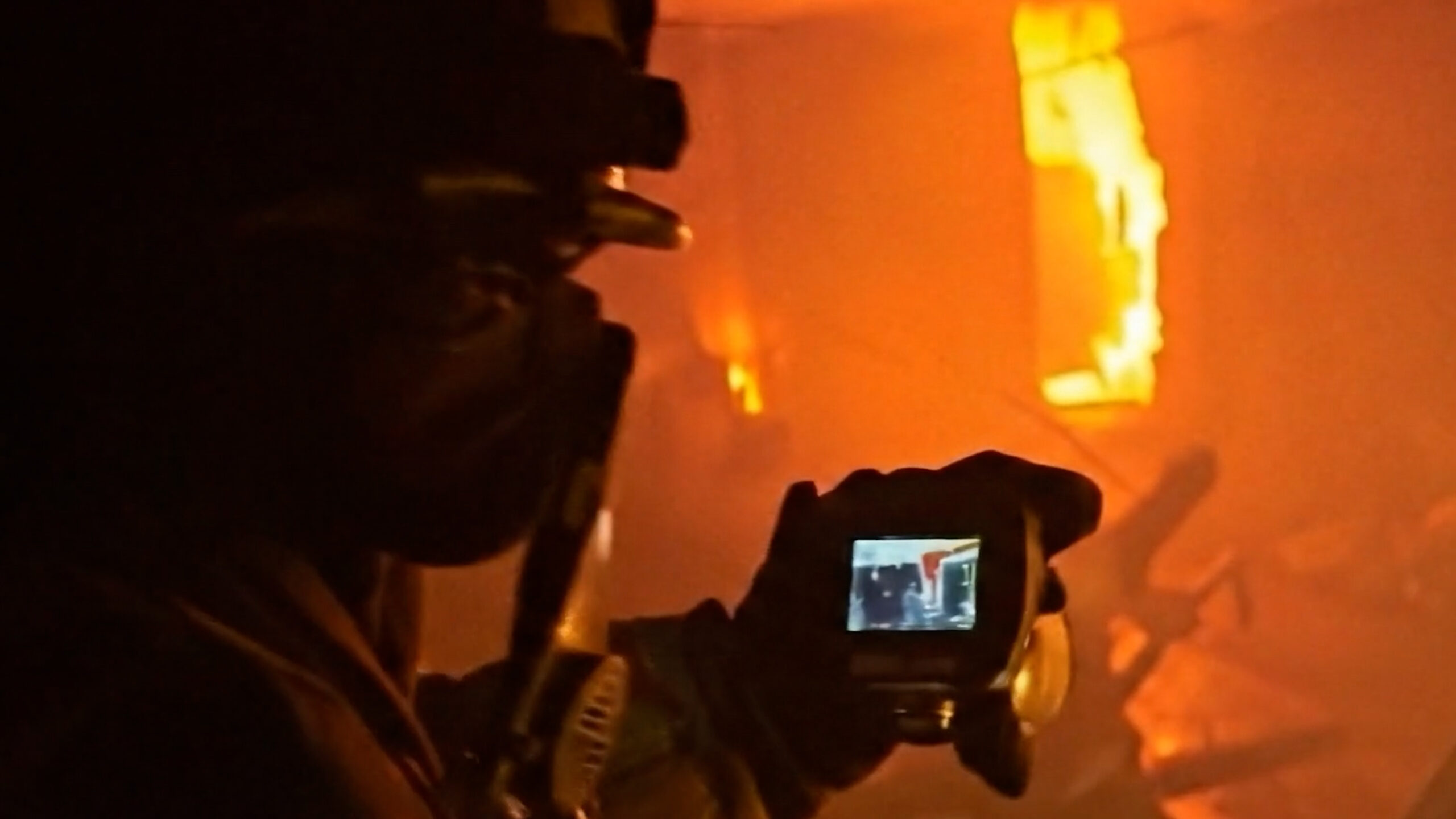
And as soon as before we go in and open up on that, put the take in front of the nozzle person, hit him on the shoulder and say, look, okay, what are we looking at? Well, to the naked eye, we’re looking at just turbulent smoke moving what in the tech we’re seeing, he comes. And if I can show you where he currents are coming from, if they’re rapping, if this is a this is a cape and there’s a, there’s a fire in a bedroom down the hallway.
00:10:01:23 – 00:10:22:01
Unknown
And I open this door and I got good smoke pushing right and getting that intake exhaust. And I’m getting good small portion. If I can hit that tip really quick and see those heat currents rapping the corner, that’s a huge advantage for the nozzle person. Because now right from here, as soon as they slide into the door, they can get that stream up, start to pull that common area.
00:10:22:01 – 00:10:35:08
Unknown
They know where to point the stream, right? If they didn’t, they just went in. But I would start, you know, working right now would be not be as effective as you want to be. So, so that’s those are kind of the teaching points that I like to do with them.
00:10:35:08 – 00:10:39:00
Unknown
So if we were we want to slide in the front.
00:10:39:03 – 00:11:01:05
Unknown
So if you slow down a little bit and you went through those motions and you check to check really quick and make some fires, communicating out of this common hallway because, you know, it’s getting into that, the flow path has been created. I like to use the simple firearm in terms of hot to cold. Some people use high pressure, low pressure, whatever you want to do but understand one thing right?
00:11:01:05 – 00:11:19:10
Unknown
In simple firefighter terms, whatever opening you create a building, it’s creating hot to cold. It’s going to find it. So if we open this door and we don’t learn the fire, eventually what’s going to happen is flow pad. It’s been created. It’s been moved down in March out of this hot, cold. Okay. That’s how I like to look at it.
00:11:19:10 – 00:11:20:18
Unknown
Very, very simple terms.
00:11:20:18 – 00:11:26:18
Unknown
Before we dive into nozzle techniques. Let’s get a bonus tip on the smoothbore versus fog debate.
00:11:26:18 – 00:11:28:21
Unknown
There’s a lot of departments that are struggling,
00:11:28:21 – 00:11:40:22
Unknown
with an internal argument between going smooth border, staying fog and, this nozzle checks a lot of boxes. It gives you a disperse pattern. It’s low operating pressure, meaning low reaction force. It’s high
00:11:40:22 – 00:11:43:06
Unknown
volume. It’s a solid border stream.
00:11:43:09 – 00:11:51:12
Unknown
The fins can mechanically agitate foam. So if you’re using more of a Class-A foam, that’s going to be a friendly option for you versus trying to do a foam tube.
00:11:51:12 – 00:11:54:05
Unknown
So you’ve got a few things on the vortex that are unique.
00:11:54:05 – 00:12:01:23
Unknown
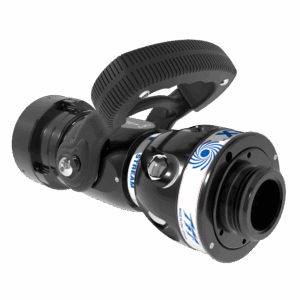
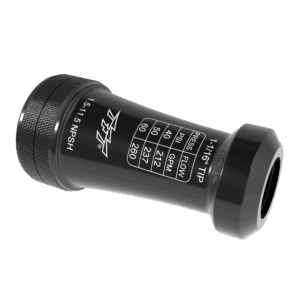
Do you want to learn more about the vortex nozzle or any other of our smooth bore suite? Check out tft.com/shop.
00:12:02:07 – 00:12:05:11
Unknown
Back in Connecticut, it’s time to make the push inside.
00:12:05:11 – 00:12:09:01
Unknown
Question five what nozzle technique does Pete recommend?
00:12:09:01 – 00:12:19:20
Unknown
So if we went into I just want you to open the line and I want you to do just floor to ceiling and whip it around pretty fast. Okay.
00:12:19:22 – 00:12:45:05
Unknown
And I want you to look where the water really got from this. Some water. All right. What we’re doing here is go where we want. Structure that, fire that water was not in the hallway. For example. Okay, so the fire. So what I did is I started to hit a little bit up top, but am I really doing anything to control that or cool that hallway?
00:12:45:08 – 00:13:01:02
Unknown
All right. So the bedroom was very close to that hall. And now we might even start seeing fire wrapping around that corner. So if I just to open up a little bit from here, from a position of advantage. Right. I just get that I go up and walk through the block, I walk through the block and I go here.
00:13:01:02 – 00:13:10:22
Unknown
If I follow up along the block right, I go back and forth a little bit. I came right looking at where the water
00:13:10:22 – 00:13:14:02
Unknown
got.
00:13:14:04 – 00:13:18:26
Unknown
All over.
00:13:19:00 – 00:13:40:14
Unknown
Then there was a water gun going over. Right. So for years, years we’ve taught hoses was like that going ceiling wall four four, four four, four. Move right to me to recruit competency skill. So now I’m not telling you that you see you’re moving in an open area. It’s fully evolved. You got a good room with fire going and you got to come down.
00:13:40:14 – 00:13:52:29
Unknown
You got to perform. You got to start to cool it a little bit. I’m a nozzle person that always advanced for my knees. I never did a leg up. I just felt more stable on the ground. So I’m low and I’m advancing from my knees. So I had to sweep the floor time of time. But think about it.
00:13:52:29 – 00:14:09:14
Unknown
You’re going down a hole. It was fast on the floor. It’s coming out of a back bedroom is rolling out into the hallway. We’re witnessing fire gases and rolling in our body. So if we’re not getting an effective stream to cool that common area, I come in now as a rescue company or truck company. Hey, bro, knock that down real quick so I can get volume.
00:14:09:14 – 00:14:19:29
Unknown
Get to the bedroom. I need you to get that stream down the hallway really quick. Slow down that common hallway so I can talk into another room instead of you sitting there like this, working the whole hallway.
00:14:19:29 – 00:14:25:11
Unknown
It’s not efficient. It’s not quick. Make sense? All right, so let’s slide in a little bit.
00:14:25:11 – 00:14:31:17
Unknown
Finally, phase six what can I do to control the hallway and put out the fire?
00:14:32:16 – 00:14:46:27
Unknown
Fire against communicating either out of this room initially, or that far of the room. We want to look at where the water is going in the hallway. Right. How it’s effectively cooling the hallway. How it’s effectively going to kick that fire and reset it back into that room till we can get to it, for sure.
00:14:47:02 – 00:15:04:03
Unknown
So if we look at this and open up, I want you to look at the big whip pan. Yep. Who’s doing the what? All right. So just as you can see, a little bit of water. But again it’s, it’s coming out of left or or some all of this, all that goes right now is back in, is it?
00:15:04:06 – 00:15:27:13
Unknown
It’s moving water for sure. But now again, if I, if I just put myself against the wall here right. And I want in that creatures in our room is that if I just do that. Look at the water. Know where it’s gone. Right. I dropped down a little bit. I come back up. I go to look at my the plastic.
00:15:27:16 – 00:15:50:28
Unknown
Right. I’m falling apart. Glass does not hold, right. No need to sweep the flooring up as far as I can get it out. Going here. So again, by the blocking, the blocking off the ceiling, coming across, anything that I put a significant hit on that fire. So now at this point the $80 is halfway. He’s a single nozzle person.
00:15:50:28 – 00:16:13:05
Unknown
At this time. My backup person might be three station hose to the job getting it in here, right? So if we just look at this. A little bit more than point from three stays in the room. As I’m doing that, he’s going to slide down the hallway. We’ve been trained up against the wall. Use the wall as an anchor form.
00:16:13:07 – 00:16:22:21
Unknown
So you’re going to slide down. So you saw him stop right there. Open up hard. All right. So now we’ll
00:16:22:21 – 00:16:26:07
Unknown
continue with this. He’s on the roof.
00:16:27:28 – 00:17:05:19
Unknown
That was. Going on. The red right there. More of a paint. We’re moving. Open up. Farther up that easily. That room is up with minimal effort. Right? So often when we wanted to be, we talk about, you know, all the patterns. Right? And if you should, if you like. Oh, ziti. Do whatever you want to do. Okay. This is only to talk about the efficiency of getting
00:17:05:19 – 00:17:07:06
Unknown
water where it needs to be.
00:17:07:08 – 00:17:25:22
Unknown
You could see the difference okay. You can see what the water is doing. And if you don’t like the term water mapping, some people get very offended by water mapping. Oh, you’re you know, we don’t want to say water mapping. Okay. Call water. We want get water where it needs to be. We’re distributing water to suppress to cool the common hallway, to move in and knock the fire off.
00:17:26:00 – 00:17:29:13
Unknown
We actually from the hallway reset that fire back into this area.
00:17:29:13 – 00:17:42:29
Unknown
Okay? We slowed it down a little bit. We kicked it back in as a single person nozzle, and I know I’m going to get the argument. Well, this shouldn’t be a one person line. I get it. But decide what department where you work and how. What’s the reality of it, right?
00:17:42:29 – 00:18:01:16
Unknown
We’re teaching. We’re talking about experience to reality teaching, not giving you what you want to hear from either the representative or the book. Right. Okay. So so to understand what do I have to do to be effective in a residential house fire to me, through experiences has worked very well. Control the area. Now we have off bedrooms here.
00:18:01:18 – 00:18:18:23
Unknown
Okay. Just because the fire was down here, we have off bedrooms. If we don’t control that flow path of that common area, I come along, I’m going to do an unprotected search and we’re hot and you and get in front of you if we’re just letting that go until we get to this point where the line, we may lose the hallway, or it’s might start to layer off and it might start to roll of that.
00:18:18:25 – 00:18:34:22
Unknown
So you control that area for search crews to get in and out for you do what they have to do. And then by working in here, getting the water to do what it wanted, what was the effort like done that? Was it much? Yeah. Yeah I didn’t take much. But so say you right here. You’re 25 seconds. You’re now you’re coming down the hallway and you’re moving and you’re moving.
00:18:34:22 – 00:18:49:04
Unknown
What happens when we’re really, really with that line. What happens. Slides it right. Slides in. And you got a oh I’m tired I got to reset. Right. What are you going to hear from the guys in the firehouse. Oh I had too much meatloaf tonight. Oh my gosh. You need so much right. And I’m exhausted. And I’m going down the hallway and I’m working.
00:18:49:04 – 00:19:05:16
Unknown
I’m working. If you can pen him yourself, keep that line up. And there’s always going to be. Well, how much line is too much okay. We’ve seen it from where we don’t want it creeping here because you’re not getting the efficiency of the nozzle. You’re not getting the movement you may need because you’re tight like a little dinosaur.
00:19:05:16 – 00:19:24:03
Unknown
And on tight sometimes it’s too far. Some people, in my opinion, only will go too far, and it looks like a telephone pole out front. And it’s like this. And they’re whipping. Now, listen, you could do that with low pressure usually. But if this line is being pumped properly, you got that line way out. You’re not experienced nozzle person.
00:19:24:06 – 00:19:41:15
Unknown
You will get a little bit of nozzle whipped from it okay okay. And that’s your call up. You can pull it off. And once you have that, what I like to do is make sure it’s an arm’s length out. If I can touch the nozzle, that’s usually a good position. If I could touch the tip like this before I’m ready to open up, I usually have a good amount of line up for me to work.
00:19:41:18 – 00:19:56:05
Unknown
And you saw how easy it was, right? A couple movements, right? You can use whatever turns I like to you to paint the whole way. I like to keep it straight for deflection. You know, every now and again I might come down if if I thought I was moving into an area that was on fire. Again, to me it’s about
00:19:56:05 – 00:19:57:23
Unknown
working smarter and more efficient.
00:19:57:25 – 00:20:13:21
Unknown
So like getting that water where we needed it to be. We’ve controlled the initial flow path in the residential. We control the common hallway, which we had to get down the search. We got to the fire. You know, it’s when he came into the fire room, he went a little bit to a zero or circle pattern because that’s what you have to do.
00:20:13:21 – 00:20:33:24
Unknown
You got to put everything out, right. We’re not just talking about remote water application call today, but remote water application until you get to the fire. And then it should be business as usual. We got the water there quickly and efficiently from a position of advantage. We slowed down the process. I think it works very well. Good.
00:20:33:24 – 00:20:37:24
Unknown
And a special bonus for you. The after party with Pete Morano.
00:20:37:24 – 00:20:53:13
Unknown
In just in my opinion, with dealing with nozzle movement. And it was probably me being either naive to it years ago or this was just the way I was taught and just the way I was going to teach it to you, and it was as fast as you can whip the line around and as hard as you could move.
00:20:53:15 – 00:21:21:17
Unknown
Right. And again, it’s great for competency skill sets. It really is. But I was fine. The effectiveness on the Fireground wasn’t there because we were losing too much of how I’m exhausted. All the nozzles creeping in. I can’t hold it. I can’t do it. And we weren’t getting the water to wear it is. And you can see very easily here that by holding it tight, pinning yourself, making sure you have a good hold on what you’re against to get you really to clamp down on that line, keep that nozzle in that arm’s length and you’ll slow movements.
00:21:21:24 – 00:21:36:28
Unknown
You’re putting water. You’re putting gallons where it needs to be. Instead of exhausting yourself. And again, a lot of fires go out that way. Yeah I’m not going to say it’s not, but I’m just thinking of ways that we could tweak it to be a little bit smarter while we’re moving hose lines. Yeah, and that was my approach.
00:21:37:02 – 00:21:56:08
Unknown
Unless it’s not something I came up with. It’s something I learned, that was taught to me through through looking through the you all studies and looking through really what water mapping meant and then just trying to make it practical for, for staffing situations in the different communities. You’re a that I work in or a teacher. And that’s, that’s pretty much my take on that.
00:21:56:09 – 00:22:16:27
Unknown
Yeah, yeah. So I mean, the interesting part for me is the way this fire’s rolling and I’ve got to work like mad to put it out. And so this idea of the nozzle, you know, encompassing the entire floor to ceiling and wall, I understand that reaction, but it’s like, slow down, take a breath. And you talked about, you know, baking off the wall, baking off a door frame.
00:22:17:03 – 00:22:30:26
Unknown
Sweep the floor on occasion. But it’s like, yeah, get the water on fire. Yeah. Like you’re going down a hallway and we’re like, we’re put all this water on the floor. There’s no fire on the floor, right? Nothing is on fire in that area. But the fire gas is over your head. Right. And we’re wasting our time with that.
00:22:30:29 – 00:22:50:04
Unknown
I so isolate, kick it back. Control. Same principle as as transitional attack. And I know some people, they get very offended when you say that we’re transitioning. Attack! Oh, you’re ruining the fire service. No, I’m not telling you to put water through a window and stay outside for ten minutes. No, but I’m telling you, as a nozzle person walking up to something, control it quick, right.
00:22:50:04 – 00:23:06:20
Unknown
If you have to slow it down so you can get a good ongoing size. So you know now as you go interior where you need to go, well, that might be the reality for some. Okay. Not everybody has has two engine companies on one hand. Like if we did we could master any building in one matter. But that’s not the reality.
00:23:06:20 – 00:23:20:21
Unknown
Even in busy departments, it’s not reality because you might just have two people on and I so to really come in and it’s not about it’s not about taking a beating. It’s going on all the way. Right. We throw on our Superman suits and we can go in and take a real beat. What are we what are we accomplishing?
00:23:20:21 – 00:23:45:11
Unknown
It’s not quick and efficient, right? If I can come in and there’s an untenable position, our room is well off. Right? Survivability, profile, whatever buzzwords you want to use to talk about that. If there’s nothing going on, that room is fully off and it’s out to windows. Just I get to the porch and I quickly adjust the flat off the off the doorways or off the top of the window just to slow that down, darken it down, or rake across the room real quick.
00:23:45:13 – 00:24:04:02
Unknown
Then get over here, get in position so I can do my business from here, and then move on. To me, that’s being smarter, right? It’s being smarter. We’re slowing down the situation. Can we talk a little bit before about on protect searches? Your department’s going to unprotected search all that’s going on is first floor. There’s crews passing you to get to the second floor immediately.
00:24:04:05 – 00:24:17:22
Unknown
Right. Immediately, almost before you’re ready to do your stream check. Right. Because if you’re moving, you’re quick. You’re off a rescue of a truck company. You don’t have a hose line. You can move pretty quick, right, to get in. You’re already in the stairwell. You’re going to be off, right? If we’re not, I don’t want to put water.
00:24:17:22 – 00:24:30:25
Unknown
I don’t want to slow this down. I want to go inside and push the fire out. What’s that doing to interior conditions in the common area, common hallway. And of course, the stairwells. Right. So again, working smarter.
00:24:30:25 – 00:24:41:03
Unknown
the right nozzle for your next residential fire. Head to Ft.com Slash shop and use the filter tools to get just the right one for you and your situation.
When you hear “low staffing,” do you think slower, riskier operations — or smarter, tighter tactics?
Tackling a house fire with one firefighter on the nozzle can be exhausting.
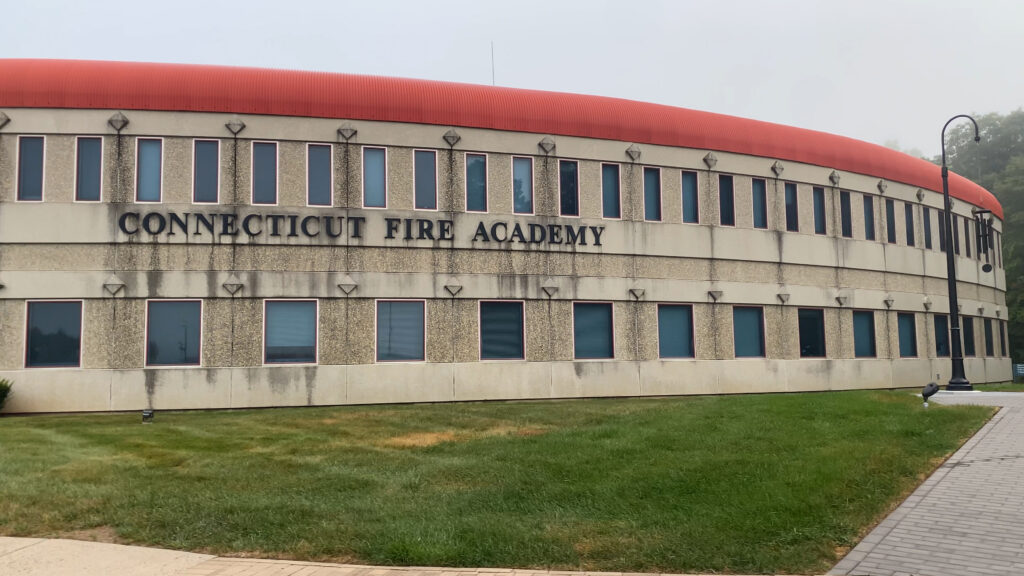
At the Connecticut Fire Academy, they teach skills to win that situation. Veteran instructor Pete Morotto brings decades of experience to the nozzle, teaching firefighters how to stretch further with less, while still being aggressive and effective on the fireground.
“You’re putting gallons where it needs to be — instead of exhausting yourself,” Morotto says. “We’re not getting the water to where it is. And you can see very easily here — by holding it tight, pinning yourself, making sure you have a good hold… you’re putting water where it needs to be.”
This episode of Fully Involved heads to New England, where Pete Morotto walks through six critical phases for fighting residential fires with minimal staffing — including how to read the layout, stage with purpose, and use your stream to cool, control, and push effectively.
Pete Morotto challenges a few common assumptions in this episode:
Why Morotto Says This Matters
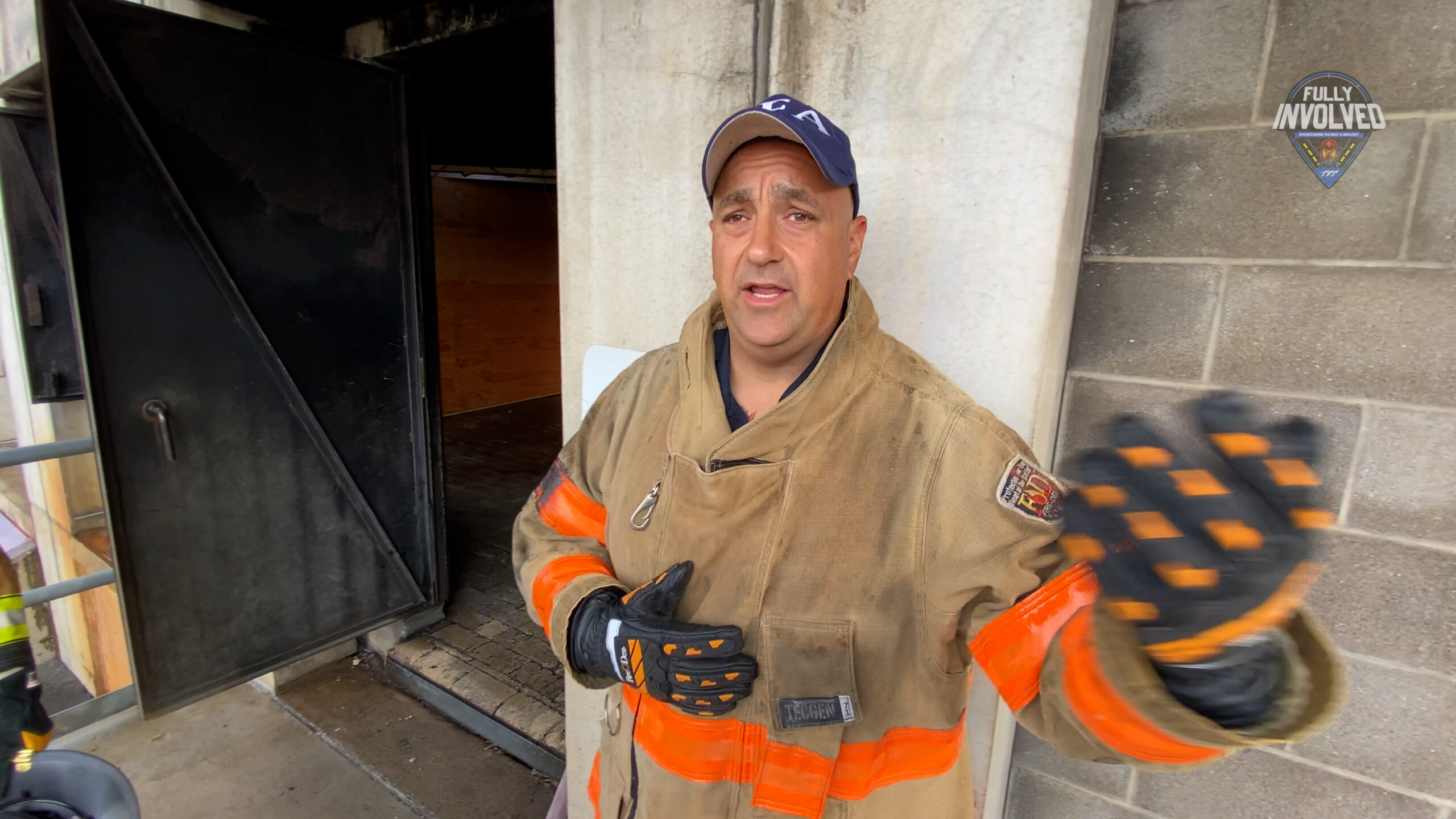
Morotto teaches six phases for operating effectively on residential fires with minimal staffing. Here’s how he breaks it down:
Exterior charge preferred: Morotto recommends charging the line outside so firefighters have water before entry.
Use 50 feet initially for most first-floor homes: Enough hose to make entry without overcomplicating movement.
Bleed air, confirm pressure, look for a solid stream: Morotto says even 5 seconds of stream check can prevent big problems.
Smoothbore or fog setup must be intentional: He encourages setting the nozzle appropriately for your planned tactic.
Pause and observe the neutral plane, smoke, and layout: Morotto trains firefighters to look for early fire indicators before committing inside.
Use visible floor types (carpet, tile) to orient yourself.
Get low to see farther: Morotto’s tip is to get on your belly before entry—this reveals more about layout, hazards, and conditions.
Observe fire gases and thermal layering: Helps decide where and how to direct water.
Pete Morotto doesn’t teach nozzle work as a show of force — he teaches it as a method of targeted suppression. His core message: stop whipping the nozzle. Instead, use intentional sweeps to “map” water onto key surfaces where heat lives and fire spreads.
“You’re putting gallons where they need to be instead of exhausting yourself.”
Stay low and anchor your body — control comes from the knees and the hips, not the arms.
Use short, stable arcs to apply water to ceiling-wall junctions, upper walls, and overhead gas layers.
Avoid “power swings” or wide, repetitive motions that tire you out and deliver inconsistent results.
Think of it as painting the hallway with water — not fighting it.
This aligns with the FSRI research: water mapping places water where it matters most, using less motion and more accuracy. It keeps firefighters effective, especially when working solo or with limited support.
Morotto emphasizes that the hallway is a tactical chokepoint — and your first big win comes by owning it.
Water mapping in the hallway helps control thermal layering and slow smoke spread.
By cooling overhead and along wall paths, crews reduce rollover risk and create workable conditions for search and suppression teams.
Once the hallway is tenable, then the nozzle firefighter can commit to the push into the fire room.
“If we don’t control that flow path of that common area… we may lose the hallway.”
This approach lets smaller crews work smarter, keeping momentum on their side while preserving safety and effectiveness.
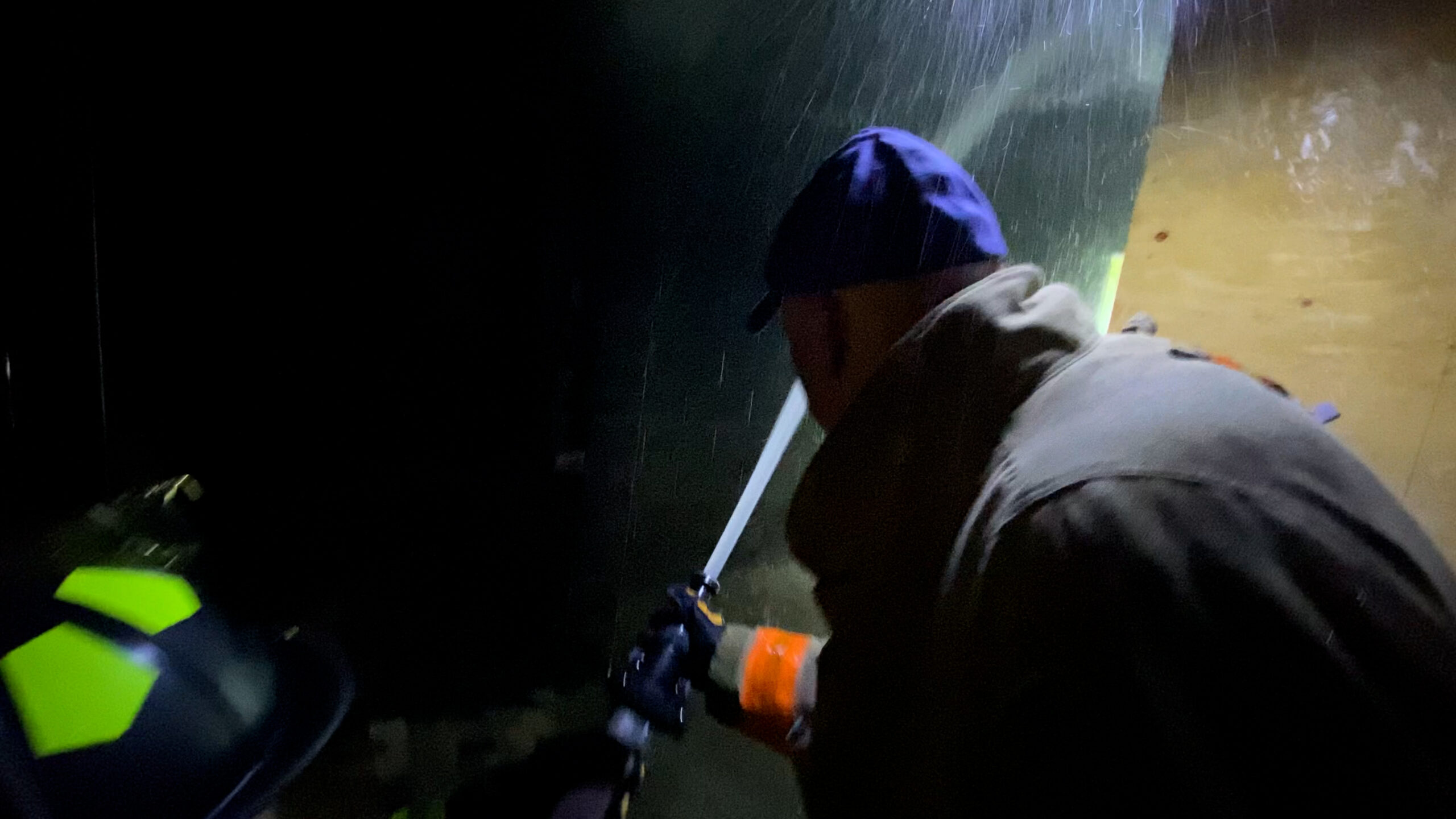
Pete Morotto’s nozzle setup is deliberate, grounded in real-world staffing realities:
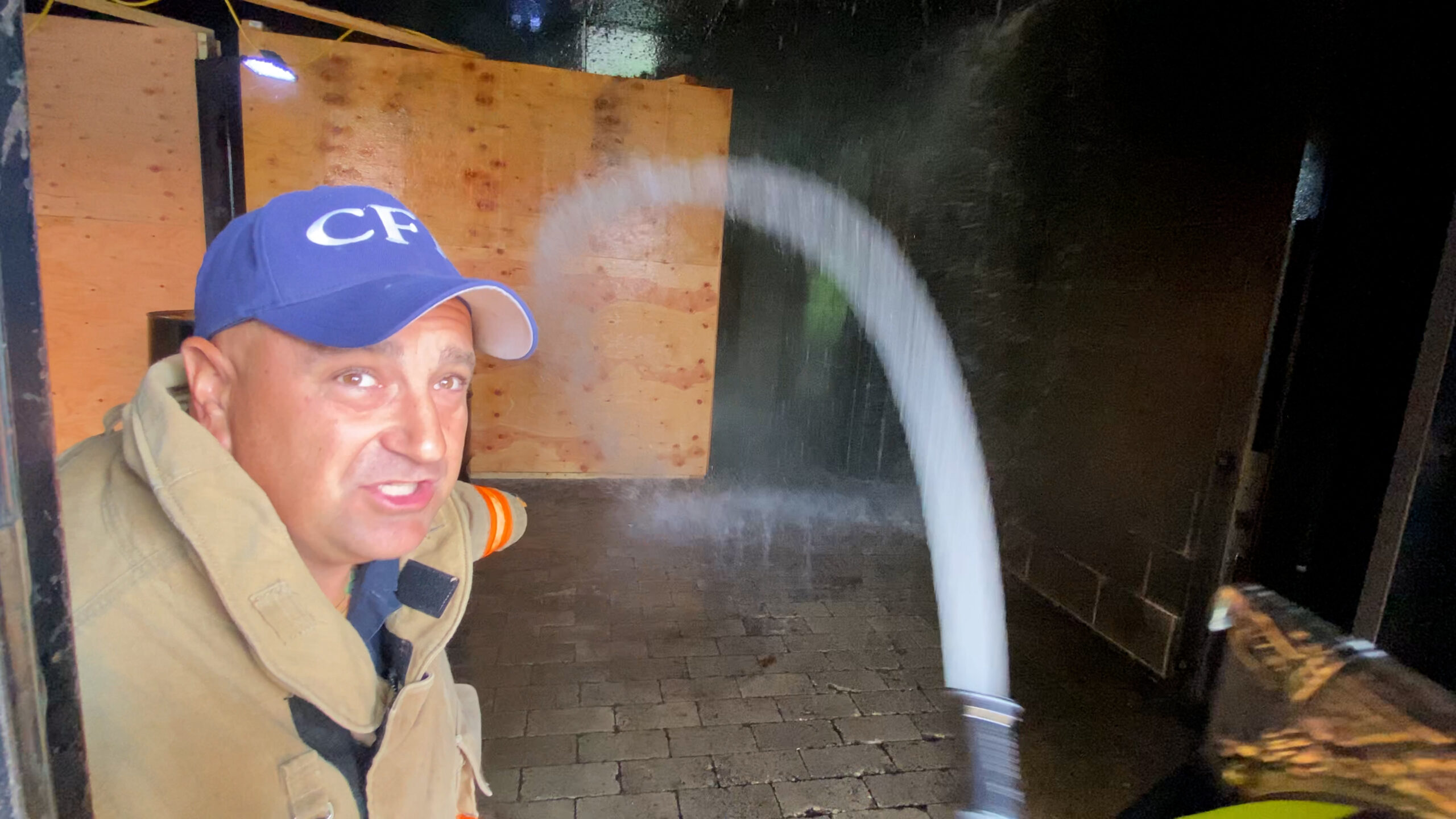
Smooth Bore Nozzle with 7/8″ Tip
Morotto prefers smooth bores because they simplify things on the fireground — fewer adjustments, fewer surprises, and more consistency in pressure and reach.
1¾″ Hose Line
Balances flow rate with mobility
Easier for single or short-staffed nozzle operators to maneuver
Standard length (50 ft) typically reaches where it needs to in first-floor homes
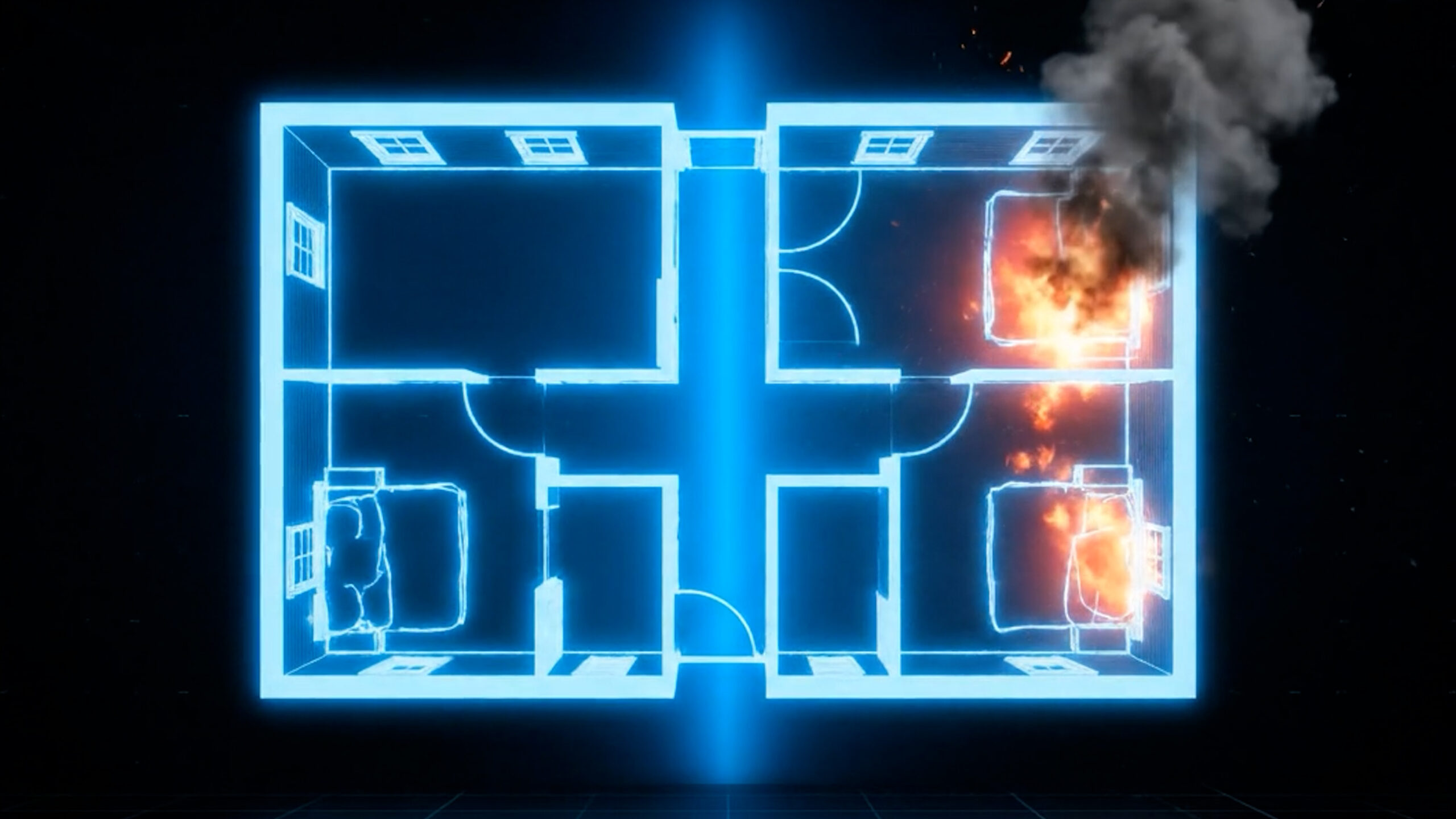
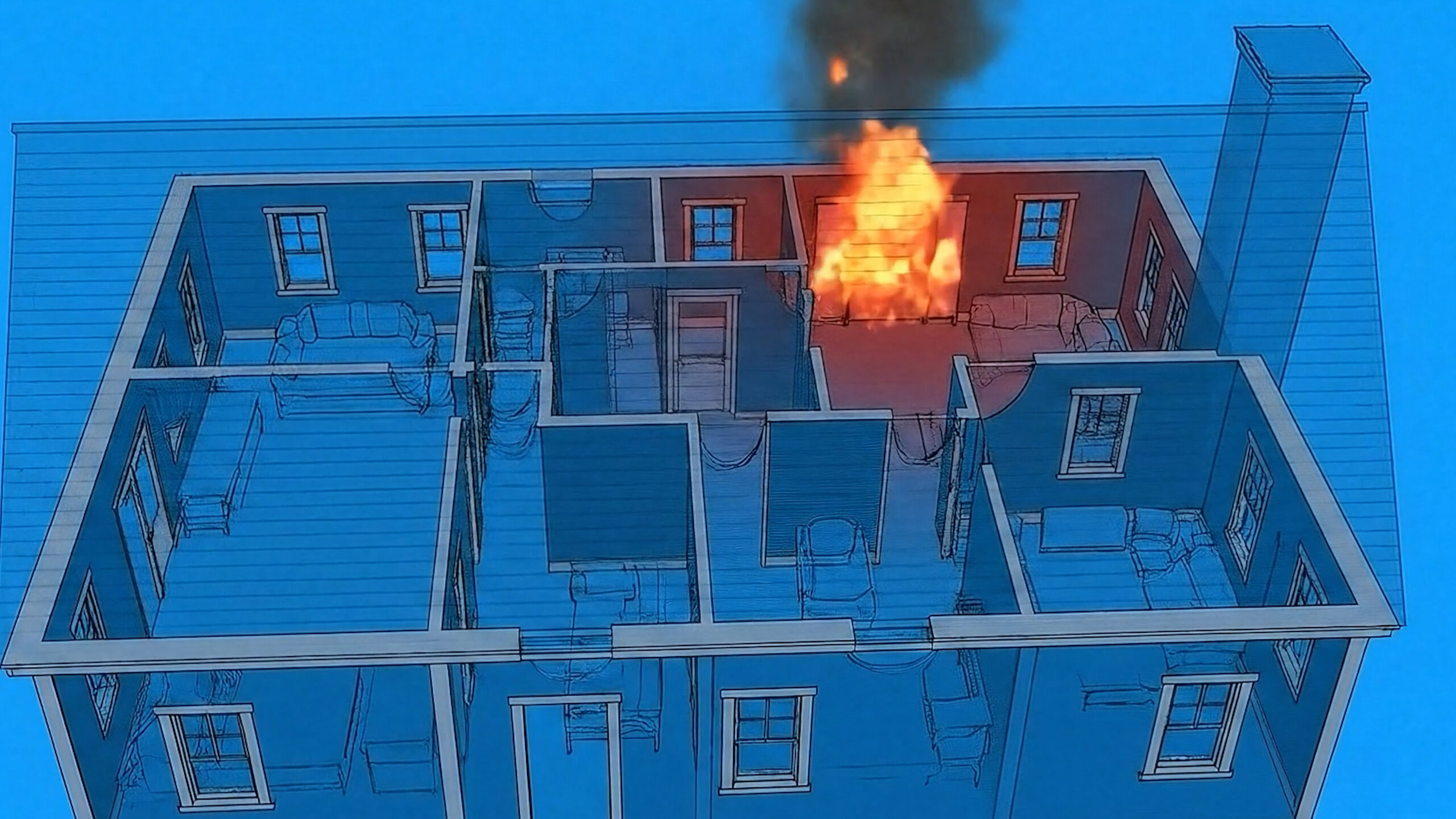
When it comes to residential fires with limited staffing, Pete Morotto teaches a smarter way to control the hallway and attack the fire: stop whipping the nozzle and start placing water with intent.
“You’re putting gallons where they need to be instead of exhausting yourself.”
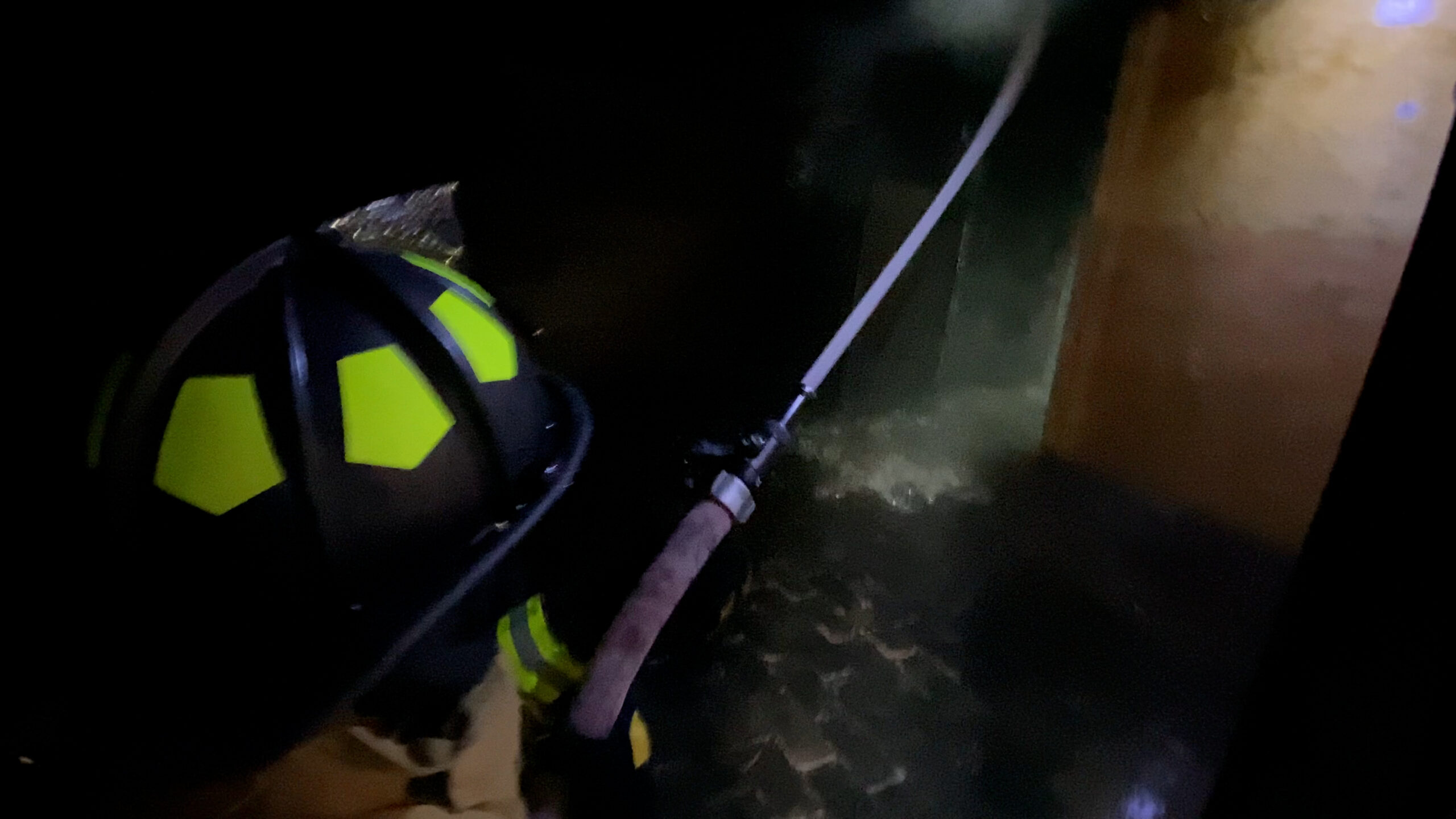
Morotto prefers measured, stable movements over wide, aggressive swings. By keeping the nozzle low, close, and steady, firefighters can “map” water where it actually cools gases, resets the fire, and supports fast hallway advancement.
Less fatigue: Controlled sweeps reduce nozzle whip and burnout.
Better stream placement: Ceiling-to-wall arcs cool overhead heat and common areas.
More effective hallway control: Water mapping helps hold back fire gases so search crews and attack teams can move in safely.
“Call it whatever you want—water mapping, painting, suppressing. Just get water where it matters.”
This tactic isn’t about slowing down—it’s about being efficient under pressure, especially when you’re operating with two people and a charged line. In Morotto’s view, that’s the real path to fast, aggressive fire control.
Start smart with pre-staging and a solid stream check.
Use the door as an information source—read before rushing in.
Know your hallway—it’s where conditions either stabilize or spiral.
Don’t waste motion—point the water where it matters.
Control gives your crew—and the victim—the best chance.
No one fights fires like your department. This is your chance to highlight your crew's aggressive tactics and unique responses.
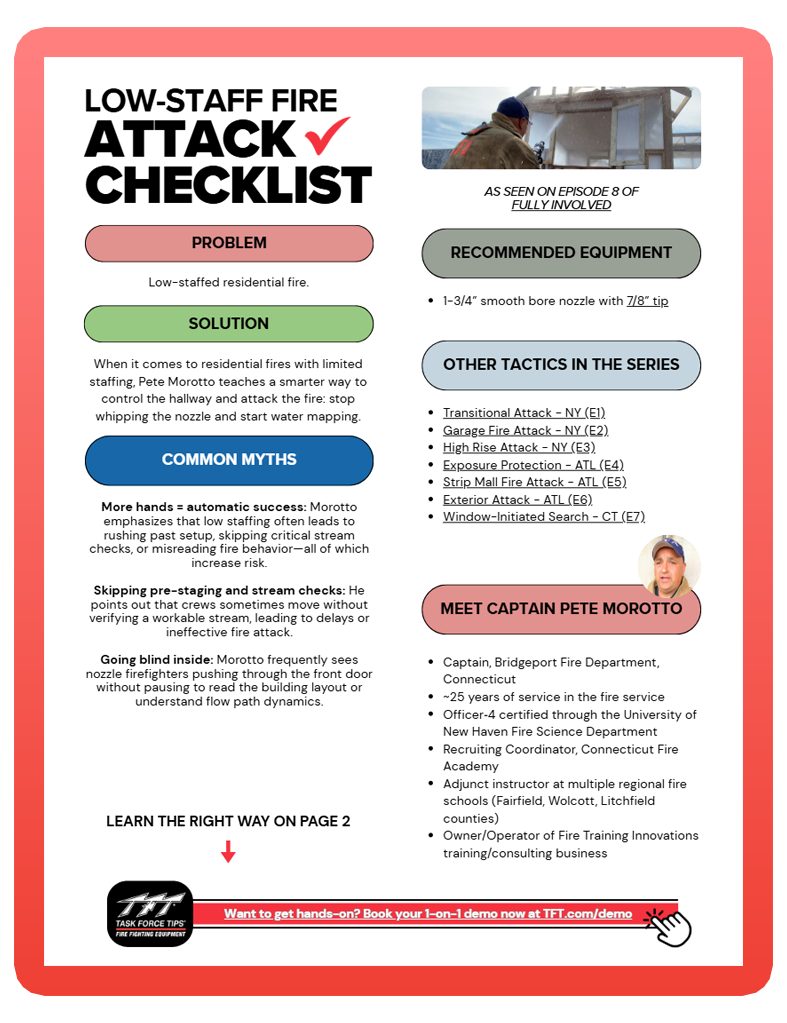
Download the step-by-step checklist your crew can use at the firehouse or in the field.
Be the first to catch new episodes. Get updates straight to your inbox and never miss insights into regional firefighting tactics.