

00:00:03:14 – 00:00:09:23
Narrator
You pull up to a fire, and before you even get off the rig, you can see flames threatening the building next door.
00:00:09:23 – 00:00:16:00
Narrator
Your brain races. How do you calculate whether to tackle that fire or prevent more buildings from catching too?
00:00:16:00 – 00:00:24:07
Narrator
In this episode of Fully Involved, you’ll learn from the department that has mastered some of the craziest exposure problems in the country.
00:00:24:10 – 00:00:25:11
Narrator
Louisville.
00:00:25:14 – 00:00:27:21
Philip Marchegion
100% of our fires in certain areas,
00:00:27:23 – 00:00:30:16
Philip Marchegion
if it’s a working fire and we pull up, it’s lapping out the windows
00:00:30:16 – 00:00:31:08
Philip Marchegion
into the neighbors.
00:00:31:09 – 00:00:32:23
Narrator
In fact, by good luck,
00:00:32:23 – 00:00:40:09
Narrator
the department recently released this incredible training video showcasing textbook examples of a Louisville exposure fire.
00:00:40:14 – 00:00:45:02
Narrator
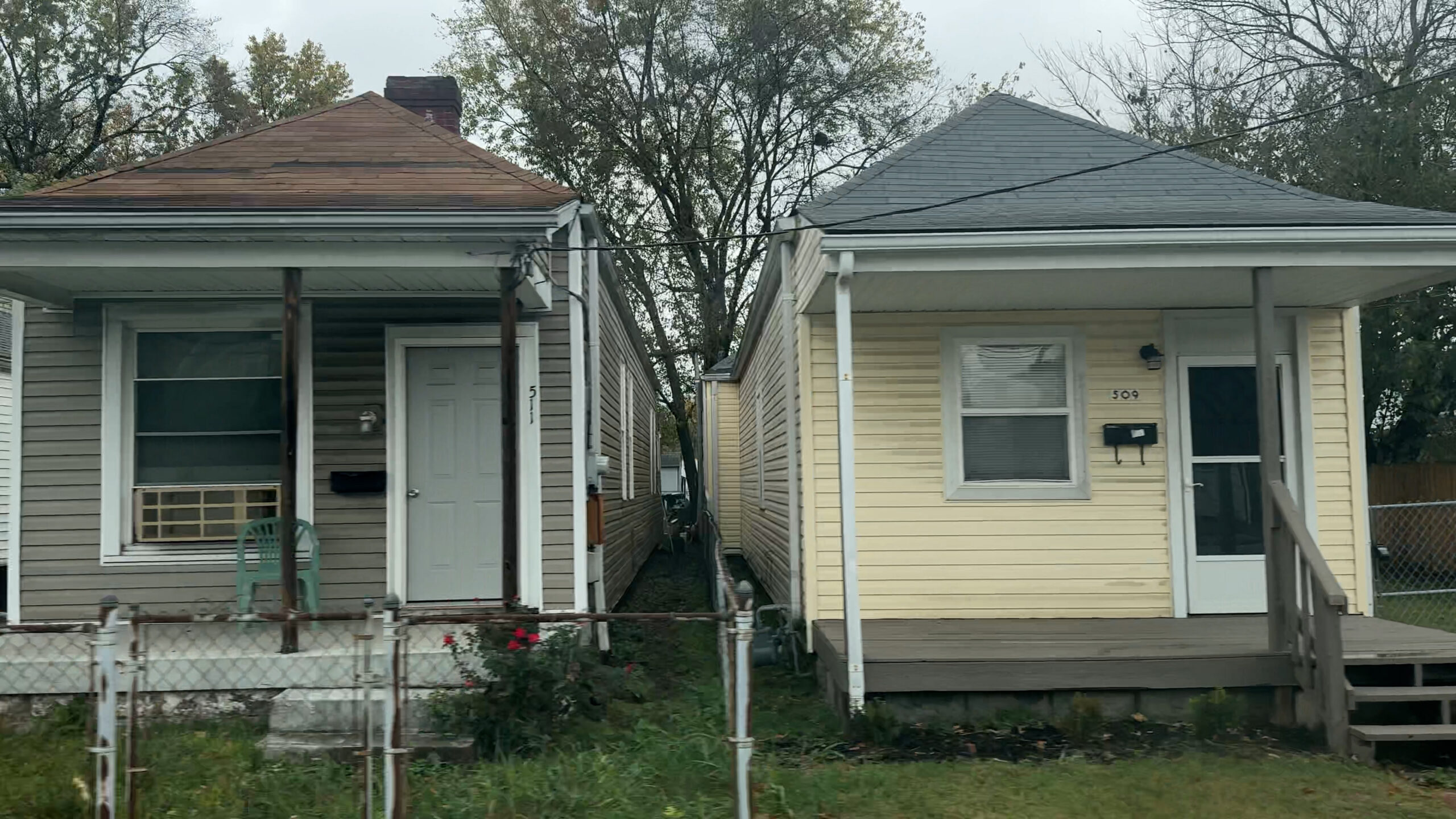
In it, you see houses so close together you can barely walk between them.
00:00:45:02 – 00:00:46:03
Philip Marchegion
We’re an older city.
00:00:46:03 – 00:00:48:06
Philip Marchegion
A lot of our houses are a foot apart from each other.
00:00:48:06 – 00:00:49:26
Philip Marchegion
You can see that as you drive down the streets.
00:00:50:01 – 00:00:55:05
Tony Downes
We have a lot of camelbacks in our area, where it’s a smaller style house. One story in the front, two story in the back.
00:00:55:09 – 00:01:07:18
Philip Marchegion
So our initial company is aggressive. They want to be. They make interior a**ack. They know one of their first assignments is an exposure line, too, to minimize that exposure to the neighboring dwelling.
00:01:07:20 – 00:01:14:04
Tony Downes
They come in and they’ll lay, hook up a hydrant. They’ll lay an a**ack line. After that, they’ll lay two BlitzFires down the side to protect both exposures.
00:01:14:11 – 00:01:17:24
Andrew Tompkins
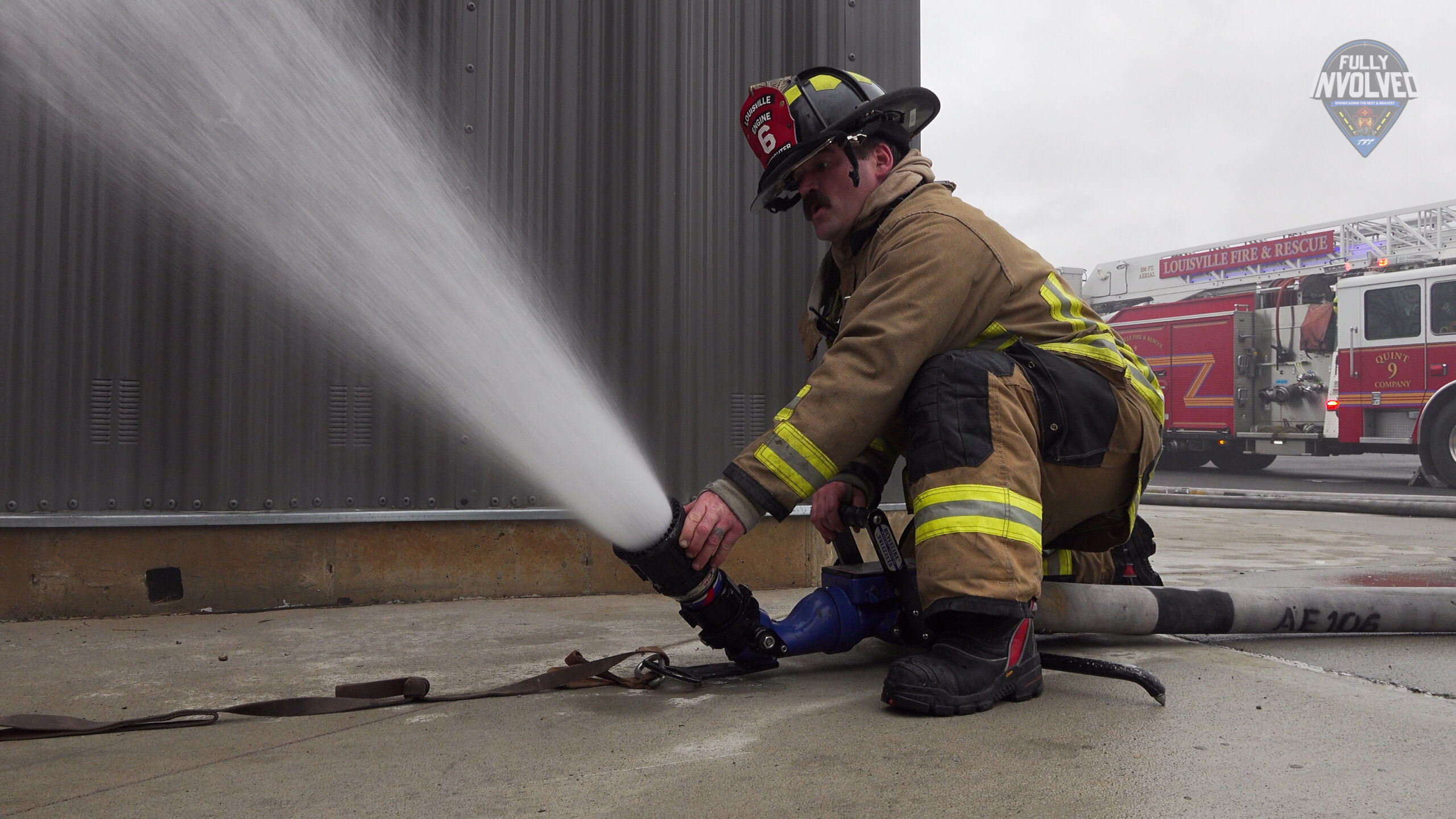
You don’t want to spray into the building. You’re protecting the exposure.
00:01:17:27 – 00:01:24:02
Narrator
In this episode, you’ll learn directly from some of the most experienced exposure pros in the country.
00:01:24:04 – 00:01:30:20
Narrator
We’ll go over procedure, equipment choices that you might not expect, like choosing three-inch hose.
00:01:30:20 – 00:01:42:21
Tony Downes
It’s nothing for someone to grab a three-inch with a BlitzFire on it that’s already attached. They’ll lay 100 feet and put it in between two houses. And that’s the only work you got to do with it. So it allows lots of water to protect an exposure.
00:01:42:21 – 00:01:46:16
Narrator
And then we’ll dive even deeper into certain tactics in a tailboard.
00:01:46:19 – 00:01:51:03
Narrator
Learning from the experts at Louisville Fire on this episode of Fully
00:01:51:05 – 00:02:09:18
Tony Downes
to confine that fire to that building and not let it continue to spread.
00:02:09:20 – 00:02:18:01
Narrator
Louisville is a history buff’s paradise. It’s a city with history dating back to 1778, and it’s got tons of culture.
00:02:18:01 – 00:02:24:08
Donovan Sims
University of Louisville, obviously. The University of Kentucky being in the state, like it was really big on its sports.
00:02:24:13 – 00:02:26:01
Donovan Sims
And its bourbon, as we know.
00:02:26:04 – 00:02:29:17
Donovan Sims
The Kentucky Derby here in Louisville, which is like one of the largest events of the year.
00:02:29:19 – 00:02:37:08
Narrator
The city is the country’s 27th largest, and the department fields between 45 and 50,000 calls a year.
00:02:37:11 – 00:02:47:00
Narrator
Being founded in 1778 means that spaces are tight all throughout the city, from the lower income areas to the spectacular mansions.
00:02:47:05 – 00:02:54:10
Narrator
Louisville’s been a paid department since 1858, which puts it as a top five oldest in the country.
00:02:54:12 – 00:02:59:18
Narrator
It prides itself on being an aggressive old school department when it comes to search priority.
00:02:59:18 – 00:03:05:05
Donovan Sims
So we like to get inside, be aggressive, search for that seat of the fire, make sure no one’s in there, pull out any rescues,
00:03:05:10 – 00:03:11:17
Donovan Sims
and get that fire knocked down. We don’t like to sit on the outside and try to just hit it from the outside and hope it goes down.
00:03:11:20 – 00:03:14:10
Philip Marchegion
Our initial company is aggressive. They want to be
00:03:14:10 – 00:03:23:06
Philip Marchegion
to make interior a**ack. They know one of their first assignments is an exposure line, too, to minimize that exposure to the neighboring dwelling.
00:03:23:08 – 00:03:32:06
Narrator
Here’s the scenario that we’ll tackle today. One of Louisville’s classic camelback homes has caught fire, and flames are extending out both sides.
00:03:32:08 – 00:03:33:01
Tony Downes
This scenario
00:03:33:04 – 00:03:49:08
Tony Downes
we do a lot. We have a lot of camelbacks in our area, where it’s a smaller style house, one story in the front, two story in the back, that were built years and years ago. A lot of them have exposures about three to four feet, if that. So wood frame construction, vinyl siding.
00:03:49:10 – 00:03:52:27
Tony Downes
Significant amount of companies. Engine 6 is very familiar with them.
00:03:53:04 – 00:04:00:10
Philip Marchegion
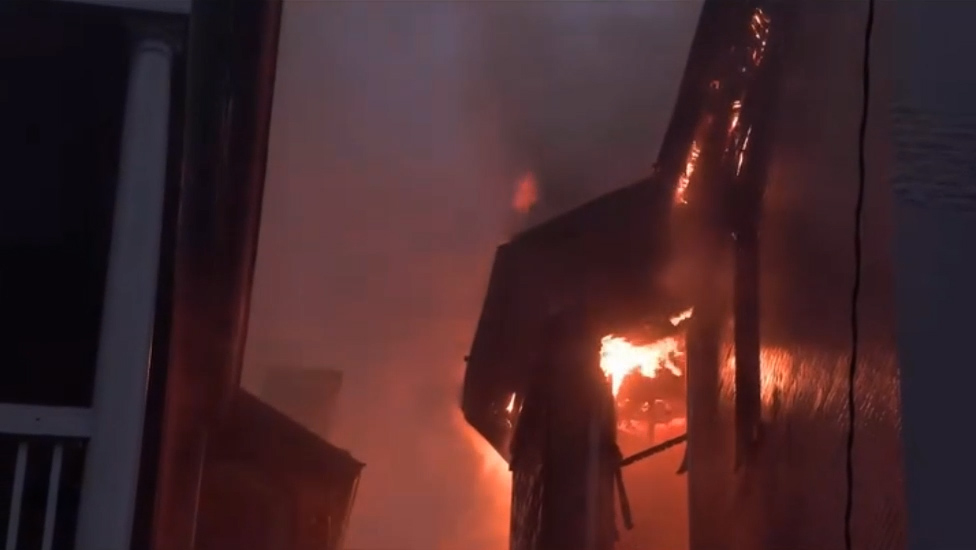
75% of fires we respond to, when we arrive, if it’s a working fire, it’s coming out of side windows, getting into a neighbor’s house.
00:04:00:12 – 00:04:07:07
Philip Marchegion
So our companies are very aggressive on laying BlitzFires to keep that extension from happening in the neighboring dwelling.
00:04:07:09 – 00:04:11:21
Tony Downes
Again, this is the type of construction where we have one story in the front, two story in the rear.
00:04:11:22 – 00:04:15:01
Tony Downes
You can see where the truck company comes in. A lot of these houses
00:04:15:01 – 00:04:26:29
Tony Downes
are balloon frame construction. The two by fours go all the way up into the attic. So once that fire gets in the void, it’s a solid, sandwich-filled home and stuff like that, so it travels quickly.
00:04:26:29 – 00:04:30:10
Tony Downes
So these guys that come in the truck, it’s very important to get above the fire.
00:04:30:17 – 00:04:35:21
Tony Downes
Go over, ventilate, check for trapped fire and stuff like that. Balloon frame construction.
00:04:36:04 – 00:04:42:01
Narrator
What are some of the key details of Louisville’s standard operating procedure? First up, water supply.
00:04:42:04 – 00:04:58:18
Tony Downes
You’re on, and you come to your only line. If two guys are on a truck and they don’t see a line going somewhere, they may go get a line. You know, we are very big on laying supply lines. Each company pretty much brings their own water. It’s almost always we have two supply lines on every house fire.
00:04:58:21 – 00:05:15:07
Tony Downes
We try to get a pumper in the front of the house. We try to get a pumper in the rear of the house. So our standard is three or four engines and two trucks on every box. One engine, one truck always goes to the rear. And if they can’t get to the rear, they take the personnel to the rear to start operating forward.
00:05:15:13 – 00:05:20:24
Narrator
For the rest of that deep dive, make sure you watch Chief Downes’ Fully Involved podcast episode.
00:05:21:00 – 00:05:24:12
Narrator
Back at the training center, it’s time to deploy the a**ack.
00:05:24:15 – 00:05:34:17
Tony Downes
So today we’re going to do a little fire in the front room. They’ll lay in, they’ll come in and hook up a hydrant. They’ll lay an a**ack line. After that, they’ll lay two BlitzFires down the side to protect both exposures.
00:05:34:19 – 00:05:55:25
Tony Downes
We probably use the BlitzFire as the second most used line for Louisville Fire Department. We use them a lot to protect exposures, or on significant larger fires we’ll use them for extinguishment. But it’s very quick, easy to deploy. It doesn’t take a lot of manpower to stay there and operate it, but it also puts a lot of water between the main fire building and the exposures to kind of confine the fire.
00:05:55:25 – 00:06:02:24
Jelen Greene
If you notice that there’s an exposure issue or a close building, you know, the more senior guy is going to be the one to tell you, hey, let’s lay that BlitzFire or let’s get some kind of exposure line on this.
00:06:02:27 – 00:06:06:01
Jelen Greene
That BlitzFire, or let’s get some kind of exposure line on this.
00:06:06:05 – 00:06:16:03
Andrew Tompkins
Just want to maintain good mask and overhead clearance. Because as far as spraying, you don’t want to spray into the building, you’re protecting the exposure.
00:06:16:03 – 00:06:30:08
Andrew Tompkins
So you want the pattern to not necessarily reflect penetration, but also you don’t want it to send a whole bunch. So you want to kind of be somewhere in the middle. Sort of redirect the flame and the smoke off the exposure.
00:06:30:11 – 00:06:32:26
Tony Downes
I think it’s deployment. I think we’re very quick
00:06:32:27 – 00:06:44:27
Tony Downes
at laying the BlitzFire. There’s obviously times some companies will lay them first to get them into operation to try to protect exposure and confine the fire, and then go into containing and extinguishing the fire.
00:06:45:00 – 00:06:54:14
Tony Downes
One of our top priorities is exposures, especially in this type of scenario, is to confine that fire to that building and not let it continue to spread.
00:06:54:16 – 00:07:07:06
Tony Downes
I think staffing sometimes has a lot to do with it, and experience. You know, obviously if you only have four people showing up and it’s going to be another four or five minutes before your other units get there, you’re going to be a little bit slower at being
00:07:07:06 – 00:07:09:01
Tony Downes
aggressive in the interior.
00:07:09:03 – 00:07:17:26
Tony Downes
Most of our companies have companies on top of each other, due to the run volume. And we can put a good amount of people to a fire scene quickly.
00:07:17:28 – 00:07:28:18
Tony Downes
I think some of our outlying companies are a little bit slower, maybe a little bit, I don’t want to say less aggressive, but it takes a little bit longer to get things into play.
00:07:28:18 – 00:07:32:21
Tony Downes
Where some of our neighborhoods, you may have the full box alarm assignment there within a few minutes.
00:07:32:21 – 00:07:36:20
Narrator
So that begs the question, what equipment choices does Louisville make?
00:07:36:22 – 00:07:39:17
Narrator
First off, master stream nozzle choice.
00:07:39:17 – 00:07:53:11
Tony Downes
We use fog, because like I said, a lot of times we use it to protect exposure. And we do carry smooth bores that we can switch out with, between that and our apparatus monitor and stuff like that. So there have been times we have switched.
00:07:53:13 – 00:07:57:22
Tony Downes
The majority of the time we use them for protection of exposures.
00:07:57:26 – 00:08:00:04
Narrator
Next, handline nozzle choice.
00:08:00:05 – 00:08:17:25
Philip Marchegion
All TFT fogs. Versatile. Universal. Everybody trains with it. Everybody’s familiar with the gallons per minute. Everybody’s familiar with how they’re going to react in certain circumstances. So we keep it standard, so it’s easy to compare it to when you make fire after fire.
00:08:18:02 – 00:08:24:15
Narrator
When it comes time to choose a ground monitor, why is it important to have a monitor that can hit the widest range vertically?
00:08:24:16 – 00:08:48:10
Tony Downes
Just depending on how far the building is, whether it’s a two story, three story. Again, you get into some old Louisville houses where they’re three stories plus. You’re going to need some reach to get to the top floor, the attics, and stuff like that.
00:08:48:12 – 00:08:53:19
Tony Downes
Not only that, that exposure line takes time to go up multiple flights of stairs around furnishings to make your way to it.
00:08:53:21 – 00:08:58:13
Narrator
Here’s a choice that you might not expect. Three-inch hose paired with their BlitzFires.
00:08:58:16 – 00:09:15:23
Tony Downes
Thirty years ago, when I got on, we used three-inch hose in all our engine companies. Only our quints and supports had five-inch. Back then, we used to lay a bundle and pump back.
00:09:15:23 – 00:09:34:18
Tony Downes
Since then, we switched pretty much all five-inch for our supply line. But we still use three-inch when we need large water. We use BlitzFires a significant amount.
00:09:34:21 – 00:10:00:06
Tony Downes
So it’s nothing for someone to grab a three-inch with a BlitzFire already attached. They’ll lay 100 feet and put it in between two houses. And that’s the only work you have to do with it. So it allows lots of water to protect an exposure.
00:10:00:06 – 00:10:09:26
Tony Downes
But there’s less friction loss. The downside is it’s heavy. It’s not a good line to take inside a fire. It’s hard to maneuver.
00:10:09:28 – 00:10:16:21
Narrator
Now let’s dive even further with some of these tactics. First question, what common mistakes do you see crews make?
00:10:16:24 – 00:10:32:22
Tony Downes
Biggest thing is not to put the exposure line into the building, to complicate the fire scene inside or change the conditions. Or push smoke and heat back onto members making the push.
00:10:32:22 – 00:10:36:20
Tony Downes
You need to protect the exposure, but try to keep it out of the main fire building.
00:10:36:20 – 00:10:44:12
Tony Downes
A lot of times these houses are full of tight spaces. You go right into a living room, walk through a bedroom to get to the kitchen.
00:10:44:17 – 00:10:57:29
Tony Downes
A lot of times they’re offset to the side, so you can go down the side entrance between two houses. If fire is blowing out the windows, you always have an exposure problem, but you usually have good access.
00:10:58:05 – 00:11:04:13
Tony Downes
If you come in the back, a lot of times people have added lean-tos for storage or sheds.
00:11:04:15 – 00:11:25:23
Tony Downes
Some of those lean-tos have been turned into dining rooms, makeshift kitchens, or bedrooms. There’s balloon frame construction going on in them, so the fire can travel well. A lot of voids.
00:11:25:23 – 00:11:37:03
Tony Downes
As houses have gotten older, they used to have ten-foot ceilings. Since then, people have dropped them, creating more hidden voids.
00:11:37:03 – 00:11:45:25
Narrator
Coming up in episode 13, Louisville shows how it tackles apartment lines differently than most departments using a horizontal high-rise concept.
00:11:45:29 – 00:11:54:10
Narrator
If you want to take your exposure protection to the next level, download the Portable Monitor Guide at TFT.
00:11:54:12 – 00:11:56:08
Narrator
So you can perform at your best.
When fire is already extending into the exposure on arrival, Louisville Fire shows how to control spread without giving up an aggressive interior push. In tightly spaced neighborhoods—sometimes with only a foot between houses—crews prioritize getting an exposure line in place immediately while stretching the attack line. Their approach uses BlitzFire ground monitors, 3-inch hose for high flow, and disciplined stream placement to deflect heat instead of hitting the fire directly. The result: the main body of fire is confined, exposures are protected early, and interior crews can advance with better conditions and fewer setbacks.
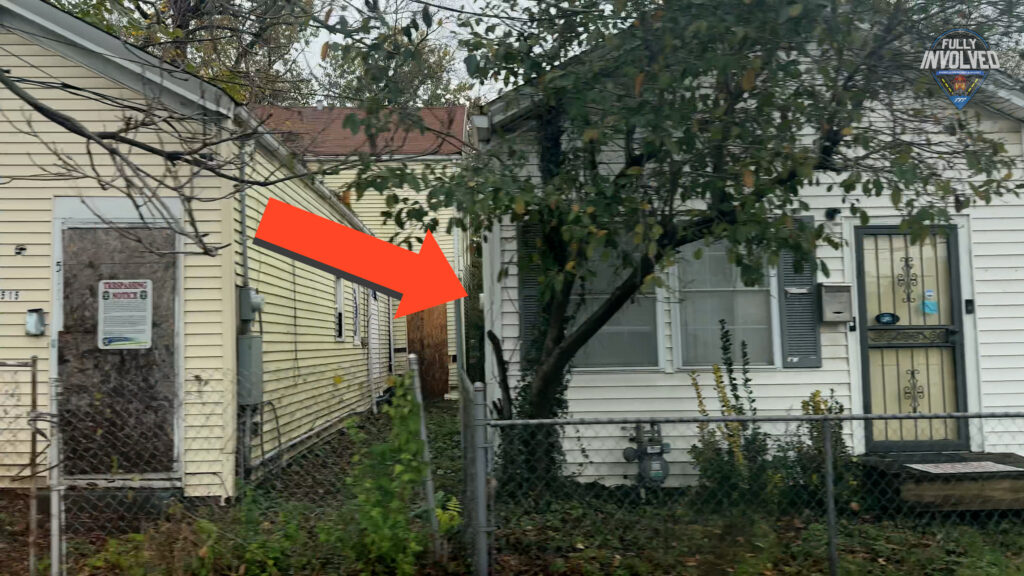
In Louisville, this is common—not the exception. Crews expect visible fire extending out windows into the neighboring structure on arrival. The decision isn’t either/or. They initiate interior attack and deploy an exposure line immediately. The first assignment often includes protecting the exposure to keep the fire from multiplying before it’s controlled.
These conditions mean fire doesn’t stay put—it moves fast into the exposure if not checked early.
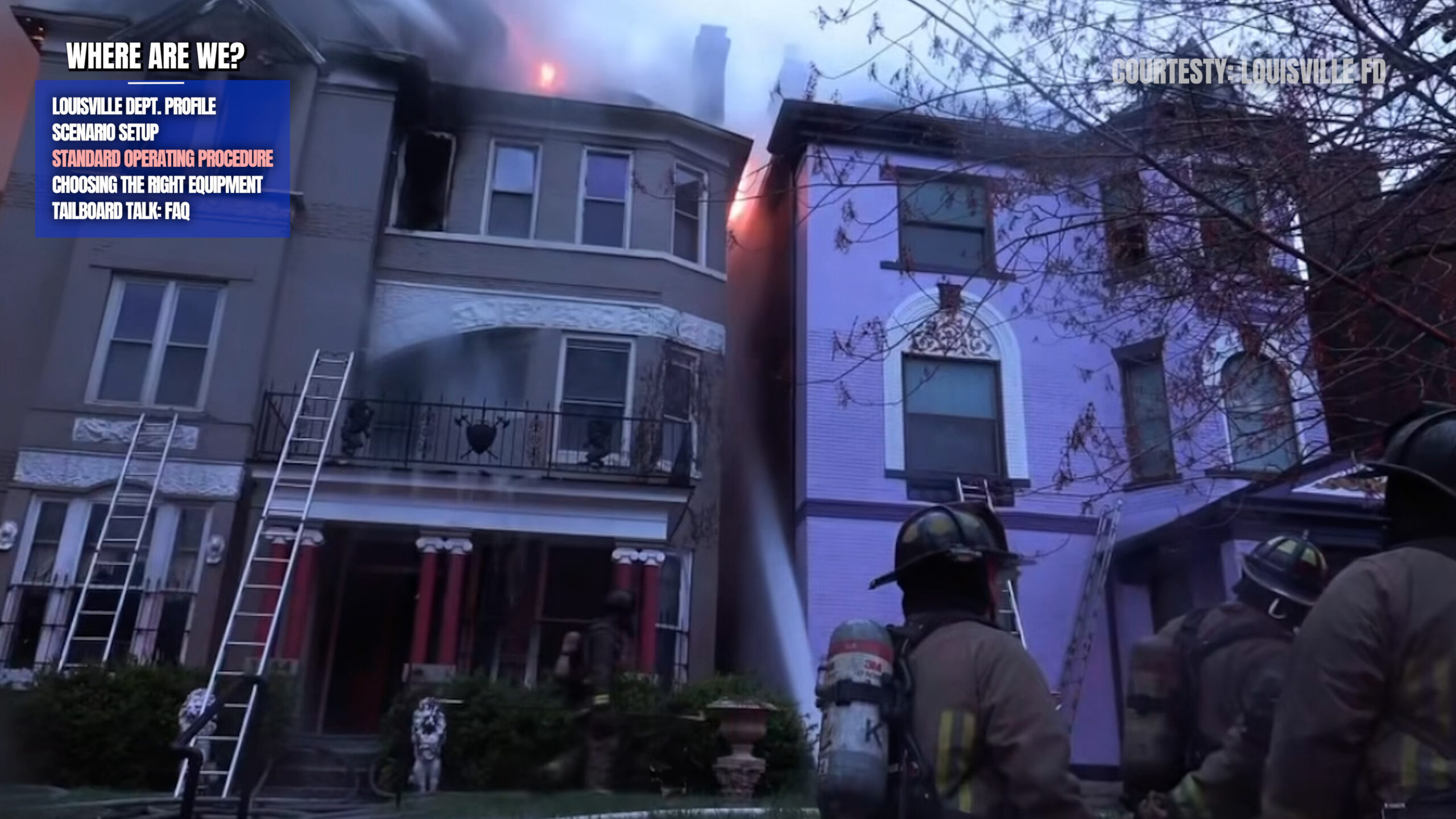
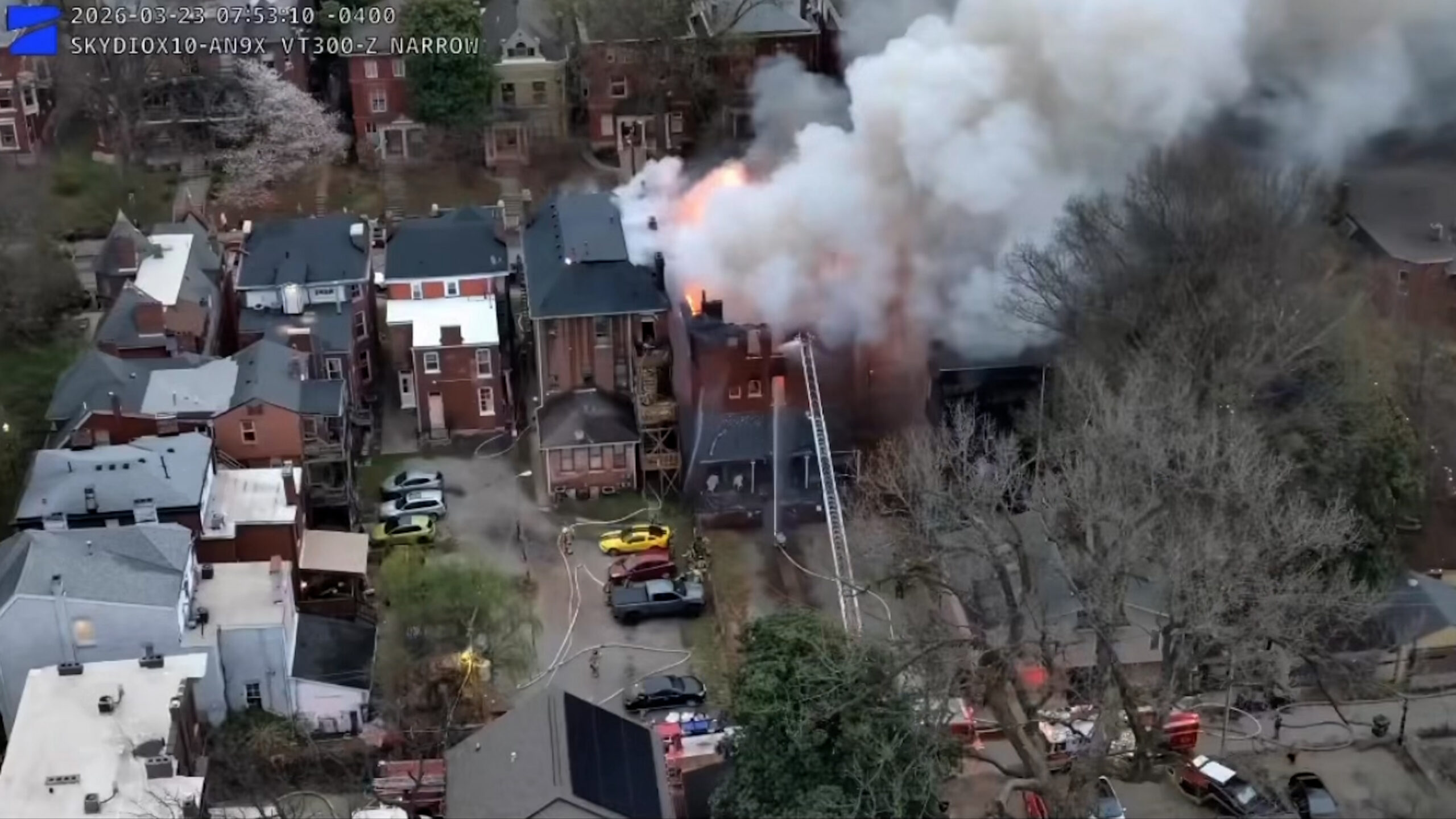
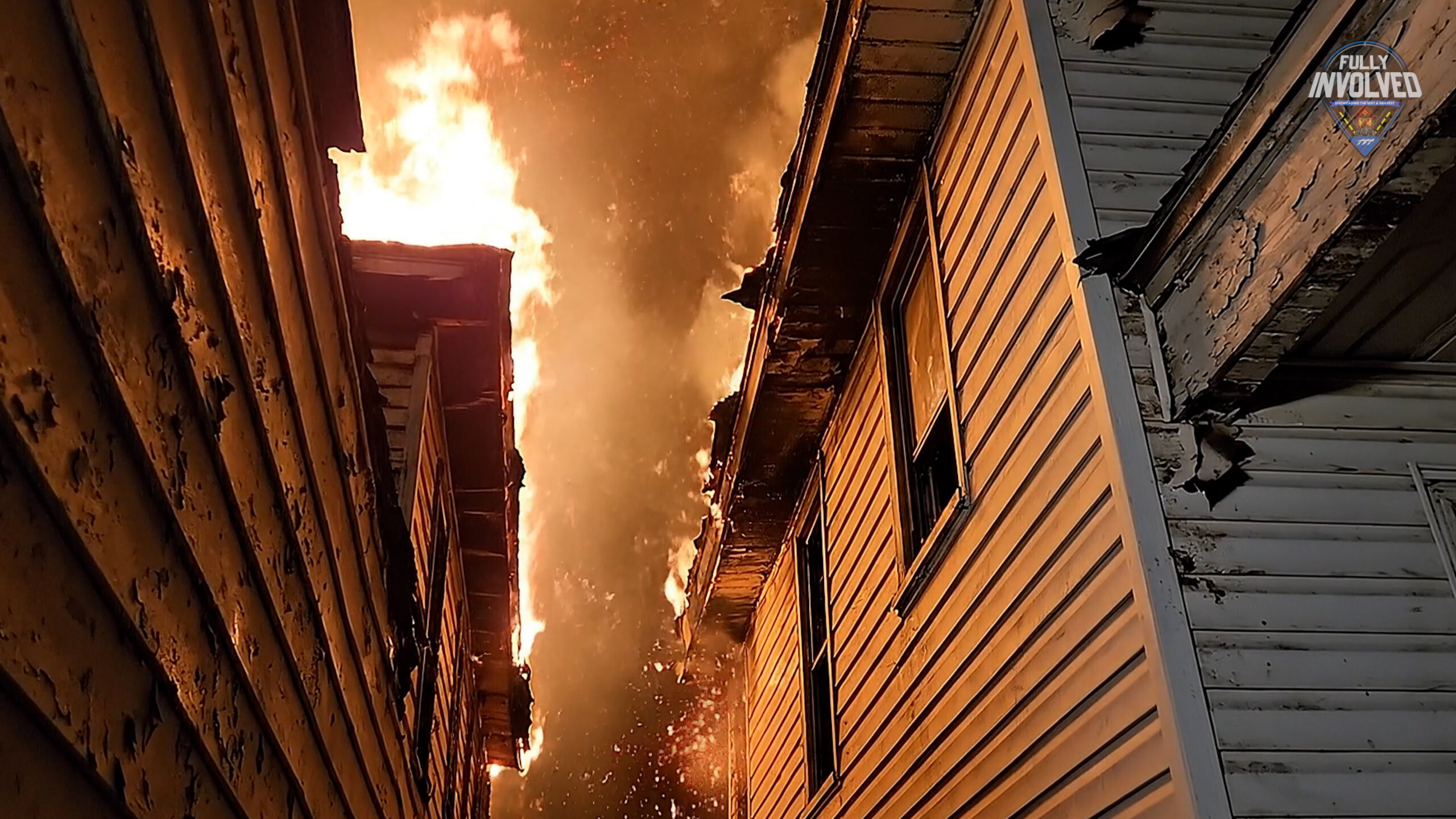
Louisville crews don’t delay one for the other. The sequence is tight and coordinated:
This dual focus keeps the fire from extending while still moving toward knockdown.
BlitzFires are one of their most-used lines for a reason:
Crews often place them between buildings to create a water barrier that slows or stops extension.
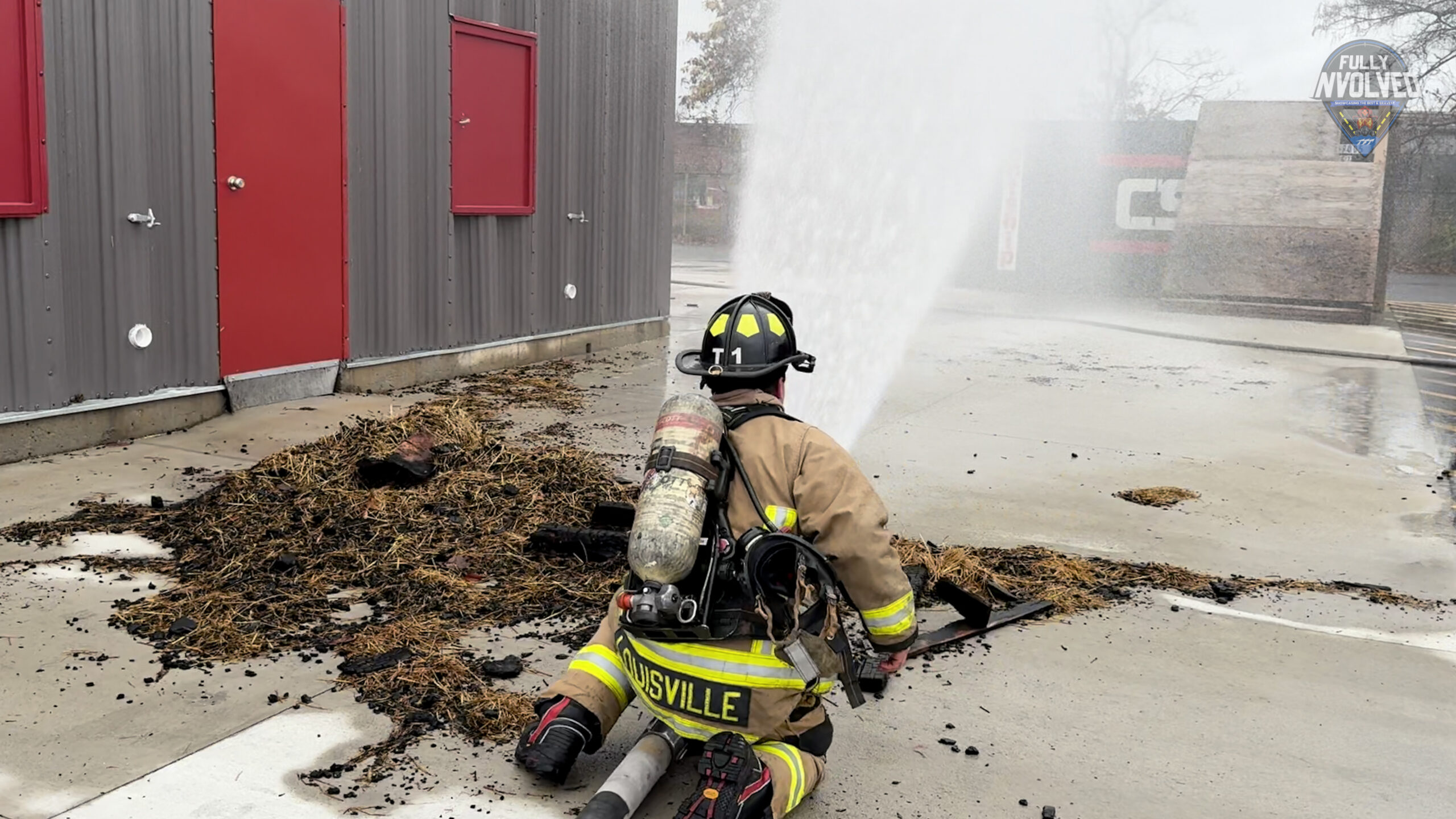
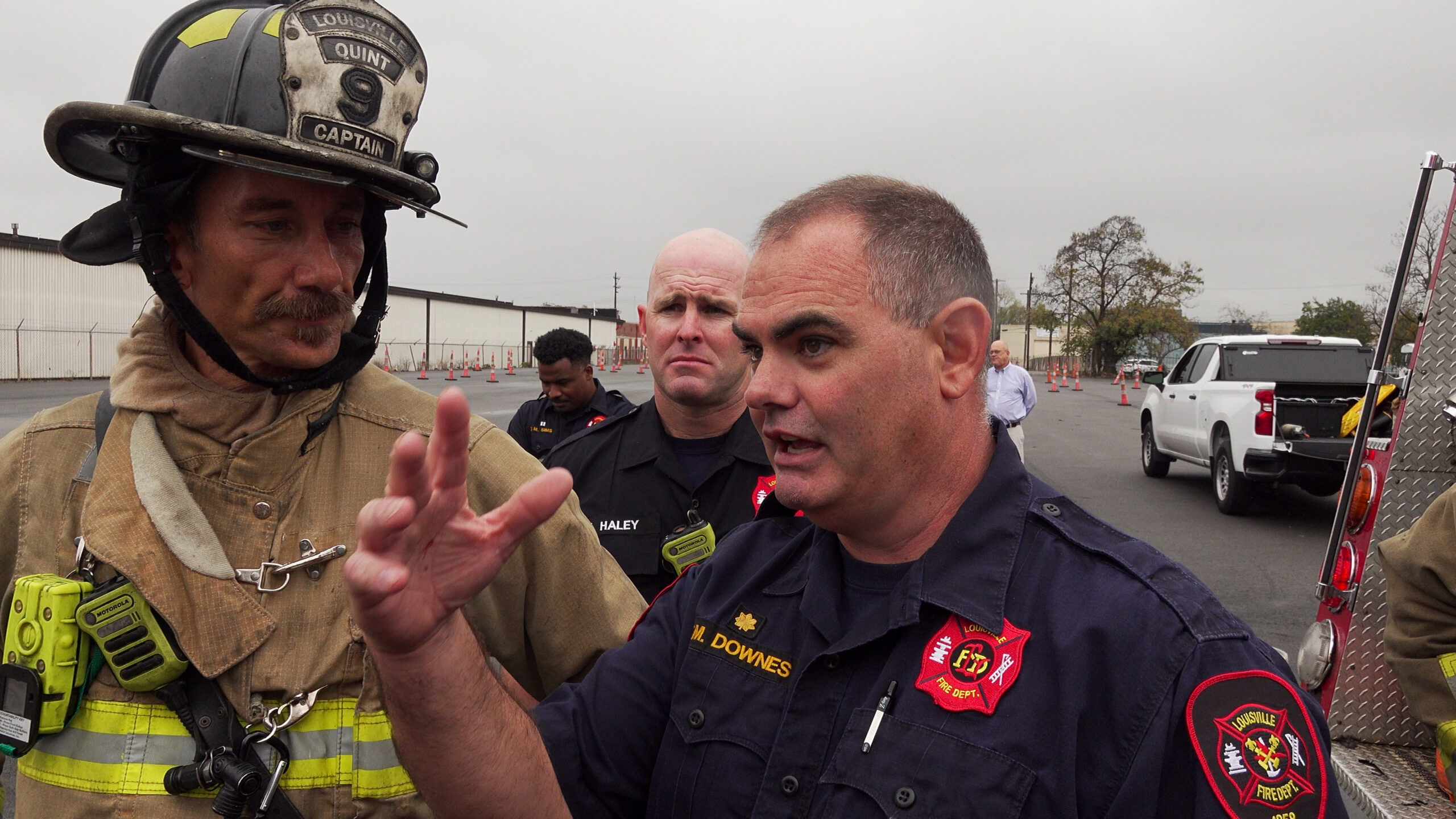
Louisville pairs BlitzFires with 3-inch hose for a simple reason: volume.
The tradeoff is weight and maneuverability, which is why it stays outside. It’s not an interior line—it’s a high-volume exposure tool.
Where to Aim: Protect the Exposure, Not Fight the Fire
A critical point Louisville emphasizes:
The goal is shielding—not extinguishment—from that position.
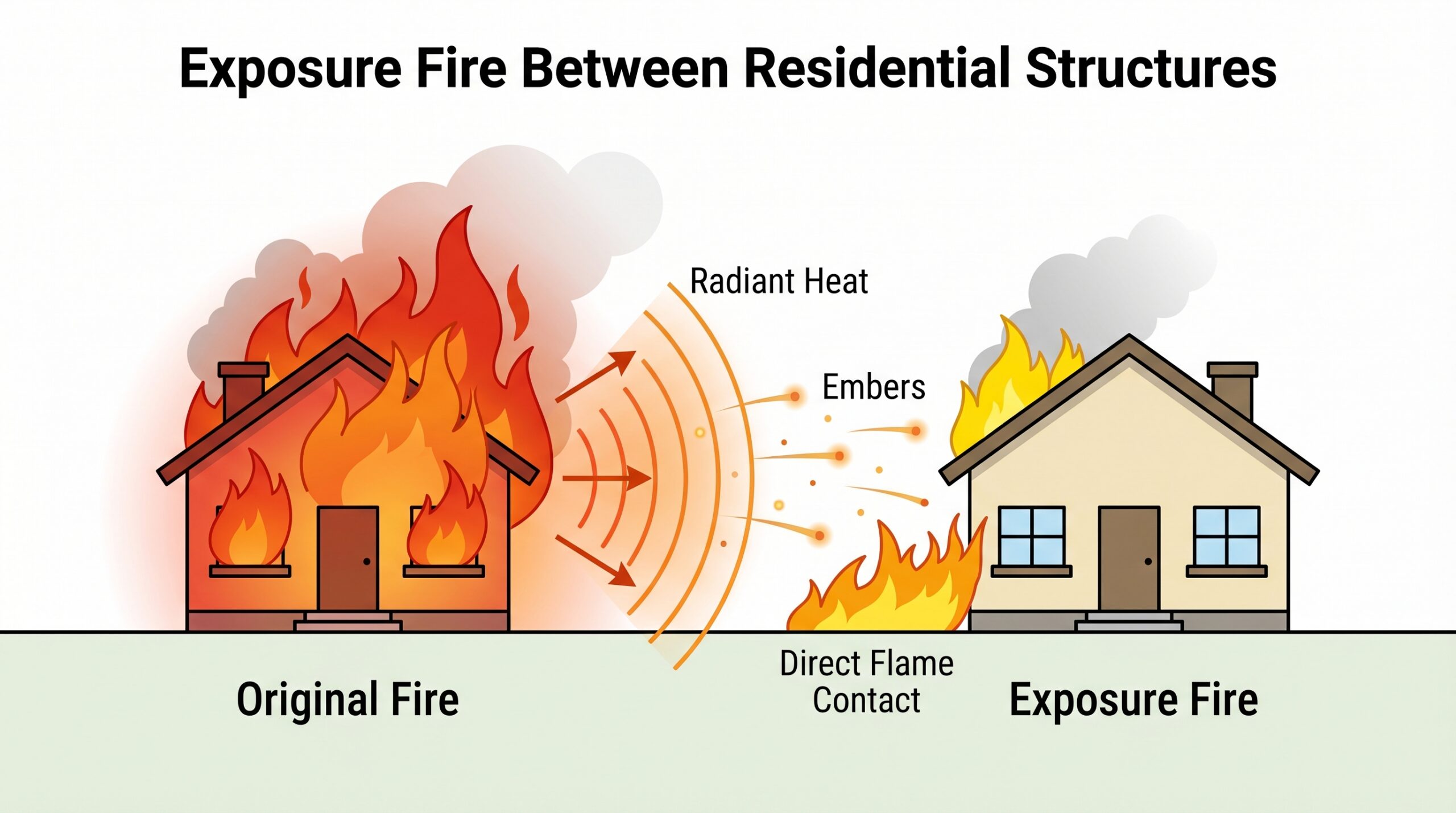
Louisville expects heavy fire conditions and builds water supply accordingly:
This ensures both the attack line and exposure lines can operate without delay or pressure issues.
When Exposure Protection Comes First
There are situations where crews will deploy BlitzFires before advancing inside:
In these cases, knocking back exposure risk buys time for a safer interior operation.
No one fights fires like your department. This is your chance to highlight your crew's aggressive tactics and unique responses.
Download the portable monitor product guide your crew can use at the firehouse or in the field.
Be the first to catch new episodes. Get updates straight to your inbox and never miss insights into regional firefighting tactics.


