

00:00:00:00 – 00:00:10:04
THE PROBLEM
00:00:00:19 – 00:00:11:22
Narrator: You pull up to a two-story house and find that fire is upstairs in the second-floor bedroom. And right away, the fireground starts asking for more people than you have.
00:00:10:04 – 00:00:13:25
SECOND FLOOR FIRE
00:00:11:22 – 00:00:13:12
Two-story residential structure.
00:00:13:25 – 00:00:15:25
3-MAN ENGINE
00:00:13:12 – 00:00:20:19
Narrator: You’ve got a three-man engine, a three-man rescue, and a lot of work that has to happen fast.
00:00:15:25 – 00:00:19:18
3-MAN RESCUE
00:00:20:21 – 00:00:23:03
Bruce Donofrio: We’re going to make entry on the Bravo side.
00:00:23:05 – 00:00:25:01
David Silverberg: We can’t throw 17 people at it.
00:00:25:01 – 00:00:46:02
WHAT YOU’LL LEARN IN THIS EPISODE
00:00:25:03 – 00:00:26:22
Narrator: The decisions stack up.
00:00:26:22 – 00:00:27:26
Narrator: Who’s reading the building?
00:00:27:26 – 00:00:29:13
Narrator: Who’s controlling the front door?
00:00:29:15 – 00:00:30:28
Narrator: Who’s feeding the line?
00:00:30:28 – 00:00:36:17
Narrator: Who’s watching the exposure? And how soon can you start putting water into the fire room?
00:00:36:20 – 00:00:45:17
Narrator: In this episode of Fully Involved, the crew learns how Palm Beach Gardens, Florida, gets more out of less with unusually versatile roles.
00:00:45:17 – 00:00:49:13
David Silverberg: Well, out here we train every position to be able to do almost every position.
00:00:47:05 – 00:01:01:11
GET MORE FROM YOUR MANPOWER
00:00:49:13 – 00:00:50:11
All utility.
00:00:50:14 – 00:00:51:08
We can do it all.
00:00:51:11 – 00:00:52:19
David Silverberg: That six-man crew.
00:00:52:19 – 00:00:55:21
David Silverberg: Everybody knowing their job and being good at every portion of that.
00:00:55:24 – 00:00:58:10
David Silverberg: Can take that time from the air brake down.
00:00:58:10 – 00:01:02:20
David Silverberg: To such a small amount of time that we really have a shot of making a difference in somebody else’s life.
00:01:02:15 – 00:01:06:05
5 PHASES
00:01:02:22 – 00:01:06:19
Narrator: We’ll walk through five phases of a second-floor fire attack.
00:01:06:05 – 00:01:08:19
INITIAL ARRIVAL
00:01:06:23 – 00:01:09:06
Narrator: Phase one: arrival.
00:01:08:19 – 00:01:11:16
FRONT DOOR
00:01:09:09 – 00:01:12:04
Narrator: Phase two: front door.
00:01:11:16 – 00:01:14:17
MAKING THE PUSH
00:01:12:07 – 00:01:15:03
Narrator: Phase three: making the push.
00:01:14:17 – 00:01:17:27
EXPOSURE PROTECTION
00:01:15:06 – 00:01:18:13
Narrator: Phase four: exposure protection.
00:01:17:27 – 00:01:21:01
FIRE ROOM
00:01:18:16 – 00:01:21:09
Narrator: And phase five: the fire room.
00:01:21:01 – 00:01:32:29
LEARN FROM THE EXPERTS
00:01:21:11 – 00:01:32:29
Narrator: To make your fire department more versatile, watch how this crew gets the most out of a six-man response, handling everything from driving to nozzle work to paramedic duty.
00:01:32:29 – 00:01:34:18
DAVID HUBERT
00:01:33:01 – 00:01:36:17
David Hubert: Making a smooth inside the game plan for the rest of the guys coming in behind.
00:01:34:18 – 00:01:39:15
READY FOR ANY CURVEBALL
00:01:36:21 – 00:01:39:18
Gordon Voit: What’s it like having a microphone three inches away from your face?
00:01:39:15 – 00:01:42:04
ANDREW LEZZA
00:01:39:20 – 00:01:55:20
Andrew Lezza: I absolutely hate it. Absolutely hate it.
00:01:53:16 – 00:02:00:09
EPISODE 14: “CREATIVE STAFFING”
00:02:00:09 – 00:02:05:11
WHERE ARE WE?
00:02:00:09 – 00:02:05:11
PALM BEACH GARDENS
00:01:55:23 – 00:02:04:09
Narrator: The Fully Involved crew is in Palm Beach Gardens, Florida. It’s a community of about 62,000 people, 80 miles north of Miami.
00:02:05:11 – 00:02:22:27
DEPARTMENT PROFILE
00:02:04:09 – 00:02:14:29
Narrator: Chief Training Officer David Silverberg is our lead guide, and he shows how Florida firefighting is about dealing with homes that were built to stand up to severe weather.
00:02:14:29 – 00:02:23:11
Narrator: Concrete block construction, hurricane-proof glass, and fire conditions that may not show themselves right away from the outside.
00:02:22:27 – 00:02:33:11
COMING UP IN EPISODE 15: SEARCH + RESCUE
00:02:23:12 – 00:02:33:11
Narrator: Coming up in episode 15, we’ll get into the rescue side, including second-floor window access, hurricane glass, and doggie-door VEIS.
00:02:33:11 – 00:02:45:13
EPISODE 14: FIRE ATTACK | VERSATILE ROLES
00:02:33:11 – 00:02:37:22
Narrator: Here in episode 14, we’re focusing on the versatility of roles.
00:02:37:25 – 00:02:48:06
David Silverberg: Well, out here we train every position to be able to do almost every position. Now they’re all promoted positions. We have driver and stuff like that, but everybody understands the role of the person next to them.
00:02:48:01 – 00:02:58:01
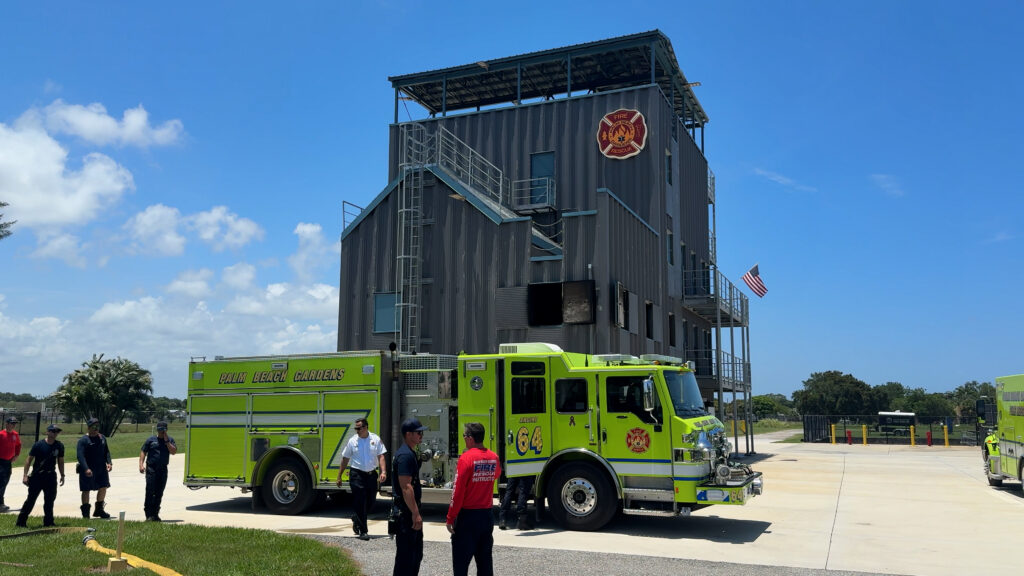
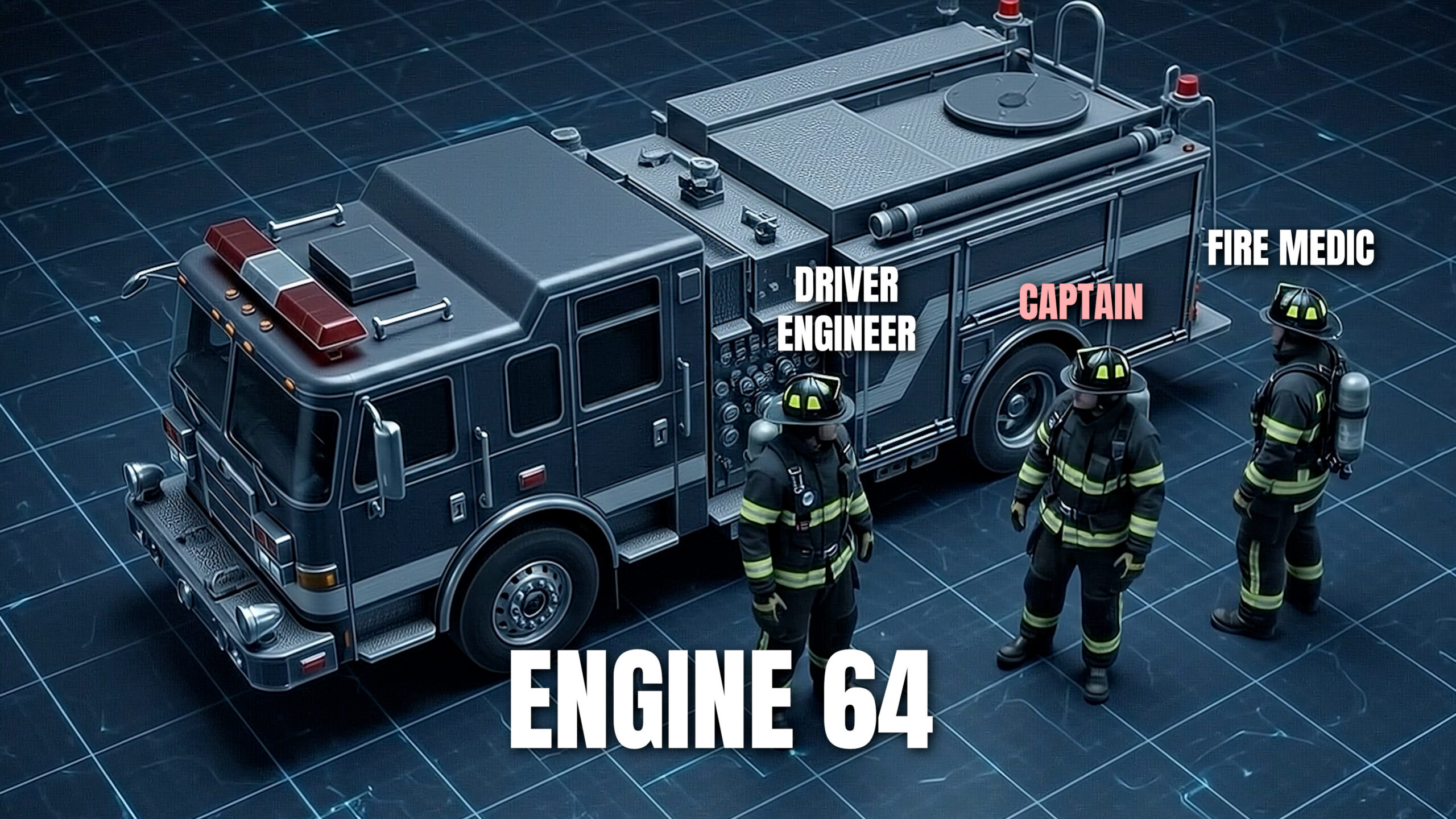
ENGINE 64
00:02:48:08 – 00:02:55:17
David Silverberg: Your initial arriving, which will be going over today with fire attack, will be initial arriving engine with three on engine and three on a rescue.
00:02:55:17 – 00:03:01:07
David Silverberg: The challenge with that, with rescue, like our rescue will be doing forcible entry, which is really a truckie type in other parts of the country.
00:03:02:09 – 00:03:11:29
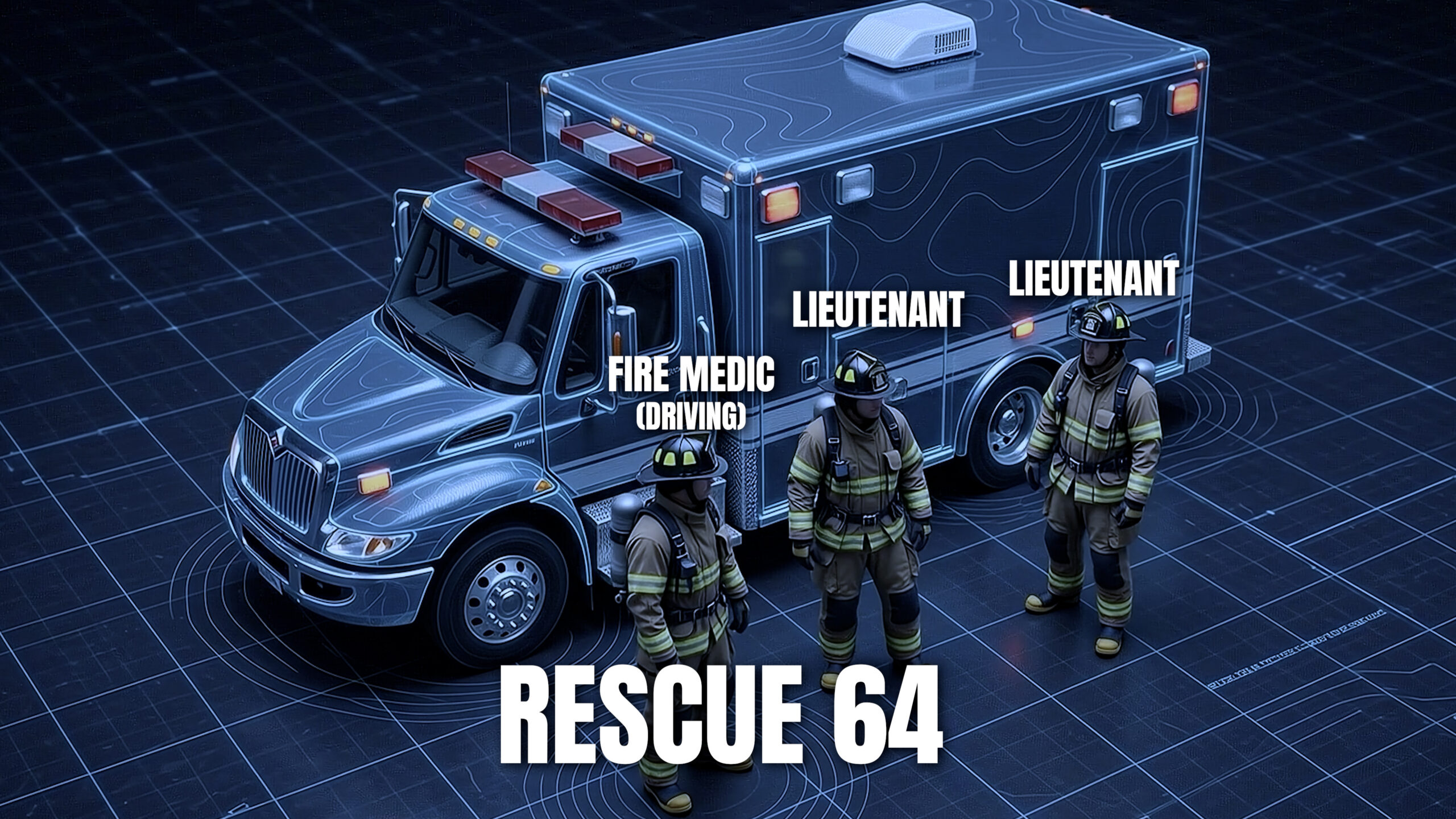
RESCUE 64
00:03:02:14 – 00:03:11:29
David Silverberg: We’ll be sending the rescue driver over there to handle that by himself on air. The other rescue personnel will be assisting with hose setup and management.
00:03:12:01 – 00:03:21:03
David Silverberg: We do in our city have a ladder truck and a truck that are staffed, but they also cover their own zone, so they possibly could be on a call.
00:03:11:29 – 00:03:33:22
ROLES OF A PBG “RESCUE” CREW
00:03:21:06 – 00:03:33:17
David Silverberg: So our rescues, as we refer to them, really do our truck work, which is forcible entry, helping with hose management and search, their primary roles, getting primary search.
00:03:33:22 – 00:03:43:15
NEXT-ARRIVING CREWS
00:03:33:22 – 00:03:44:02
David Silverberg: Now as that call progresses, you’ll have backup units, units with supply and water supply, more RIT teams, things like that as we build onto the scene.
00:03:43:15 – 00:03:50:01
SCENARIO
00:03:44:05 – 00:03:50:01
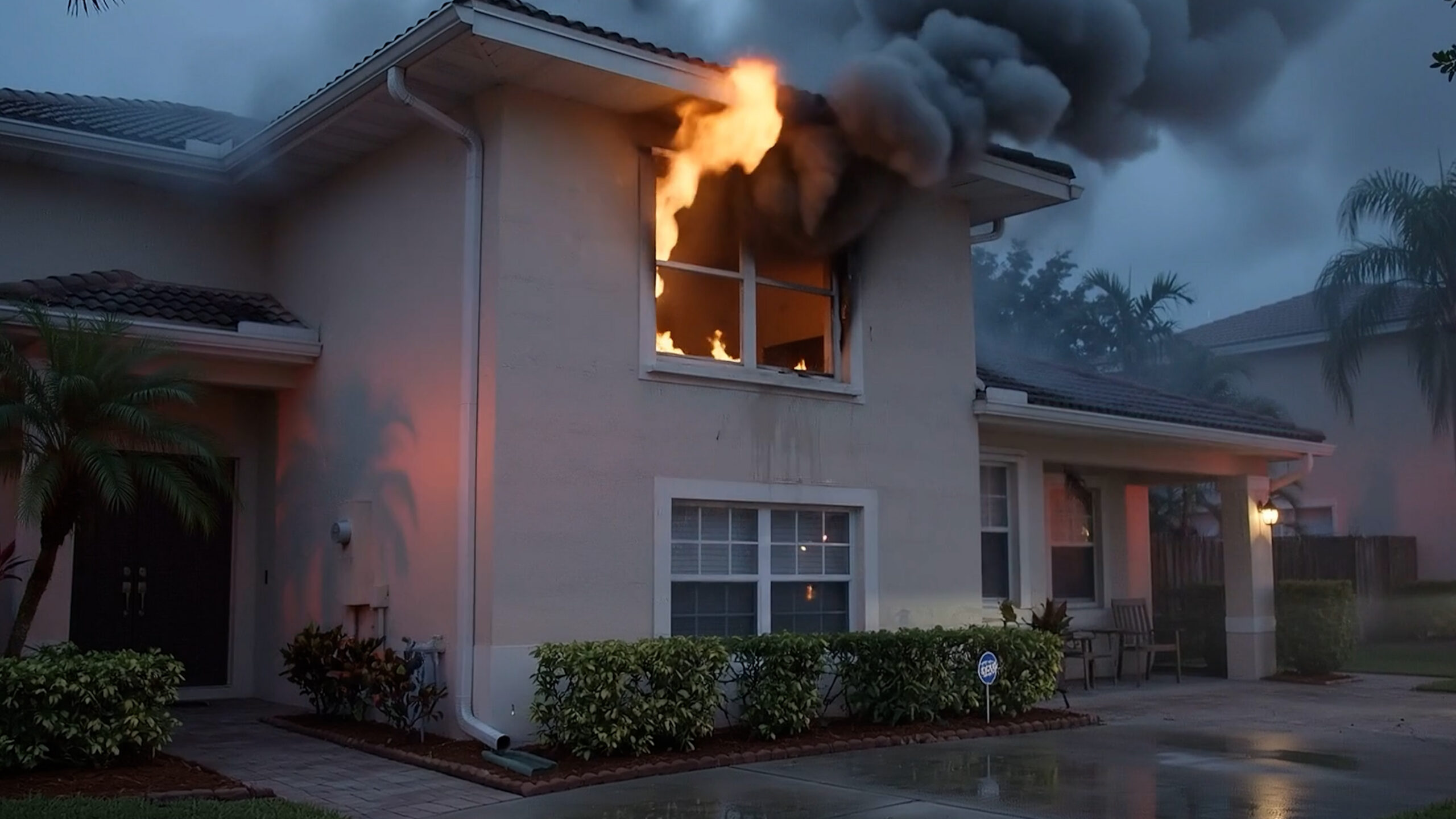
Narrator: Here’s the scenario. A two-story single-family home has a fire in a second-floor bedroom.
00:03:50:01 – 00:03:56:20
SCENARIO
00:03:50:01 – 00:03:58:21
Narrator: Here’s the initial response the department has to work with. The first-arriving engine has three people. The rescue has three people.
00:03:56:20 – 00:04:03:15
INITIAL RESPONSE
00:03:58:21 – 00:04:07:11
Narrator: And the question every department with limited staffing has to answer: How do you get the important work done without wasting steps?
00:04:03:15 – 00:04:10:26
SCENARIO
00:04:07:14 – 00:04:10:11
Narrator: We learn from Chief of Training David Silverberg.
00:04:10:26 – 00:04:14:03
DAVID SILVERBERG
00:04:10:14 – 00:04:14:03
David Silverberg: Speed is number one thing, and with a small group like we have.
00:04:14:03 – 00:04:32:08
SCENARIO
00:04:14:05 – 00:04:16:01
David Silverberg: We can’t throw 17 people at it.
00:04:16:01 – 00:04:22:20
David Silverberg: On any one call. Our initial response is, you know, first-in engine and rescue, six people.
00:04:14:25 – 00:04:27:17
SCHEDULE A DEMO
00:04:22:20 – 00:04:33:01
David Silverberg: We certainly have engines and rescues coming in right behind them, but we’re not operating like some of the up north departments with large-based crews.
00:04:32:08 – 00:04:37:02
INITIAL ARRIVAL
00:04:33:03 – 00:04:35:16
Narrator: Phase one: arriving on scene.
00:04:37:02 – 00:05:02:22
ENGINE ARRIVES ON SCENE
00:04:35:16 – 00:04:40:29
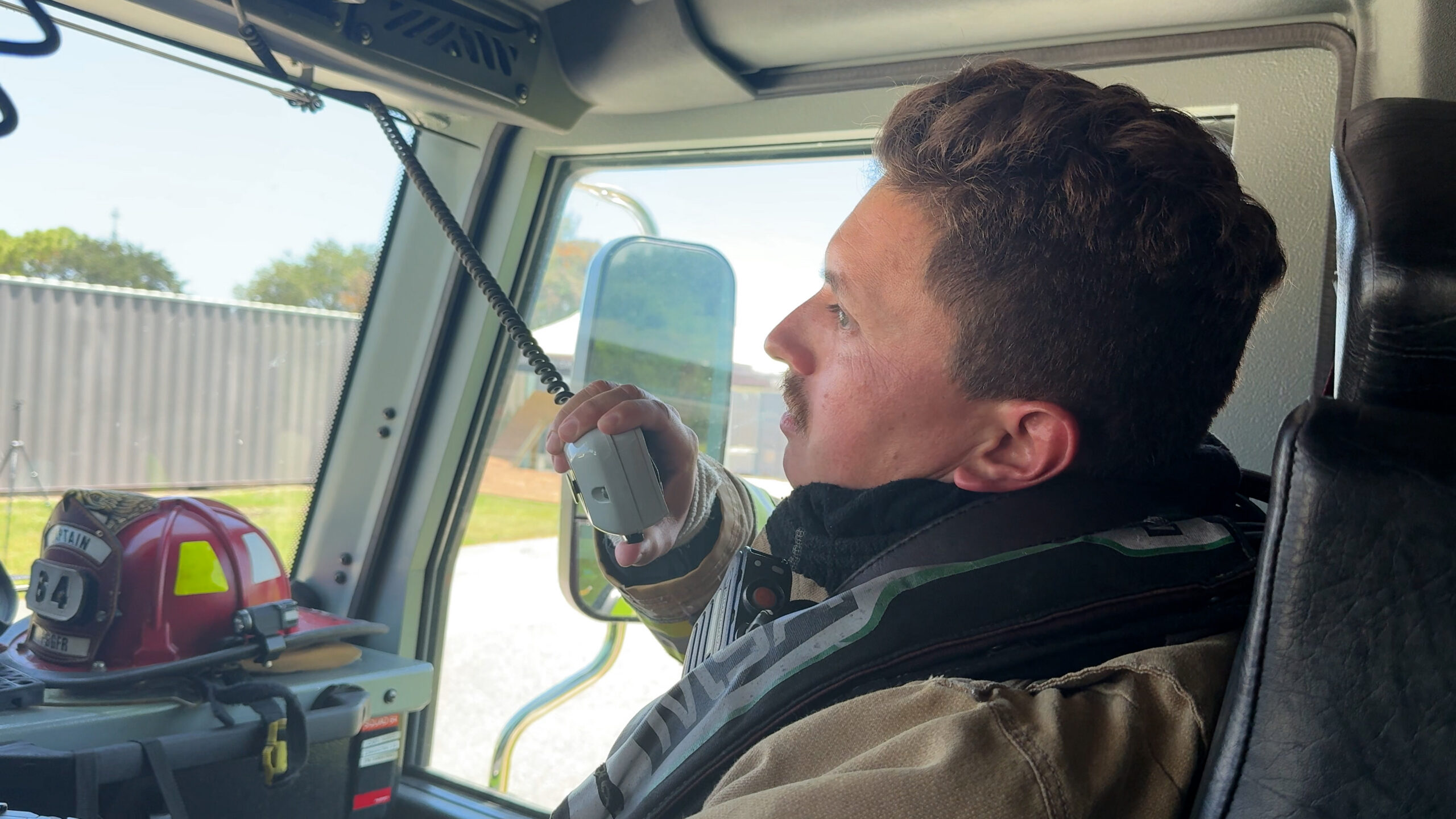
Narrator: Inside Engine 64, Captain David Hubert starts to scope out the problem.
00:04:40:29 – 00:04:45:25
Radio: Report of a multi-story residential structure fire.
00:04:45:28 – 00:04:49:25
David Silverberg: It’ll be an engine and a rescue on an initial arrival, and they will be doing.
00:04:49:28 – 00:04:54:04
David Silverberg: A windshield report by the captain as the arriving engine.
00:04:54:06 – 00:04:59:13
David Hubert: Grab the crosslay. Bring it to the front door.
00:04:59:16 – 00:05:01:12
David Hubert: Squad 6-4 responding.
00:05:01:14 – 00:05:02:25
360.
00:05:02:22 – 00:05:09:19
RESCUE ARRIVES ON SCENE
00:05:02:28 – 00:05:03:27
David Silverberg: Rescue will pull up.
00:05:04:02 – 00:05:05:03
David Silverberg: And move out of the way.
00:05:05:05 – 00:05:09:19
David Silverberg: And then all that personnel will be geared up by the rig and get ready to play.
00:05:09:19 – 00:05:33:12
CAPTAIN’S 360
00:05:09:21 – 00:05:14:01
David Silverberg: The captain will do a 360, which he’ll go around that building, whether.
00:05:14:01 – 00:05:24:16
David Silverberg: Single family or if it’s a modified 360, depending on access around. And he’ll do a size-up of that building and update his command and probably label the command at that.
00:05:24:19 – 00:05:28:21
David Silverberg: He’ll also assign what attack is going to be and what access we make.
00:05:28:22 – 00:05:42:12
David Silverberg: And are we going through the Alpha side, Bravo side, Delta side, and what line we’re pulling. Rescue will help with that and then facilitate getting that hose to the fire as quickly as they can before they break off for a primary search.
00:05:33:12 – 00:05:42:03
RESCUE’S DUTIES
00:05:42:03 – 00:06:29:16
CAPTAIN’S 360
00:05:52:26 – 00:06:03:09
DAVID HUBERT
00:05:42:14 – 00:06:03:08
David Hubert: A walk around the building looking for where the smoke and flames are coming from. If you have any victims from the windows, doors, or seeing any exposures, anything that could be a hazard to us, electrical wires, anything overhead. So I’ll do a complete walk down around the building.
00:06:03:10 – 00:06:08:17
David Hubert: Look at what kind of construction we have.
00:06:08:19 – 00:06:14:12
David Hubert: I take a note of the tank right here as a possible hazard.
00:06:14:14 – 00:06:16:01
David Hubert: We have a standpipe connection.
00:06:16:04 – 00:06:29:16
David Hubert: When I do my 360, my firefighter is pulling the crosslay to the door wherever I told him to pull it. I said to pull it to the front door. So that would be this front door. So when I’m performing my 360, he’s already pulling that. So it’s already, we’re working together.
00:06:29:16 – 00:06:53:29
TIME-SAVING VARIATIONS
00:06:29:16 – 00:06:47:05
David Hubert: We try to do a three-sided view on arrival. So this is our Alpha side door. We would pull through and I would see the Bravo and the Delta side. So I could just do a quick peek on the Charlie if we need to get something going quick. I don’t have to do a full 360, especially on a big building. In our district.
00:06:47:06 – 00:06:52:20
David Hubert: Captains can do a, they have SUV, they can do the drive-by of a large structure.
00:06:52:20 – 00:06:53:25
David Hubert: A full 360 on.
00:06:53:29 – 00:07:54:24
MISTAKES TO AVOID
00:06:54:01 – 00:07:13:24
David Silverberg: Initially when a captain pulls up and does his 360, the building can really lie to him about what’s happening on the inside. The hardest part of his job is that initial size-up and figuring out what the game plan is going to be. If he guesses right, this goes really smooth. First line goes as the fire goes, right? But the building is built tight.
00:07:13:25 – 00:07:40:01
David Silverberg: A lot of our buildings down here are cement block, hurricane glass, and the building will hide what’s going on behind. So with his 360, what he’s doing is reading that and his experience with that. The TIC he’s using, looking for heat signatures. But the building wants to lie to him about really what’s going on. And if he hits that right by his experience, knowing his own, this initial attack will go really smooth and so will the rest of the call.
00:07:40:03 – 00:07:54:24
David Silverberg: Any bad guess on that, then there’s a lot of catch-up afterwards because we have to pivot, readjust. So the captain’s role is really a super honorable role in our service. And if he hits it right with his training, it makes the whole department look good.
00:07:54:24 – 00:08:04:23
DRIVER ENGINEER’S ROLE
00:07:54:27 – 00:08:04:01
Narrator: The captain and fire medic are joined by a third member of the engine, the driver engineer, whose responsibilities include water supply.
00:08:04:23 – 00:08:09:22
J.T. WALUKIEWICZ
00:08:04:04 – 00:08:17:08
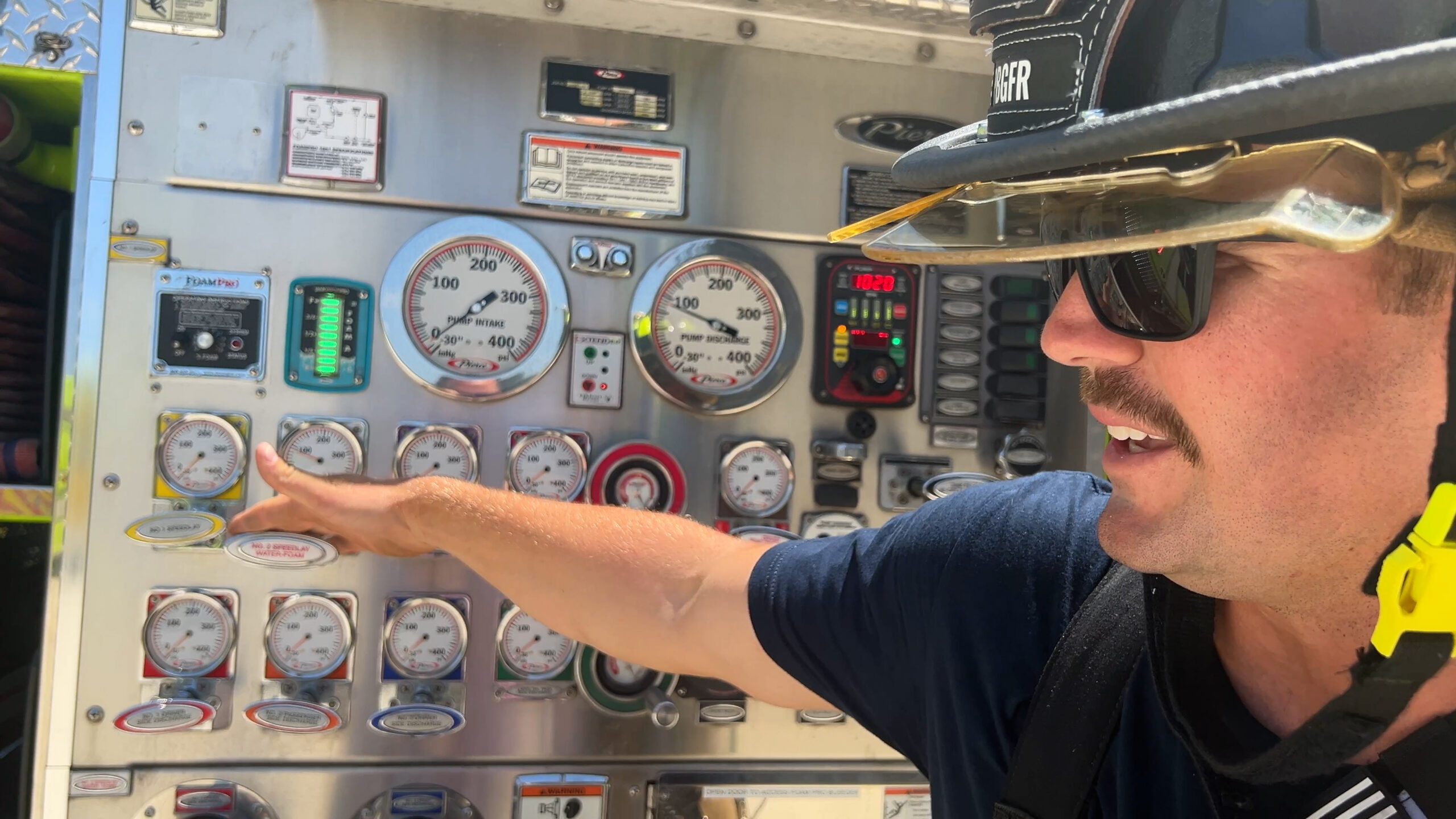
J.T. Walukiewicz: So when you come out, the first thing you’re going to do is pull your tank-to-pump. That gets your tank water into the pump to flow water. Since you don’t have a hydrant connected yet, you run it slowly off the tank and then you pull your tank recirc to keep the water circulating in the tank.
00:08:09:22 – 00:08:47:05
WATER SUPPLY
00:08:17:10 – 00:08:35:10
J.T. Walukiewicz: The engine won’t overheat or anything like that. And then you’re coming over to our number two speedlay, which is the crosslay. It’s 200 feet of 1-3/4″. We charge out to 90. So we’re going to pull this here after you let them know that you got water coming. Come to cover. Make sure you set it close to 90.
00:08:35:11 – 00:08:48:10
J.T. Walukiewicz: And then when they flow it, you’ll see what you’re flowing at. But generally, it’s pretty close to the governor that you see here. And you can cycle through and see all your temperatures and pressures and stuff on this gauge.
00:08:47:05 – 00:08:51:02
FRONT DOOR
00:08:48:13 – 00:08:50:29
Narrator: Phase two: the front door.
00:08:51:02 – 00:09:03:12
RESCUE’S RESPONSIBILITIES
00:08:51:02 – 00:09:03:14
David Silverberg: Well, the departments may have a lot more manpower than we do. Our rescue, what we call a rescue, a lot of other departments would call a med unit. Those guys really are forcible entry, ventilation, and search.
00:09:03:12 – 00:09:24:19
SIZING UP THE DOOR
00:09:03:16 – 00:09:08:15
Narrator: Lieutenant Bruce Donofrio leads the three-man rescue crew to the front door.
00:09:08:19 – 00:09:15:12
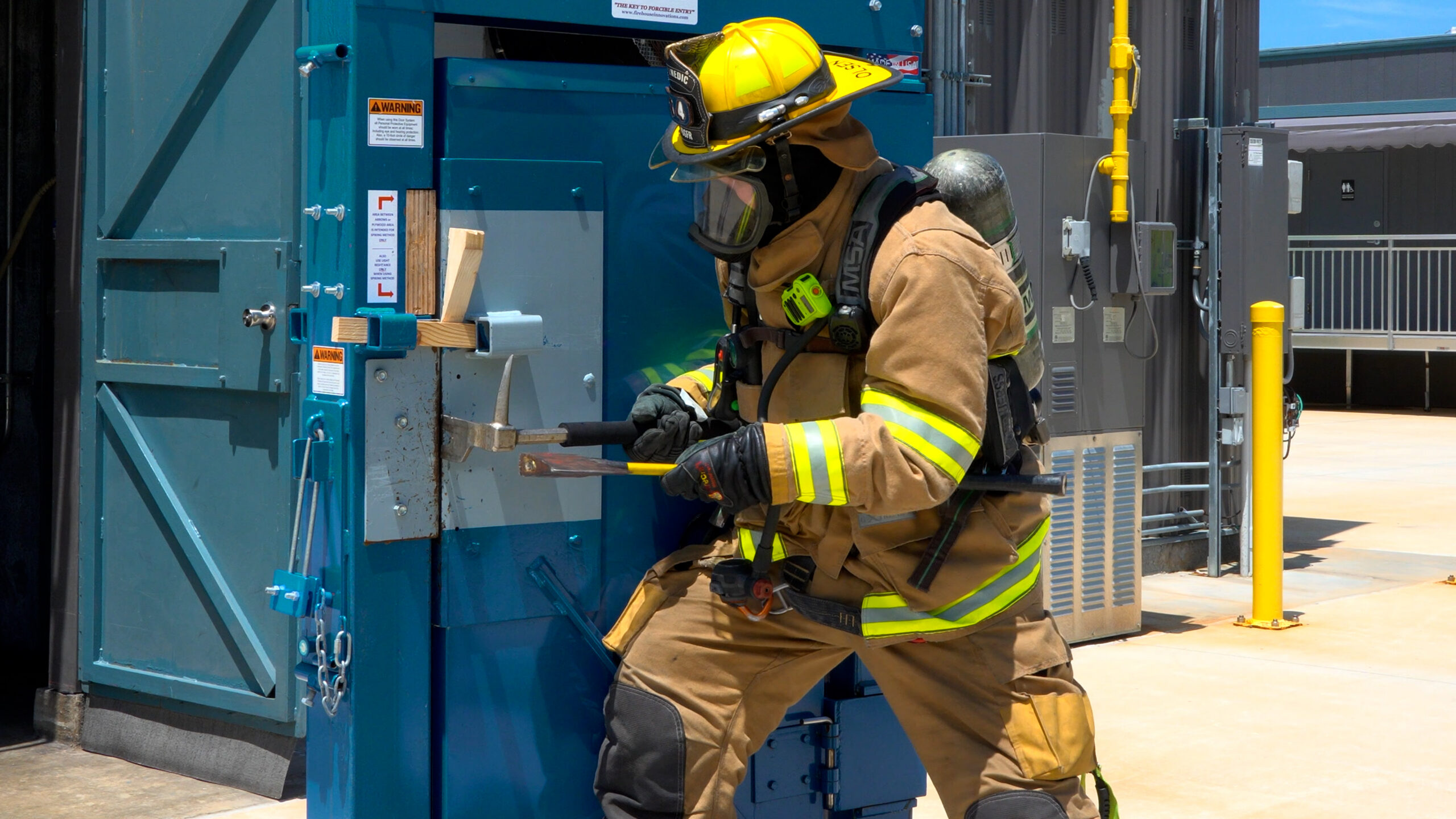
Bruce Donofrio: All right, we’re going to make entry on the Bravo side. Olsen, I’ll have you force the blue door. Carlos, help.
00:09:15:15 – 00:09:20:02
Bruce Donofrio: Flaking out the hose line. Olsen on the door. So mask up before we start.
00:09:20:09 – 00:09:35:20
Bruce Donofrio: Oh, we got to think about where the victims could potentially be. Where is the fire at? Where are we going in? You know, multistory, if they’re up on the first or on the first floor, if they’re up on the second floor. The type of door, is it a commercial door? Is it a heavy hurricane door?
00:09:24:19 – 00:09:34:20
BRUCE DONOFRIO
00:09:35:21 – 00:09:38:09
Bruce Donofrio: Is it a storm door? Is it just a regular wooden door?
00:09:34:20 – 00:09:50:03
SIZING UP THE DOOR
00:09:38:15 – 00:09:44:27
David Silverberg: They initially come up, our rescue truck, and assist fire attack and advancing hose into the fire.
00:09:44:29 – 00:09:50:00
David Silverberg: One gentleman off of that rescue will take and control the front door. We call the blue door.
00:09:50:03 – 00:09:55:00
JARED OLSEN
00:09:50:06 – 00:10:05:17
Jared Olsen: Yeah. So I’m sizing up the door. If it’s an outward swinging door and inward swinging door, two different approaches. Thought process of how I’m going to force it. I prefer the Halligan the exact way you just saw. And there’s different ways of skinning a cat. You know, you can do it many different ways. Is it swinging out to the left?
00:09:55:00 – 00:10:26:29
SIZING UP THE DOOR
00:10:05:18 – 00:10:07:09
Bruce Donofrio: Is it swinging out to the right?
00:10:07:11 – 00:10:08:24
No victims at the door. Back.
00:10:08:27 – 00:10:17:01
Bruce Donofrio: A lot of doors. Is it metal? Is it wood? Wood doors are normally a little easier. Do we have to use a saw, K-12, Sawzall?
00:10:17:03 – 00:10:23:23
David Silverberg: Down here in South Florida, most everything, because of hurricane code, is an outswing door.
00:10:23:26 – 00:10:27:03
David Silverberg: So today we just showed you the outswing door with that.
00:10:26:29 – 00:10:38:18
FLAKING OUT HOSE
00:10:26:29 – 00:10:38:18
Nozzle: Fixed-Gallonage (Metro 1)
00:10:27:06 – 00:10:32:07
Narrator: Once the fire medics flake out the hose, it’s time to make the push inside.
00:10:32:11 – 00:10:35:09
Narrator: Some crews prefer the smooth bore nozzle.
00:10:35:11 – 00:10:39:07
Narrator: Today, this crew is using a fixed-gallonage combination nozzle.
00:10:38:18 – 00:10:40:05
JEFF TAMBURRO
00:10:39:09 – 00:10:41:25
Jeff Tamburro: Water.
00:10:41:27 – 00:10:43:10
Hey. Thank you.
00:10:40:05 – 00:10:43:06
MAKING THE PUSH
00:10:43:06 – 00:10:55:28
SCHEDULE A DEMO
00:10:43:06 – 00:11:20:17
THROUGH THE THRESHOLD
00:10:43:13 – 00:10:52:09
Narrator: Captain David Hubert opens the door and uses his thermal imaging camera to get a sense of what the crew is facing and to check for extension.
00:10:52:14 – 00:10:56:15
Narrator: After a final stream check of the nozzle, the crew goes in.
00:10:56:17 – 00:11:01:28
Narrator: A second-floor fire is not just a nozzle problem. It’s also a hose problem.
00:11:01:28 – 00:11:13:01
Narrator: The line has to move through the door, through the first floor, up the stairs, around openings, through pinch points, and toward a room the crew may not be able to see clearly yet.
00:11:13:03 – 00:11:20:17
David Silverberg: We control the door and everybody, we prepare to go inside and look for fire. They assist with the hose advancement.
00:11:20:17 – 00:11:33:02
STAIRWELL PROBLEMS
00:11:20:17 – 00:11:28:02
Bruce Donofrio: You could get hung up on stairwells. As you see, there’s all these openings. Commercial stairwells would be the same way. The hose could get stuck over there.
00:11:28:05 – 00:11:34:18
Bad conditions, dark conditions, you can’t see. You just got to mind your hose. Pay attention to it.
00:11:33:02 – 00:11:59:08
COMMUNICATING HOSE ADVANCEMENT
00:11:34:21 – 00:11:34:24
Hey.
00:11:34:24 – 00:11:46:28
Jared Olsen: I think bumping up and moving up are two different terms that we use. Move up is when we’re at the fire. Bump up is when you just move to the next pinch point. It’s a common misunderstanding, but that’s why we train all the time.
00:11:47:03 – 00:11:48:15
Move up.
00:11:48:18 – 00:11:59:08
David Hubert: So we located the fire room. We see a glow coming from the room. Door’s open. So what we’re going to do is we’re going to spray at the door jamb and cool down the environment before we go in.
00:11:59:08 – 00:12:03:25
CARLOS URQUIZA
00:11:59:08 – 00:12:04:01
Carlos Urquiza: Too much hose in the same room, not enough hose in the same room could be a mistake as well.
00:12:03:25 – 00:12:09:09
EXPOSURE PROTECTION
00:12:04:03 – 00:12:06:19
Narrator: Phase four: exposure protection.
00:12:06:21 – 00:12:12:00
Narrator: While the crew is moving inside, the driver engineer still has a fireground outside.
00:12:09:09 – 00:13:00:15
DRIVER ENGINEER
00:12:12:03 – 00:12:29:13
David Silverberg: We always say the driver has ten things to do. If he gets them all done, nobody knows. If he misses one, everybody knows. Part of one of his assignments, and not only the setup for fire attack pressures, backup lines, saws, lighting, maybe throwing a ladder by himself, is if there’s any exposures.
00:12:29:13 – 00:12:52:16
David Silverberg: So me being able to throw a 50-foot roll down and leaving 15, 20 feet behind that monitor pointing at an exposure, I can set that stream. And with the nozzle we’ve seen today, I can even adjust the pitch. It’ll stay where I aim it, and I can control the rest of that as a driver by gating that hose line down.
00:12:37:08 – 00:12:53:20
BlitzFire Portable Monitor
00:12:52:16 – 00:12:56:01
David Silverberg: So let’s say the back of this building has a 500 LP.
00:12:56:04 – 00:12:57:08
David Silverberg: Exposure.
00:12:55:09 – 00:13:09:21
SCHEDULE A DEMO
00:12:57:11 – 00:13:06:26
David Silverberg: I can start throwing water on that as the driver, with those guys being inside, and don’t have to take any other personnel to do that. It can be a one-person job.
00:13:00:15 – 00:14:05:18
WHAT SHOULD YOU LOOK FOR IN A GROUND MONITOR?
00:13:06:27 – 00:13:08:12
David Silverberg: As a ground monitor, we try to.
00:13:08:19 – 00:13:09:22
David Silverberg: At least 500.
00:13:09:25 – 00:13:21:17
David Silverberg: I’m looking for something that can move GPMs, not have that much of a recoil on it or, you know, reaction to it. It can be a single-person deployment, and it’s stable when it gets there on the ground.
00:13:21:19 – 00:13:35:16
David Silverberg: So if I have a driver go out, and we train our drivers to be able to do this on their own, drop down a monitor, and whether it’s smooth bore for reach or the fog for taking care of an exposure, they can move it with three-inch hose on that.
00:13:35:16 – 00:13:51:16
David Silverberg: I can get 500 GPMs. I have an inch and 3/8 tip or the fog that we have on that end, and I can direct that nozzle. And having a nozzle that doesn’t recoil when I let go, having a nozzle that actually stays where I point it, is an absolute advantage.
00:13:51:19 – 00:13:56:22
David Silverberg: So now I can take an exposure and I can cover that while the other guys are inside.
00:13:56:24 – 00:14:05:18
David Silverberg: Stay in a fixed position like that. He can aim that nozzle and then leave that unmanned, and he can get back over to the rest of his jobs.
00:14:05:18 – 00:14:11:01
10° Unassisted Attack Angle
00:14:05:18 – 00:15:03:21
WHY DOES STREAM ANGLE MATTER?
00:14:05:21 – 00:14:25:03
David Silverberg: Able to lower that angle down, that’s probably what, ten degrees? So with that angle like that, he can get a direct aim on his target. So instead of having to, which a lot of times on other monitors to be able to get that reach, I would be doing from the gate, I would gate it down, and I adjust my aim by pressure.
00:14:25:03 – 00:14:40:28
David Silverberg: And I got other lines that he’s operating on that are inside. So they have to maintain their pressure. But if he can gate that, he’ll be able to keep that aim on that with that pressure. With this nozzle, he can just aim it down to ten degrees and hit it, bullseye it. And he doesn’t have to worry about getting.
00:14:41:02 – 00:14:56:00
David Silverberg: And then if I’m trying to make a reach, if I don’t have something that can go down to ten degrees, I’m going to have to take care of that reach with the RPM, with the gate valve on the engine. The engine will all be operating in pressure for lines that attack lines are already in play.
00:14:56:00 – 00:15:04:10
David Silverberg: So this line itself will have to be gated down. And with that, he can see from the panel and get that down for the aim. So he hits bullseye.
00:15:03:21 – 00:16:01:02
WHY DOES SAFETY SHUTOFF MATTER?
00:15:04:12 – 00:15:10:00
David Silverberg: Now if you want to see, is this thing shut off?
00:15:10:03 – 00:15:16:05
David Silverberg: We’ll get that where it slowly shuts on its own, so it doesn’t water hammer on the driver. And why is that a good thing?
00:15:16:09 – 00:15:40:05
David Silverberg: If that nozzle ever becomes unstable or starts to move left or right, or if there’s a trained twist in the hose, which happens over time, and that monitor tries to lift left or right, that nozzle will shut down.
00:15:40:08 – 00:15:57:01
David Silverberg: That jar sideways like that, I needed my foot to get it because I wasn’t able to flip this nozzle. As soon as it gets jarred like that sideways, it shuts down automatically. How does that solve a problem? Well, it keeps anybody from getting hurt because this thing, if it’s not strapped properly or a problem with that, it can take off sideways.
00:15:57:03 – 00:16:00:25
David Silverberg: So it being able to shut down due to the built-in safety mechanism, which is really nice.
00:16:01:02 – 00:16:05:19
FIRE ROOM
00:16:01:02 – 00:16:05:20
Narrator: Back inside the building, it’s time for phase five: the fire room.
00:16:05:19 – 00:16:28:18
HOW FLASHOVER SPEED HAS CHANGED TACTICS
00:16:05:23 – 00:16:28:23
David Silverberg: Depending on the temperature of where they’re going to attack. The old school days of sneaking all the way up on it until you see flame. Everything flashes over a lot quicker now, so we need to start moving water downrange before we actually even get there to start controlling temperature, and we can start dropping the temperature in rooms that we’re not even at by how we direct that with our smooth bore.
00:16:28:18 – 00:16:47:23
APPROACHING THE FIRE ROOM
00:16:28:26 – 00:16:37:21
David Silverberg: When they do that fire attack and they make the room, depending on the heat and the layout, they’ll start flowing water depending on the temperature and viz.
00:16:39:16 – 00:16:47:23
Metro Fixed-Gallonage Nozzle
00:16:37:21 – 00:16:41:26
David Hubert: There’s actual fire going on. You most likely see a glow out of the side of this door.
00:16:41:28 – 00:16:46:17
David Hubert: Then we’ll just hit this jamb, knowing that we obviously don’t see fire here, but it’s close because we.
00:16:46:24 – 00:16:51:21
David Hubert: The glow. So hit that jamb and deflect off, cool that environment, and hopefully hit some of the fire.
00:16:51:24 – 00:16:52:19
David Hubert: And make it easier.
00:16:52:20 – 00:16:55:07
David Hubert: Push for us inside so we don’t get beat up by the heat too bad.
00:16:53:00 – 00:17:17:27
APPROACHING THE FIRE ROOM
00:16:55:09 – 00:17:13:14
David Silverberg: When they see a glow coming from down the hallway as they’re moving up towards the fire room, they may not be able to see the jamb. There might be a lot of banked down smoke layering happening, so when they go down here, they’re going to be listening by sound about where their nozzle is, how big the room is, as he moves the nozzle in a heated room.
00:17:13:14 – 00:17:33:25
David Silverberg: He can hear when it’s bouncing off walls and when it’s hitting a jamb. If he hits that jamb, it will spray water and indirectly map that room well before they get there. They never stop their forward motion. But as they’re going, if somebody is laying in there and waiting for the temperature to drop, they’re starting to drop the temperature from down the hallway.
00:17:17:27 – 00:17:50:06
GETTING WATER INTO THE ROOM
00:17:33:25 – 00:17:49:28
David Silverberg: So to be able to do that, even though that’s on an angle, they won’t be able to see the jamb, but they’ll hear it. So we train them on being able to tell where the nozzle is going by sound. And if they move forward, never stopping, and that nozzle is flowing towards the jamb, it’s already mapping the room.
00:17:50:06 – 00:18:01:11
RESCUE CREW BREAKS OFF: PRIMARY SEARCH
00:17:50:06 – 00:18:01:14
David Silverberg: And as soon as we have water on fire, rescue will then move up and conduct a primary search, which is their number one goal of life safety. They’ll break off from Fire TAC and do a complete primary of the building.
00:18:01:11 – 00:18:54:03
TAILBOARD TALK: FIRE ROOM
00:18:01:17 – 00:18:26:09
David Silverberg: So that nozzle will be their eyes for them. If they can’t see, you can tell the difference on the size of a room by the way a smooth bore operates inside that, and you’re moving water downrange as you’re moving towards the fire room. So if that incorporates banking water off the jamb to do an indirect water attack into a room that you’re not actually in yet, that’s what we want, and we want.
00:18:26:11 – 00:18:30:17
David Silverberg: Thinking firemen like that to be able to move forward and be flowing water the whole.
00:18:30:19 – 00:18:39:15
David Silverberg: There’s a couple things happening with that. They’re already lowering the temperature. And if there is any fire conversion turning to steam, it’s not hitting them in the face at the doorway.
00:18:39:20 – 00:18:54:10
David Silverberg: It’s already starting to convert well before they get to the door. And then it’s an aggressive controlled violence is what we’re looking for. We want a movement with purpose and to run at the problem with purpose. So that’s what they’re doing the whole time with that.
00:18:54:03 – 00:19:01:06
BONUS TIP
00:18:54:13 – 00:19:01:06
Narrator: The fire’s out, but there’s still work to do, like ventilation. Let’s head to TFT headquarters for a bonus tip.
00:19:01:06 – 00:19:06:29
BEN LEHMAN
00:19:01:06 – 00:19:04:19
Ben Lehman: Once you’re in that fire room, you may not have done a complete search.
00:19:04:22 – 00:19:08:27
Ben Lehman: Fire is suppressed. I don’t have to work this nozzle like mad. I’ve already worked.
00:19:07:23 – 00:19:11:13
TRYING TO VENTILATE?
00:19:08:29 – 00:19:11:26
Ben Lehman: Inside a building, up the stairs, and in the fire room.
00:19:11:29 – 00:19:17:05
Ben Lehman: Take it easy on yourself. Flip this Vortex pattern and allow the stream to ventilate the rooms.
00:19:13:00 – 00:19:17:05
BETTER VENTILATION IN ONE TWIST
00:19:17:05 – 00:19:29:18
Ben Lehman: This Vortex nozzle, while a solid stream, smooth bore nozzle for that exterior application, you can rotate to a Vortex pattern, put it out the window, and hydraulically ventilate. Clear the room for any occupants you still have inside.
00:19:19:25 – 00:19:27:24
VORTEX ADJUSTABLE SMOOTH BORE
00:19:29:20 – 00:19:33:17
Ben Lehman: And, if you need to, you can slip right back into a smooth bore pattern.
00:19:31:11 – 00:19:35:14
SCHEDULE A DEMO! TFT.COM/DEMO
00:19:33:19 – 00:19:35:19
Ben Lehman: All operating at 50 psi.
00:19:35:14 – 00:19:50:06
COMING UP IN EPISODE 15: SEARCH, RESCUE AND SPEED
00:19:35:21 – 00:19:50:06
Narrator: Coming up in episode 15, a deep dive on search and rescue, including how Palm Beach Gardens overcomes the cinderblock walls, hurricane glass, and extreme heat conditions that it faces on a typical fire.
00:19:50:06 – 00:19:56:24
David Silverberg: That hurricane-type construction for us as firefighters makes it very tough to get into these buildings.
00:19:55:00 – 00:19:56:24
COMING UP IN EPISODE 15: SEARCH, RESCUE AND SPEED
00:19:56:27 – 00:20:05:02
Narrator: And to win this scenario in your department, head to TFT to see the equipment with your own two eyes.
What makes Palm Beach Gardens’ approach interesting is that they don’t treat the first-arriving rescue crew like a separate medical unit waiting for its moment. They use those firefighters immediately as a truck-work force: forcing doors, helping stretch and move hose, controlling access, and then breaking off for search once water is on the fire. At the same time, the driver engineer is expected to do far more than pump—managing water, tools, exposure protection, and even one-person portable monitor deployment when needed. For any firefighter watching, the useful lesson is clear: with a disciplined six-person response, the fire attack does not have to stall while everyone waits for more hands.
Even if your department staffs, rides, or assigns roles differently, PBG’s model gives you a sharper way to think about the first few minutes: who can remove friction, who can keep the line moving, and how each firefighter can become more useful before the next crew arrives. It is not about copying their system exactly—it is about finding one or two moves that make your own company faster, calmer, and harder to stall.
Chief Training Officer David Silverberg and the Palm Beach Gardens Fire Department walk through a second-floor bedroom fire in a two-story home with a three-person engine and a three-person rescue. The lesson is clear: when staffing is tight, every role has to be versatile. The crew covers five key phases: arrival, front-door control, making the push, exposure protection, and getting water into the fire room. Palm Beach Gardens shows how a small initial response can still move fast when firefighters understand each other’s jobs, manage hose well, and put water downrange with purpose.
A second-floor bedroom fire asks a lot from a small crew. Somebody has to read the building, pull and charge the line, force the door, manage hose, protect exposures, and move toward the fire room.
David Silverberg explains that Palm Beach Gardens does not operate like departments that can put large crews on the first alarm. Their initial response is often six people: three on the engine and three on the rescue. That means speed matters, but so does role flexibility.
Their answer is to train every position to understand almost every other position. The goal is not to blur accountability. The goal is to keep the first few minutes from getting bogged down.
The captain’s first job is to read the building and set the plan.
Captain David Hubert starts with a windshield report, then performs a 360 or modified 360 based on access and building size. He looks for smoke, fire, victims at windows or doors, exposures, overhead hazards, building construction, and any obvious hazards around the structure.
At the same time, the firefighter is already pulling the crosslay to the door. In this episode, the crew uses a 200-foot, 1¾-inch crosslay.
The key lesson: the size-up and hose stretch happen together. The captain is gathering information while the line is already being moved into position.
Silverberg warns that buildings in South Florida can hide fire conditions. Concrete block construction, hurricane glass, and tight modern construction can make the outside of the building misleading.
A bad first read creates catch-up work. Crews may have to pivot, change access points, or adjust the attack plan after the line is already committed.
Palm Beach Gardens puts weight on the captain’s first decision because the first line often sets the direction for the rest of the incident.
In Palm Beach Gardens, the rescue crew does more than EMS work. Silverberg explains that their rescue handles truck-type tasks such as forcible entry, ventilation, hose management, and primary search.
At the front door, Lieutenant Bruce Donofrio starts by sizing up the entry problem:
Fire Medic Jared Olsen explains that the swing of the door changes the forcible-entry approach. Silverberg also notes that in South Florida, many doors are outward-swinging because of hurricane code.
The front door is not just an entry point. It is a control point for access, hose movement, and the conditions the attack crew will face inside.
A second-floor fire is not only a nozzle problem. It is a hose problem.
The line has to move through the entry door, across the first floor, up the stairs, around corners, through pinch points, and toward a fire room the crew may not clearly see yet.
Donofrio points out that stairwells and openings can catch the hose. In poor visibility, crews have to stay aware of where the line is and what it is hanging up on.
Olsen adds that communication matters. In their training, “bump up” means move to the next pinch point. “Move up” means the crew is at the fire. Mixing up those terms can create confusion during the push.
The takeaway: hose movement has to be trained as deliberately as nozzle work.
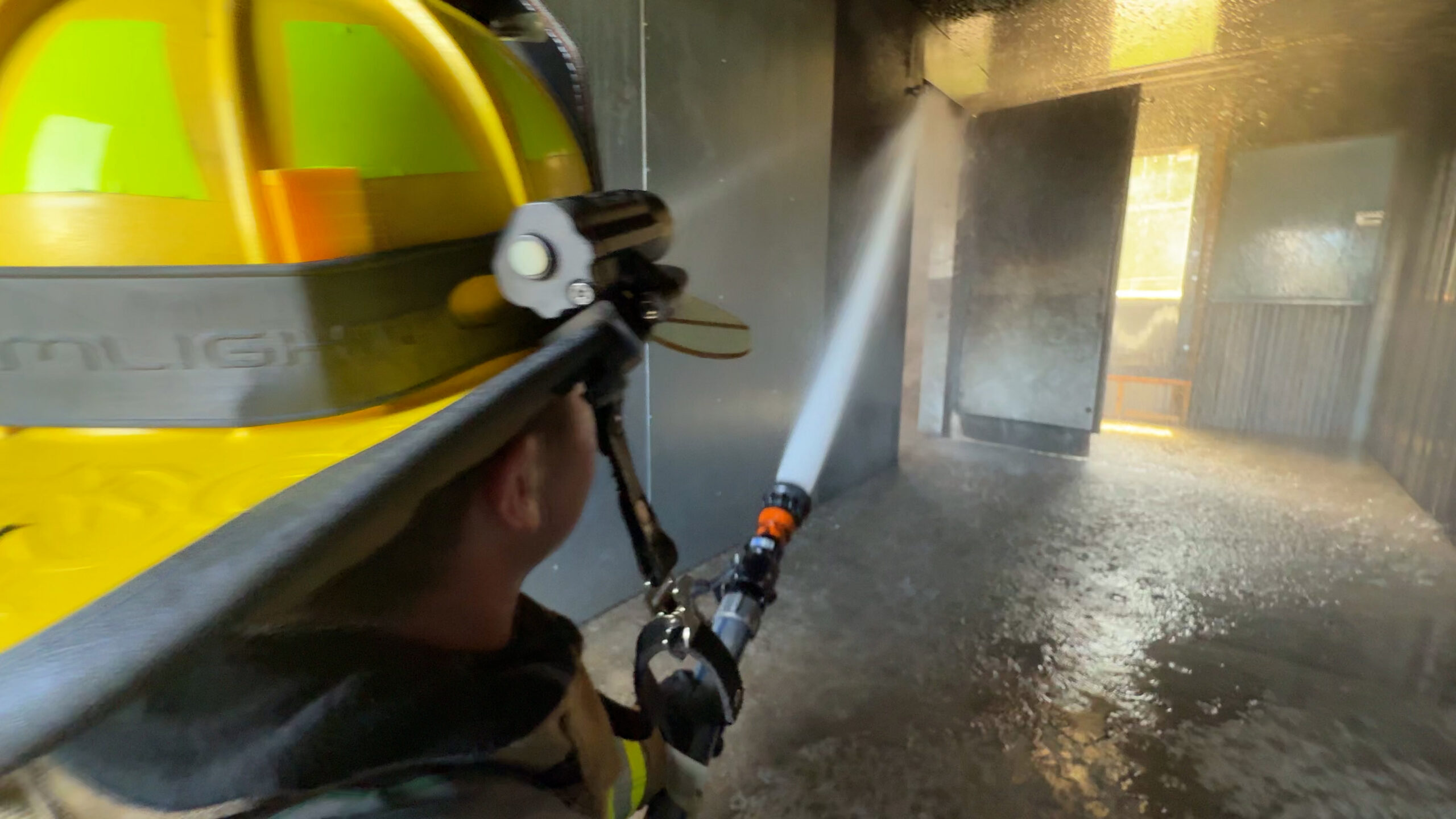
While the attack crew is working inside, the driver engineer still has a fireground outside.
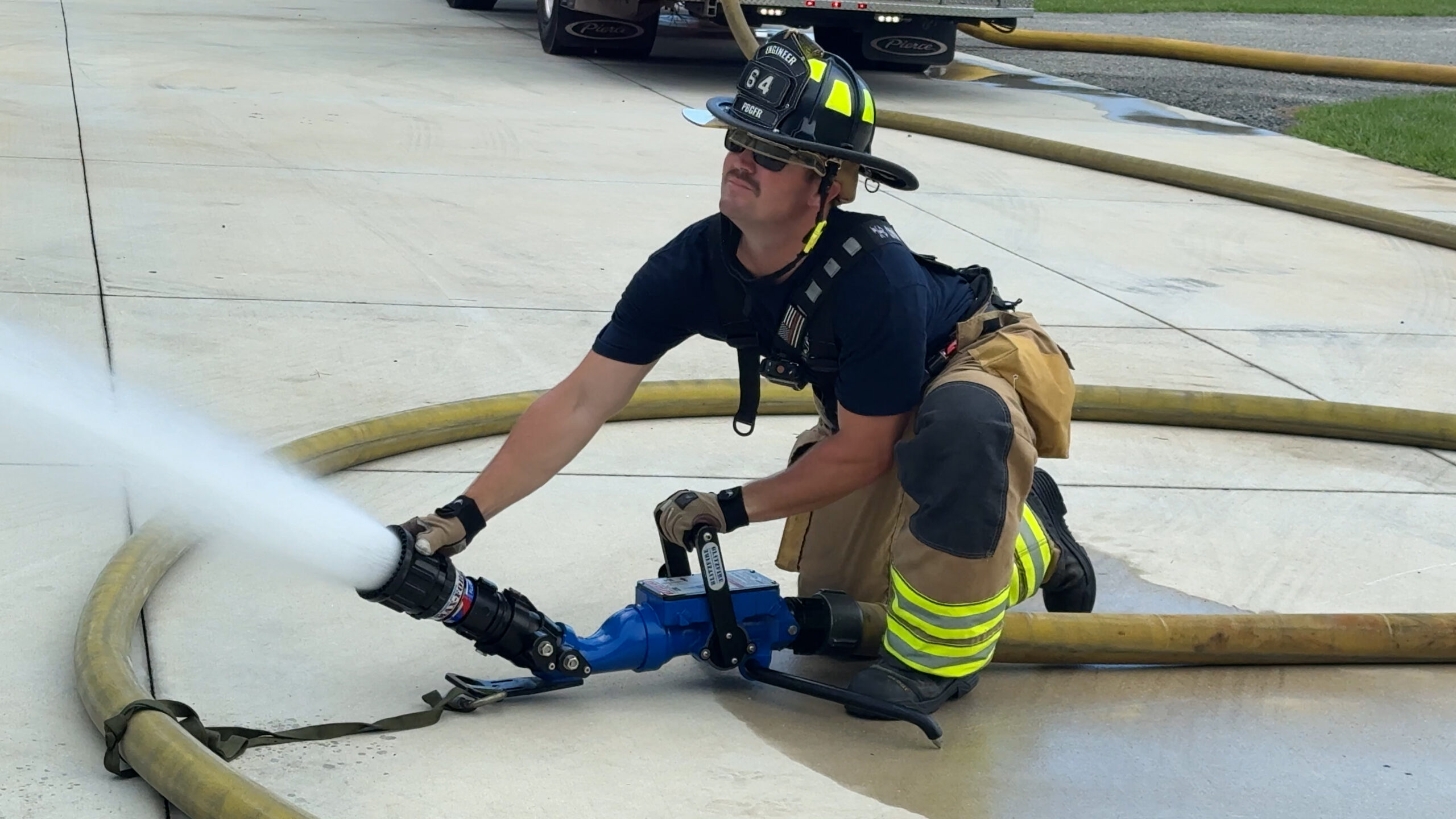
Silverberg says the driver may be handling pump operations, pressures, backup lines, saws, lighting, ladders, and exposure protection. In this scenario, a portable ground monitor can let the driver protect an exposure without pulling another firefighter from the interior operation.
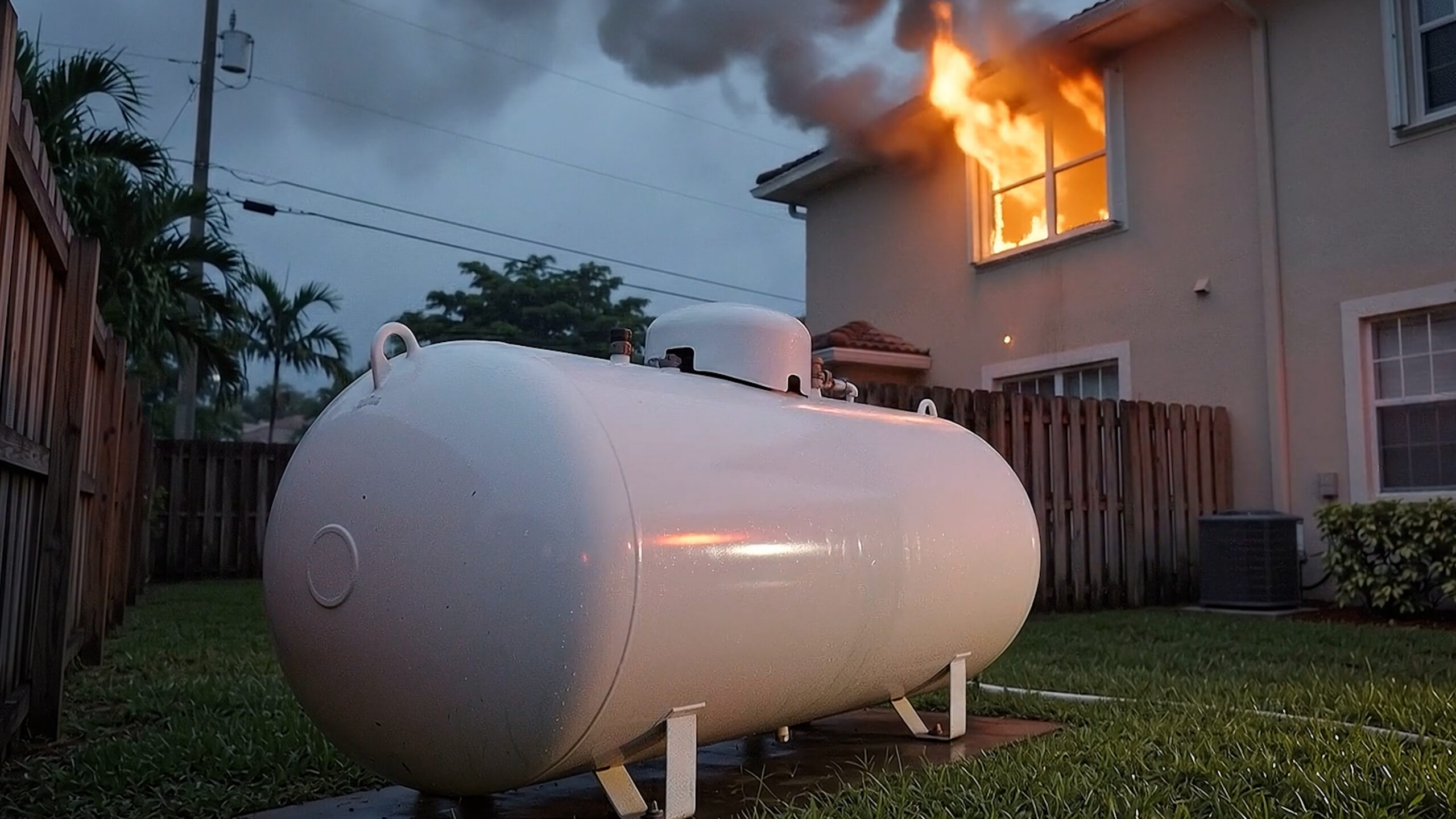
He gives the example of a 500-gallon LP exposure behind the building. A driver can deploy a ground monitor, aim it at the exposure, gate the line down, and return to other pump-side responsibilities.
What Should Crews Look for in a Ground Monitor?
Silverberg looks for a monitor that can:
Silverberg: Being able to lower the stream to 10° helps the driver hit the target without relying only on pump pressure or gating to adjust reach.
Tactical note: The BlitzFire monitor stays stable during normal forward/backward movement, with shutoff only triggered by side force.
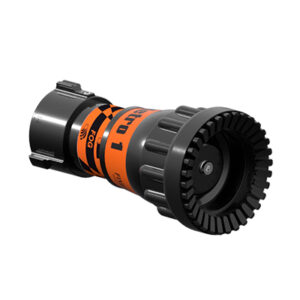
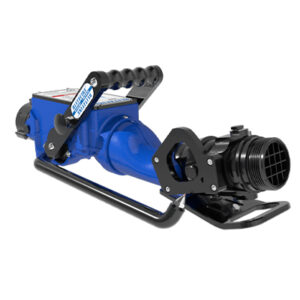
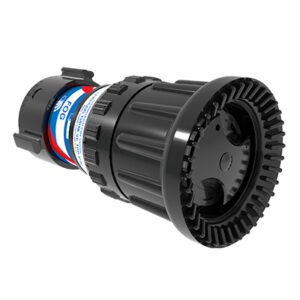
Silverberg explains that a built-in safety shutoff can help if the monitor becomes unstable or starts to move. If the device gets jarred sideways, it shuts down instead of taking off or sweeping across the fireground.
That matters because an unmanned monitor has to stay predictable. A driver should be able to set it, confirm the stream, and get back to pump operations without creating a new hazard.
Silverberg explains that modern fires flash over faster than they used to. Because of that, crews may need to move water downrange before they are directly inside the fire room.
Hubert describes seeing a glow near the fire room door and using the stream off the door jamb to cool the environment before entry. The idea is to deflect water into the room, lower heat, and make the push easier on the crew.
Silverberg adds that in heavy smoke, firefighters may not see the jamb clearly. They can use sound to tell where the stream is hitting. By listening to the stream bounce off walls or strike the jamb, the nozzle firefighter can begin mapping the room before reaching the doorway.
The nozzle becomes another set of eyes.
Palm Beach Gardens keeps the rescue crew tied into hose advancement until water is on the fire. Once the fire is controlled, the rescue crew breaks off to conduct the primary search.
Silverberg frames that as a life-safety priority. The rescue crew helps get the line in place first, then moves into search once conditions are improved.
No one fights fires like your department. This is your chance to highlight your crew's aggressive tactics and unique responses.
Download the portable monitor product guide your crew can use at the firehouse or in the field.