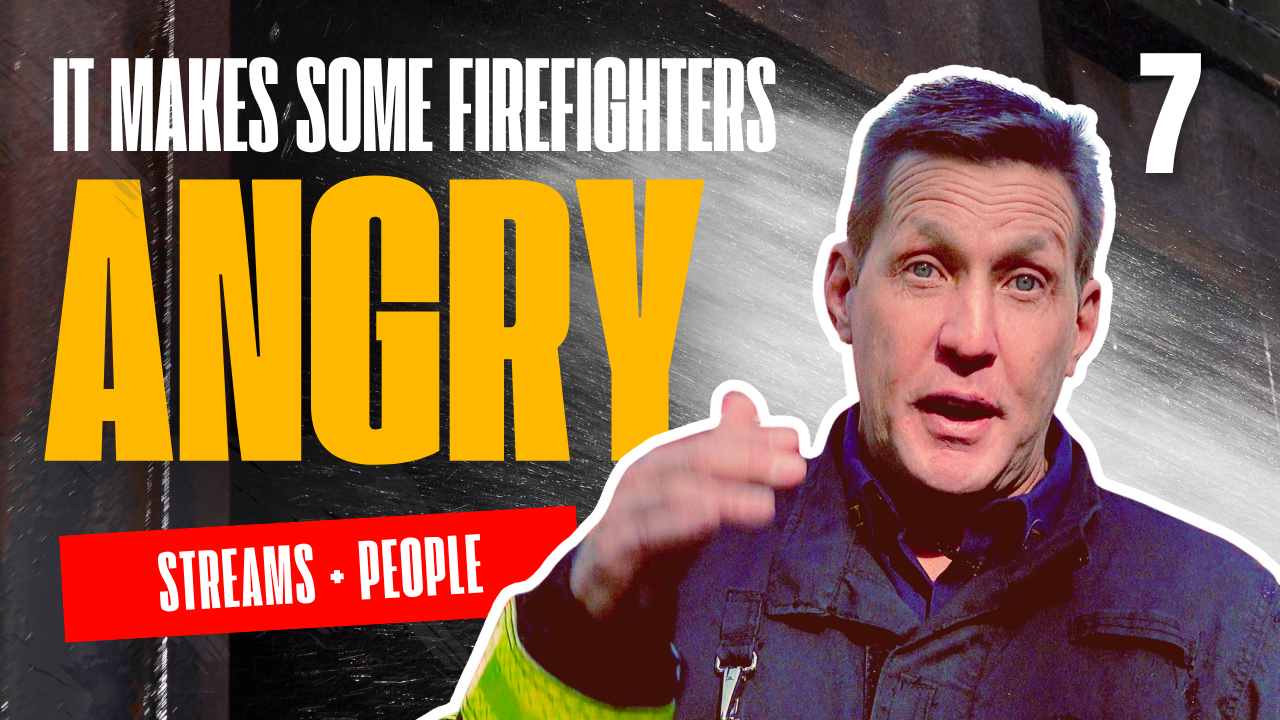
Yeah, so one of the myths we’re still fighting against is the idea that if you put water in from the outside, you’re going to steam firefighters on the inside. We know that’s not the truth — that’s not going to happen.
Some people call it VIS, VES, or EVIS. FSR calls it “window-initiated search.” And in this episode, we’re exploring five questions:
What exactly is window-initiated search?
What steps should firefighters take?
What problems should they avoid?
Is going into a window dangerous?
And aren’t you going to steam the firefighter inside?
We’re in metro Atlanta to find out from Cobb County’s Sean Gray. He’s a fierce defender of aggressive search tactics. “It’s a very safe and appropriate tactic. We’re very successful with it. We bring civilians out of windows and down ladders all the time.”
So, diving into the first question: What exactly is window-initiated search?
Window-initiated search — which many of you may know as VES, VEIS, or EVIS — has different names depending on the region. We’re using the term “window-initiated search” because it describes the geographic entry point. If you’re entering through a window, it’s window-initiated. If you go through a door, it’s door-initiated. It’s that simple. We stripped away the mnemonics to avoid the usual debates and make it easier to teach and understand.
Second question: What steps should firefighters take in this scenario?
You’re going to see one of our firefighters go up and enter through a window. Here in Cobb County, we have a very strong search culture. We do a lot of window-initiated searches. In this scenario, the firefighter enters the window to search for a victim. But things go bad — maybe he doesn’t make it to the door in time, and the room begins to flash over.
When we got up there, we saw there was more fire than expected. So we hit that window with water. We were setting a thermal layer so we could still search the room and continue with our progression. Thanks to research-based tactics, we’re not afraid of water. We’ll put water through a window while a firefighter is inside searching — to knock down the conditions and make things better for both the victim and the firefighter.
Next question: How can I avoid problems in this scenario?
Try to flood the building with people and with water — at the same time. We’re not afraid of water at all. We do try to coordinate, especially to make sure the stream isn’t hitting a firefighter directly — like if someone is standing right in front of a window. You don’t want to knock their mask off or hit them in the face. But in this case, we know conditions in the room are going bad, so we act quickly to make them better.
If someone is trapped, or if there’s a mayday, we flood the building with water and knock the fire down. Then we help that person. Water makes everything better.
So what equipment works best for this tactic?
Why is a smooth bore nozzle a good choice? I’ll give you two reasons.
First, you don’t need to do stream checks with a fog nozzle. With a smooth bore, you can focus on hose advancement and surface cooling.
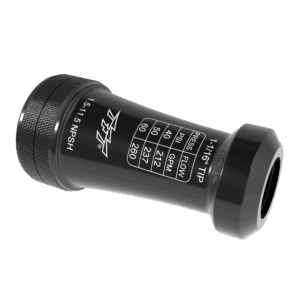
Second, smooth bore nozzles operate at 50 psi. That gives you the lowest reaction force possible. Fight the fire, not your nozzle. It doesn’t look like much, but 260 gallons per minute will go a long way through this nozzle.
You can shop for this nozzle — or any nozzle that fits your department — at ft.com/shop.
Let’s talk about some myths.
A lot of people still think that entering through a window is very dangerous — that VES or window-initiated search is a high-risk tactic. But we teach all of our people fire dynamics, how to close doors, how to identify flow paths, read smoke, and size up the building. We do search size-ups and fire attack size-ups. These firefighters are dialed in. They know exactly what they’re doing.
It’s a very safe and effective tactic. We bring civilians out of windows and down ladders all the time.
And no — you are not going to steam a firefighter inside when you apply water from the outside. That myth has been around for years, but we know it’s not true. The only thing that’s going to happen is the fire will go out, and the firefighter might get wet.
Why is this worth training on?
Because here in Cobb, our fireground priorities are clear: search and fire attack. Those two things matter most. Get water on the fire. Get all the victims out of the building as quickly as possible. That’s why we focus so heavily on the details of both.
When you hear “window entry,” do you think last-ditch move — or smart, fast search tactic?
In Cobb County, Georgia, it’s the latter. Their fireground playbook includes a no-nonsense approach to what they call window-initiated search — a simplified term that avoids the usual VES/VEIS/EVIS debate.
“We’re very successful with it,” says Captain Sean Gray. “We bring civilians out of windows and down ladders all the time.”
This episode of Fully Involved heads to metro Atlanta to break down how Cobb’s crews apply aggressive, research-backed search tactics when fire conditions are less than ideal.
According to Captain Gray, yes — when it’s done right.
He’s quick to shut down persistent myths that say entering through a window is reckless or that flowing water during a search will steam interior crews.
The tactic goes by different names depending on the region — VES, VEIS, EVIS — but Cobb keeps it simple: window-initiated search. One firefighter enters through the window, isolates the room, and starts searching. If things go sideways, the team outside puts water through the window to cool the space and protect both victim and firefighter.
Gray says this approach works because Cobb trains hard, coordinates fast, and puts trust in modern fire behavior science.
We know that’s not the truth. The only thing that’s going to happen is the fire goes out, and the firefighter gets wet.
Captain Sean Gray
Here’s the process Cobb County uses on real incidents, as explained by Captain Gray:
1. Identify the Target Room
2. Ladder and Access
3. Make Entry
4. Search the Room
5. Adjust as Needed
Even if the firefighter hasn’t made it to the door yet, Cobb will flow water to improve conditions for the victim and the rescuer inside.
We flood the building with people and water. We’re not afraid of water at all.
Captain Sean Gray
Cobb’s nozzle choice is deliberate and tactical:
Smooth Bore Nozzle
Smooth bore tips offer low reaction force and strong flow, making them ideal for quick exterior water application during window-initiated search.
Captain Sean Gray says window-initiated search makes the biggest impact in these types of fireground situations — where speed, access, and survivability are all in play.
For victim rescues or down firefighters, Cobb commits both people and water aggressively.
Priority is to knock back fire fast and support interior crews.
Window-initiated search isn’t just a workaround — it’s a core tactic when executed with training, coordination, and intent.
No one fights fires like your department. This is your chance to highlight your crew's aggressive tactics and unique responses.

Download the step-by-step checklist your crew can use at the firehouse or in the field.
Be the first to catch new episodes. Get updates straight to your inbox and never miss insights into regional firefighting tactics.