

00:00:01:10 – 00:00:03:25
Unknown
On this episode of Fully Involved,
00:00:03:25 – 00:00:05:11
Unknown
more and more and more of this,
00:00:05:11 – 00:00:07:16
Unknown
we are going to get a little tired. Right.
00:00:07:20 – 00:00:09:03
Unknown
These are people are
00:00:09:03 – 00:00:11:00
Unknown
Am I moving water? I sure am
00:00:11:00 – 00:00:13:21
Unknown
But a lot of water is not going to the affected area.
00:00:13:21 – 00:00:17:28
Unknown
you take advantage of what this water mapping prop does, you can actually see where the water goes
00:00:17:28 – 00:00:25:12
Unknown
the crew is back at Connecticut Fire Academy to find out how to get more water where you need it. With less fatigue.
00:00:25:12 – 00:00:33:06
Unknown
We’ll answer five questions about stream tactics, specifically one. Which nozzle works best for this situation?
00:00:33:22 – 00:00:37:27
Unknown
Two. How can I master pre staging for the second floor?
00:00:38:27 – 00:00:39:14
Unknown
Three.
00:00:39:14 – 00:00:44:00
Unknown
How can stream placement totally change my second floor push?
00:00:44:00 – 00:00:44:23
Unknown
up.
00:00:44:23 – 00:00:45:10
Unknown
Four.
00:00:45:10 – 00:00:48:19
Unknown
What should the slide in to the bedroom look like?
00:00:48:19 – 00:00:49:05
Unknown
are
00:00:49:28 – 00:00:50:20
Unknown
Five.
00:00:50:20 – 00:00:53:00
Unknown
Why does stream angle matter?
00:00:53:00 – 00:00:55:19
Unknown
We’ll use two different water mapping props.
00:00:55:19 – 00:00:56:04
Unknown
your stream.
00:00:56:04 – 00:01:00:04
Unknown
And finally a bonus tale board talk with instructor Pete Morano.
00:01:00:04 – 00:01:02:14
Unknown
is going to go ahead and control that common hallway,
00:01:02:14 – 00:01:05:05
Unknown
control that environment and make our push easier.
00:01:18:10 – 00:01:26:25
Unknown
The fully involved crew is back for a third episode in Windsor Locks, Connecticut, with instructors Pete Murano and Brian Hurst.
00:01:26:25 – 00:01:27:07
Unknown
I like
00:01:27:19 – 00:01:35:07
Unknown
Episode eight was all about making a low staffed push to a fire on the first floor of a typical New England house.
00:01:35:07 – 00:01:36:12
Unknown
in episode nine.
00:01:36:13 – 00:01:40:08
Unknown
The crew covered exterior water application in the living room.
00:01:40:08 – 00:01:46:09
Unknown
Now, in episode ten, the mission is get to a second floor bedroom fire fast.
00:01:46:09 – 00:01:53:13
Unknown
And the instructors are going deep on stream placement and water mapping with two different props and a burn building.
00:01:54:06 – 00:02:00:06
Unknown
We pick things up in the stairwell up to the second floor. After having put the living room fire out.
00:02:00:06 – 00:02:04:17
Unknown
gonna look at this as we’re advancing, and we’re going to treat this as a residential stairwell.
00:02:04:17 – 00:02:10:28
Unknown
You know, whether it be a multi-family, two and a half storey with a wood frame or just a regular residential where we’re trying the top
00:02:10:28 – 00:02:19:16
Unknown
floor, we’ll treat it as such. Where we have fire that is maybe, overtaking the second floor residential allowed a couple rooms.
00:02:19:18 – 00:02:29:00
Unknown
We’re starting to see the effects of, of obviously smoke starting to be in the stairwell. Did have good fire on arrival. So how are we going to go ahead and control the stairwell? So we can
00:02:29:00 – 00:02:29:25
Unknown
make a push?
00:02:29:25 – 00:02:44:12
Unknown
Let’s define a couple terms that you’re going to hear in this episode. One is water mapping. Essentially the study of how nozzle pattern, angle and movement affect where the water goes, how it maps across surfaces.
00:02:44:12 – 00:02:47:25
Unknown
instead of straight down like it was previously thought.
00:02:47:25 – 00:02:51:29
Unknown
You’ll hear Captain Morano say it. What is the water actually doing?
00:02:51:29 – 00:02:54:20
Unknown
Another term you’ll hear reflex time.
00:02:54:24 – 00:03:25:14
Unknown
So as units arrive, based on your staffing and your response profile to how fast those task is done. So generally on the Fireground, you know, fire attack, first engine takes care of fire track fire attack and your first truck or outside truck. But, we’ll take care of outside ventilation as well as search in the inside. So, you know, depending on how your department route, response arrives and the timing all that, you may have an engine company on scene for five minutes before the next company comes up and assist you in any of those tasks.
00:03:25:16 – 00:03:29:28
Unknown
So you are working in a resource. If there’s no ventilation prior to your arrival.
00:03:30:04 – 00:03:35:15
Unknown
Time for question one. What equipment works best for a second floor push?
00:03:35:15 – 00:03:46:13
Unknown
In this exercise, the crew chooses an inch and three quarter line, a smoothbore nozzle with a 7/8 inch tip, and they’re flowing about 160 gallons a minute.
00:03:46:19 – 00:04:03:21
Unknown
we’re talking about residential and hand lines. I like that that smoothbore 17 is tit for sure for this application. Again, if we were going to use the fog nozzle here, that’s fine. We just have to make sure always on straight stream and make sure especially with we’re moving as a as low staffing situation.
00:04:03:23 – 00:04:07:07
Unknown
So if you’re moving low staffing that means you’re doing a lot of pulling a lot of moving.
00:04:07:07 – 00:04:21:11
Unknown
So just be careful and be cautious. If you’re doing a lot of that with the combination or fog nozzle on there. It’s not your intent. But as you’re dragging and pulling line that might kick back to fog. So get into the habit of wood before you open
00:04:21:11 – 00:04:22:10
Unknown
that nozzle.
00:04:22:13 – 00:04:32:29
Unknown
You should have that muscle memory where you go right to that right to fight. Make sure it’s all the way over, because you don’t want to open up into that fog stream for you’re going to get that air and train, but you’re going to get that push behind you,
00:04:32:29 – 00:04:35:13
Unknown
right? You’re going to create when you’re going generate a little bit more steam.
00:04:35:15 – 00:04:49:01
Unknown
So especially for what we’re talking about with that remote water application, that laser beam smoothbore nozzle is really is really the star for something like that. Is there a place in structural firefighting for a dispersed pattern?
00:04:49:01 – 00:05:01:25
Unknown
So using a dispersed pattern as far as for active fire situations, I don’t I don’t like it. We can move into more of hydraulic ventilation, which a lot of companies will use it for hydraulic ventilation, especially if you’re talking about low staffing.
00:05:01:25 – 00:05:11:19
Unknown
They may not have the ability to have, you know, a truck company with them on the floor. So a very easy to get quick knockdown. They might be searching off a line. Hey, you know, we have a we
00:05:11:19 – 00:05:17:22
Unknown
have an exhaust point here. Let’s go ahead and transition to that five to do some hydraulic ventilation. So it definitely has its point.
00:05:17:28 – 00:05:32:24
Unknown
And believe it or not a lot of departments will use it as such. So again depending on your application they have their points. But for the active fire for the for the fight of the fire, the you’re making sure that straight stream for sure is going to be because then we’ll show you the air trim stuff and what it does later on.
00:05:33:09 – 00:05:38:10
Unknown
Question two what pre staging mistakes can I avoid before making the push?
00:05:38:22 – 00:05:54:05
Unknown
What struck me with this evolution was like, the stairs. Is your friend from the fire? Yeah, but the stairs is not always your friend from is it? Basement? So, like, your first restaging in that stairwell is a mass, right? So again, it’s just like on the outside we’re pre staging for the job. How much hose that we need for the job.
00:05:54:11 – 00:06:07:12
Unknown
When you pull up, when you look at the fire you should understand based on the size of the building where the fire is showing from how much hose you’re going to need for the job. If we’re going for a second floor fire, right, we want to get all that hose into the first floor for the job, for the second floor.
00:06:07:12 – 00:06:21:19
Unknown
And as you’re starting to progress up the stairs, right, bringing that nozzle with you is a must, because that’s going to that’s going to go ahead and say, at least I have at least 25ft with me at all times so I can start to make my initial push into the building. So again, understanding the job is going to help tremendously.
00:06:21:21 – 00:06:37:24
Unknown
Last thing you want to do. Yes, too sterile is a terrible position. If there’s no fire below you and you can really take your time, even with a good fire on the second floor, it is a very tangible position. So you can get your hose line, you can get everything where it needs to be, gives you a second get free stage and move and do what you have to do.
00:06:37:24 – 00:06:56:21
Unknown
to the homes. You have the obstacles of all the corners. You know how. Please come to the. So free staging hose over here. This would be the job of the back of guy and the control guy. And then obviously getting enough line up. Some of the farmers actually actually advance the whole uncharged hose line with the coupling in the nozzle at the top of stairs, then charges
00:06:56:21 – 00:07:00:09
Unknown
We should be telling everybody coming in the building, especially moving into a second floor fire.
00:07:00:11 – 00:07:05:13
Unknown
Everybody grab a hose. Moved here. If you’re not the engine company, just get some hose into the stairwell to help move the line.
00:07:05:13 – 00:07:13:19
Unknown
But again, using those techniques of pinning and moving and getting that stream where we want it to be helps you tremendously. Because if you just waited to say, oh,
00:07:13:19 – 00:07:17:17
Unknown
I got to get enough hose up here, I’m not going to open up until I get to the fire room.
00:07:17:20 – 00:07:25:22
Unknown
You know, that’s a lot of work. Yeah, right. And what takes a lot of work and reflex time, what’s going to happen? Fire is going to keep moving and moving and moving. So
00:07:25:22 – 00:07:36:06
Unknown
now this terrible position here that we might have to go search is not tenable anymore because we never controlled this area. Right. So we control the area a little bit, gives us just a touch more reflex time to get in and do what we can do.
00:07:36:08 – 00:07:36:17
Unknown
You.
00:07:36:17 – 00:07:43:02
Unknown
Question three time to make the push up stairs. What stream tactics can level up your attack.
00:07:43:02 – 00:07:45:10
Unknown
And what about coordinating with search.
00:07:45:10 – 00:07:55:09
Unknown
So let’s look at tactics right. So you’re out. You’re you’re the nozzle man I’m not now in line. You have a search crew coming up behind you. They’re waiting for you to basically cool that environment.
00:07:55:11 – 00:08:13:07
Unknown
The nozzle man cools the hallway. You have a room. This fully involved over here may or may not have auto vented. Right. But the search crew has to make its way down the hallway. Well, you’re not going to continually wet that hallway and soak those guys. Start banking it off the top corner of that room and getting it into that room and start cooling that environment.
00:08:13:07 – 00:08:15:22
Unknown
There that allow the search for to come down,
00:08:15:22 – 00:08:32:25
Unknown
take a peek, maybe reach in. But that room is probably untenable. If that room is fully involved. There’s no survivability. Yeah. Okay. So they might take a look real quick to see if they can reach in and see a victim that might be, you know, a survival, have any survivability, grab and pull them or keep moving down the hallway.
00:08:32:25 – 00:08:36:03
Unknown
Now you can move behind them and then suppress that fire.
00:08:36:03 – 00:08:52:26
Unknown
Right, if it’s the engine company I have the weapon here. This is the answer. But it’s not – right – because there are other people on the fireground that are going to aggressively try to get ahead of me to do their jobs. So while I’m, you know, from a position of advantage if I can cool the common hallway now while I’m getting ready to move in, they can scoot ahead to get into a search.
00:08:52:26 – 00:09:07:11
Unknown
That’s right. Mind. Do I want to control the flow path? And by doing this I’m controlling either. If we’re working in that, in that exhaust, or we’re controlling that flow path that is that’s the bread and butter with this. This is why it works. That’s cool.
00:09:07:11 – 00:09:21:12
Unknown
Getting up into the stairwell. Pretty terrible position. Usually, you know, you could only be 1 or 2 steps down in the mid landing with, with heavy fire condition above you and pretty much be like, we’re talking about like a mask on.
00:09:21:18 – 00:09:29:28
Unknown
So it’s a good opportunity and get in place. If this was a multifamily and you structure over the floor below, you’d want to go ahead and do your stream check here. Get on here to your business. We’re
00:09:29:28 – 00:09:36:21
Unknown
treating this as a residential. We came in with the chart shows like. So again we get up here, we want to start to control that common area
00:09:36:21 – 00:09:38:13
Unknown
so we can then make our advance out.
00:09:38:17 – 00:09:52:03
Unknown
So what he’s going to do is once a normal person opens up the line, he’s going to work the top of that doorframe nice and slow. He’s going to just push that water and get a good deflection into the room. Go ahead.
00:09:52:05 – 00:10:03:17
Unknown
You can do the water slide right. You start to push it back in a way to do a little bit.
00:10:03:19 – 00:10:07:15
Unknown
Right. There’s a lot of actual person forces. What
00:10:07:15 – 00:10:15:28
Unknown
So again, coming off the stairwell, the angles are going to be important, critical for that remote stream application or the penetration of the reach of the stream for sure.
00:10:16:04 – 00:10:33:27
Unknown
So I’ll make sure we’re covering most area that we can with with little with as little work involved as we can from that position advantage. So again, by positioning yourself on the other side of the hallway, you’re not only helping with the pre staging of the hose line, you’re helping your backup person as they’re pre staging that loop to anticipate your movements.
00:10:34:03 – 00:10:57:02
Unknown
But now you’re also getting in a position where you can get more scrub area that room. So even though coming off the stairwell we controlled this front common area, we still had to move down and move into another room. So by controlling that area, using the stream at the top of the door frames, kicking it back in the room, resetting the fire using the deflection by the time the nozzle in position himself and the other side, and was able to get full movement into the room.
00:10:57:07 – 00:11:13:26
Unknown
A lot of this fire would have been darkened down in this particular area off the stairwell. So then he was able to go ahead and transition that smoothly over to then create more of a more of a painting motion across the ceiling and transition back down into a sweep the floor. And then we’re able to go and just move into the main firearm
00:11:13:29 – 00:11:19:23
Unknown
To show you exactly what the water is doing. The crew heads outside to the water mapping prop.
00:11:19:23 – 00:11:25:01
Unknown
when we were advancing into that same remote bedroom door hallway. This is what it looks like in a prop.
00:11:25:01 – 00:11:36:19
Unknown
then we’ll show position of advantage or opportunity of using the reach of the stream to penetrate into a room and how the water actually gets dispersed inside the water mapping problem.
00:11:36:19 – 00:11:56:16
Unknown
So if you look at the early stages of water mapping and where it started, how it how it was really collected was buckets. Right. They put five gallon buckets down in a room, and they would do different nozzle patterns and see how the water was actually collected, which meant where was it dispersing, where was it going. Right. So this prop gives us a better look because now we can actually see what the water is doing.
00:11:56:22 – 00:12:02:13
Unknown
Right? Okay. Here’s a big difference between.
00:12:02:15 – 00:12:12:07
Unknown
Your beer or.
00:12:12:09 – 00:12:22:23
Unknown
Let’s talk about painting the hallway or going in and controlling that area just by that minimal movement. Right. I’ve got water to do what I wanted to do to cool the common hallway.
00:12:22:23 – 00:12:39:14
Unknown
show you if you saw the full circle. I’m going to show you the minimal nozzle movement and to map water into the hallway. So we’re just going to quickly. You might not like it. Please. So if I use this.
00:12:39:16 – 00:12:59:13
Unknown
Right over the space. Am I moving water? I sure am right. But a lot of water is not going to the affected area. Now, if I was just going to go ahead and rapidly cool this hallway. Okay, so what I can do is if I get in position, right, bring myself in here. Right. I talked about that arm’s length as far as you can reach.
00:12:59:16 – 00:13:16:05
Unknown
Can I go ahead and water the.
00:13:16:07 – 00:13:35:09
Unknown
Pool that environment with little or no movement. Right. Okay. If the ceiling wall, floor is your thing, understand? That’s fine. Is going to take a little bit more work from the single nozzle person, but from a position of advantage, by getting the hose line up, cooling the common area, I really mapped that water correctly and it really dispersed wherever.
00:13:37:07 – 00:13:53:27
Unknown
To the other. So now you can see if you look there. We’re starting to get some water. Now start to cool that area though. So I’m going to stop right. Well look at the hallway. Look at what’s going on in the hallway with the water. We still.
00:13:54:01 – 00:13:58:07
Unknown
Question for the crew. Slides into the bedroom to put out the fire.
00:13:58:07 – 00:14:06:22
Unknown
what kind of response is coming up real quick. Guys himself from a position of advantage.
00:14:06:22 – 00:14:28:26
Unknown
Year on, year on year. Weirdo. Jam back and forth real quick. Here to show in that conversation that room. All right. Again. Now then there was shut down half halfway to do the slide into the room. Open up.
00:14:28:28 – 00:14:36:21
Unknown
These are people are not that all friends?
00:14:36:23 – 00:14:39:00
Unknown
Good to go.
00:14:39:00 – 00:14:48:25
Unknown
What’s the room? Well, if I.
00:14:48:27 – 00:14:54:07
Unknown
Go. If I do that, I can open up. Really? How much water did I get in that room? Really not effective.
00:14:59:22 – 00:15:01:07
Unknown
I we.
00:15:01:07 – 00:15:20:24
Unknown
So again, you got the effectiveness of what the water looks like. But now from here, if I utilize the screen in such a manner or I’m using a position advantage and I’m taking it off and sealing the door frame, whatever I can to get water in that room washes out.
00:15:25:21 – 00:15:45:04
Unknown
So you truly should be able to see the effectiveness of. I didn’t move my position. My interior position as I did was change the way I was deflecting the stream. And I was able to get more water into that room, into the effective area with just keeping the nozzle, you know, straight and move it very, very little back and forth at the ceiling, kicking it off that door.
00:15:45:04 – 00:15:51:05
Unknown
It’s all about resetting the room. If I could reset the room from the common all the way, I made my job easier. Once I do, get to the room and move in.
00:15:51:12 – 00:15:55:03
Unknown
Now it’s time for a bonus tip on finishing the job stronger.
00:15:56:05 – 00:15:59:08
Unknown
once you’re in that fire room, you may not have done a complete search.
00:15:59:08 – 00:16:03:26
Unknown
fire is suppressed. I don’t have to work this nozzle like, man, I’ve already worked
00:16:03:26 – 00:16:06:12
Unknown
inside a building up the stairs and in the fire room.
00:16:06:12 – 00:16:12:04
Unknown
Take it easy on yourself. Flip this vortex pattern and allow the stream to ventilate the rooms.
00:16:12:04 – 00:16:24:15
Unknown
This vortex nozzle wall is a solid stream, smooth bore nozzle for that exterior application. You can rotate to a vortex pattern, put it out the window, and hydraulically ventilate. Clear the room for any occupants you still have inside.
00:16:24:15 – 00:16:28:16
Unknown
And, if you need to, you can slip right back into a smooth bore pattern.
00:16:28:18 – 00:16:30:13
Unknown
All operating at 50 psi.
00:16:32:04 – 00:16:37:16
Unknown
Back in Connecticut, it’s time for the final question. Why does stream angle matter?
00:16:37:16 – 00:16:43:19
Unknown
the top of the window and how we can deflect from the location. Yeah.
00:16:48:28 – 00:16:50:02
Unknown
It’s.
00:17:02:10 – 00:17:26:09
Unknown
Safer. And it’s. We got water to do what we wanted to do in that room. Okay. The water was delivered to the room from a remote location. This can be either from the stairwell, like we talked about before. It can be from the exterior to reset the fire. Or it can be as you’re moving down that hallway and you have position advantage based on the side of the hallway or on to keep that stream up, to keep it high and to move that water into the room.
00:17:26:09 – 00:17:47:13
Unknown
if you’re going to set up a ground monitor or you have a defensive stream that comes off the rig first. You’re using a two and a half using a monitor. It’s going to be the same thing. You’re going to get that position hot from position advantage, which is going to be at the ceiling level right.
00:17:47:16 – 00:18:04:07
Unknown
For right there that goes without that. And then your your plan is to do a transition off of that and break down an inch three quarter a wire off of two and a half. It’s going to work very, very well for that. Conversely, if you’re using an aerial or a decking application and you’re shooting down, what are you what are you not getting?
00:18:04:07 – 00:18:22:14
Unknown
What are you risking? So, so shooting down is you’re just getting one angle, right? You’re getting water to fill right in the problem of water to fill. It’s just not doing what it wants you to do. It’s not getting the void spaces. It’s not reaching. It’s not getting into the ceiling. It’s not reaching the sheetrock. If you’re using rapid water for an aerial, you want that rapid cooling of probably for the floor.
00:18:22:16 – 00:18:31:21
Unknown
So by getting that aerial down and getting it up, you’re getting into the knee. While you’re getting into the attic space, you’re starting to rapidly cool. And that’s what you’re going to want from the use of the aerial master stream,
00:18:31:21 – 00:18:37:29
Unknown
right. The crowd pleaser being off at the end, dumping water into something has no roof on it. That’s a garbage fire at that point.
00:18:38:06 – 00:18:43:07
Unknown
But to have truly a tactical stream from an aerial or something larger, lines like that, you want to get it down
00:18:43:07 – 00:18:48:26
Unknown
and you want to get it off. You want to get into that attic space, that cock loft, a void space you rapidly cooling
00:18:48:26 – 00:18:53:21
Unknown
you’ll see a spectacular fire and there’s massive streams up and everybody’s above shooting down. You’re not getting anything.
00:18:53:23 – 00:18:58:28
Unknown
It’s everything’s burning under the roof. Right. You got to get onto the soffits, under the eaves and shoot up,
00:18:58:28 – 00:19:03:19
Unknown
to how you get that water to mop up into the attic space, or the void space is put fire on
00:19:03:19 – 00:19:18:22
Unknown
And if you watch, if you take advantage of what this water mapping prop does, you can actually see where the water goes because we have the open roof. So the biggest problem, like we discussed before with getting water in and under the roof, right. The advantage is not going to be from above.
00:19:18:22 – 00:19:24:10
Unknown
The advantage is from below. So a quick reset again maybe even
00:19:24:10 – 00:19:31:16
Unknown
with this inch and three quarter handline or two and a half if you can identify on your size of that, the construction of the building is going
00:19:31:16 – 00:19:39:07
Unknown
to allow you to get water up into the eaves, whether it’s a plastic or vinyl soft, and it’s going to burn away. Obviously, if it’s solid, that’s going to be a bigger problem.
00:19:39:14 – 00:20:03:21
Unknown
But if it’s something that you can get a line up into for a fire that’s in the attic space, you will rapidly slow down the progression of that to the point where you can now get in pole ceilings and do all your interior firefighting and checking for extension. So I’ll open the line and we’re going to watch how the water.
00:20:03:24 – 00:20:10:03
Unknown
Going up.
00:20:17:12 – 00:20:34:02
Unknown
with the water went up, it goes up over the roof, over the rafters, and down and cools that attic space. So if I can rapidly do, especially in a lower staffing situation where I don’t have a lot of people internally get in there, start opening up again. If you have 30 people that show up, people are going to get they’re going to open up, they’re going to do their job.
00:20:34:04 – 00:20:47:14
Unknown
But here, if you can slow down the progression of that in the attic space, you’ve just bought yourself some reflex time to get your interior lines and open up and do it. Is this going to be something you won’t be able to do all time? Absolutely not. I’m not going to do it at a two and a half story frame.
00:20:47:19 – 00:20:57:24
Unknown
I’m not going to get good reach at different building construction, but if the building construction warrants it and you can do it. Not a bad idea. Give it a shot.
00:20:57:29 – 00:21:02:06
Unknown
Now for a bonus tale board talk Pete Marano ties the lesson together.
00:21:02:06 – 00:21:13:29
Unknown
Everything from position advantage, the side of the hallway to application of the water to movement of the stream is exactly the same. Yeah. And you can see where if we’re if we’re coining it as residential structure firefighting.
00:21:14:02 – 00:21:29:06
Unknown
This works. This works because think about your normal residential side structure from the front from the front door hallway. I can reach most of that first floor with a good position of advantage for my house on the right. Not saying I want to stay there, but I’m slowing it down so I can reset it to figure out what’s going on.
00:21:29:06 – 00:21:46:13
Unknown
Where’s the fire coming from? What’s the extension? How severe is it? Right? A lot of times we don’t know that. You just take the door and you get that small box. There’s a lot of energy coming out of that box, okay? You’re getting turbulent smoke. You’re getting turbulent. Push, push, push. A lot of times we miss what is truly burning and what’s going on, right?
00:21:46:16 – 00:22:06:27
Unknown
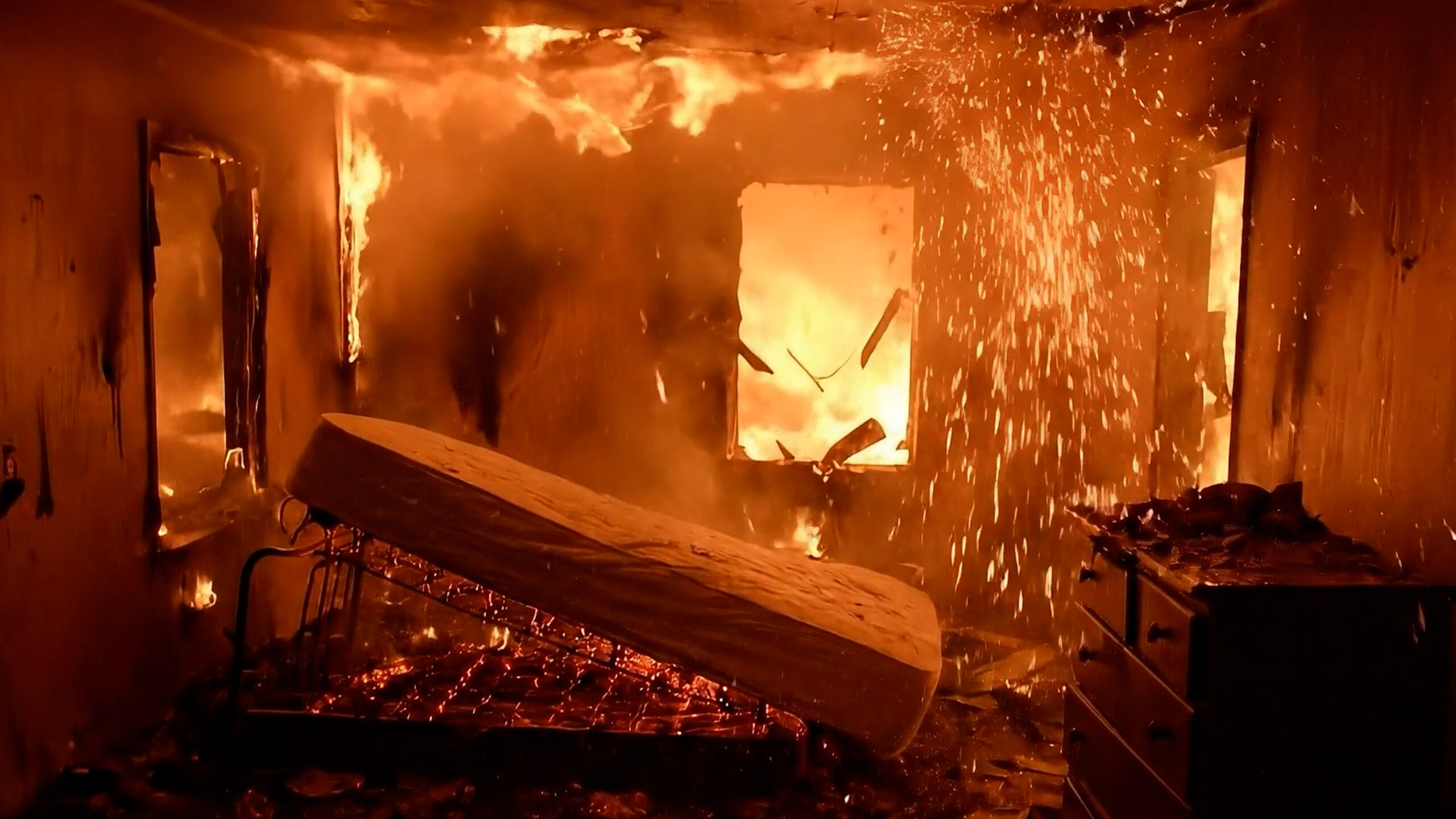
A significant foam mattress burning in a small bedroom is going to look like the end of the world for us, where that’s all it is, because that’s all we’re seeing now. If I cool, those fire gases start to deflect that stream into that room, I’m going to slow the process of that flow path down. We’re going to have an easier time working in the exhaust, getting to the point of origin and knocking fire
00:22:06:27 – 00:22:15:25
Unknown
Want to take your residential attack to the next level? Schedule a demo at Ft.com slash demo so you can perform at your best.
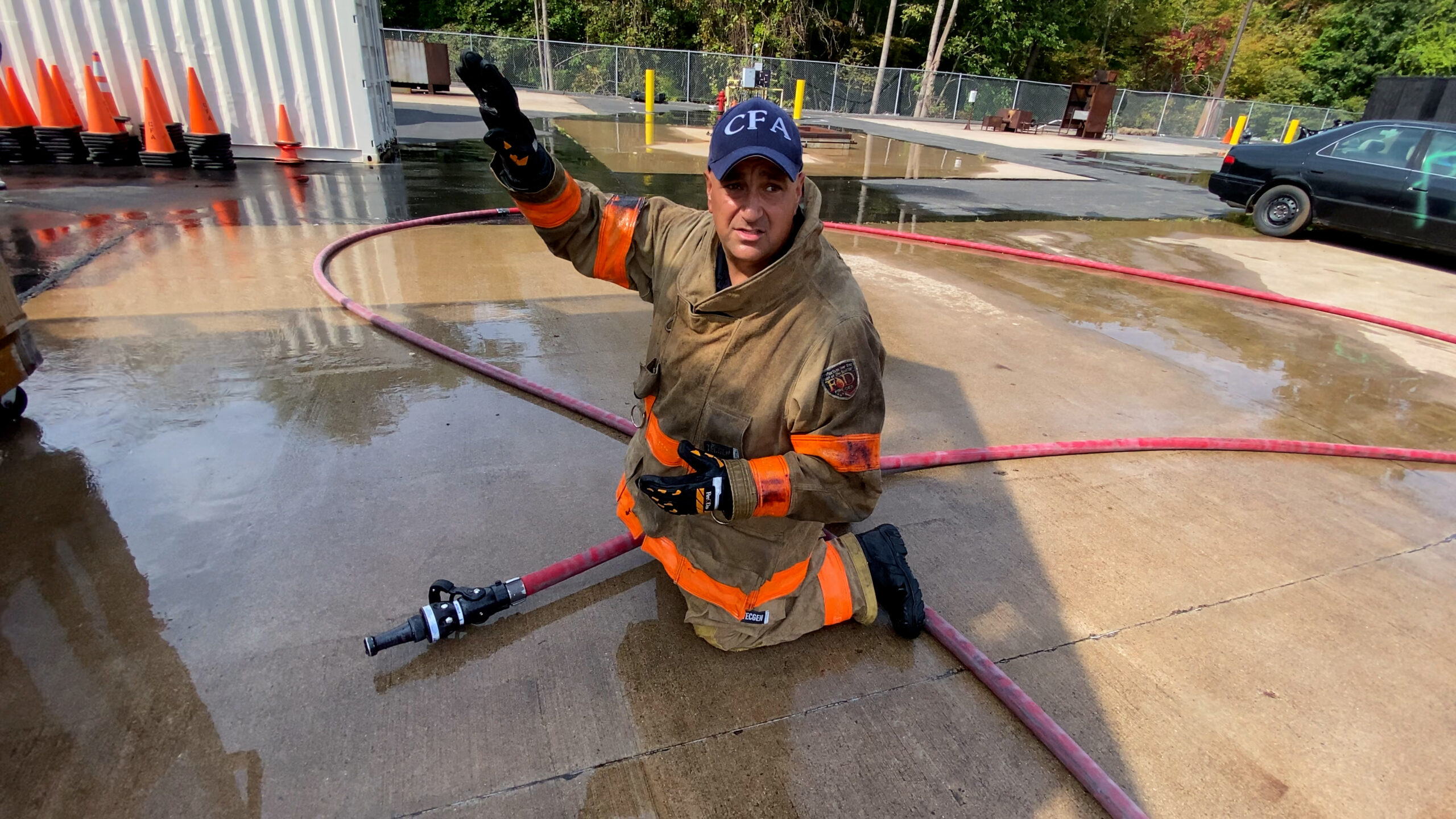
In Episode 10 of Fully Involved, the crew returns to the Connecticut Fire Academy with instructors Pete Morotto and Brian Hurst to explore one key challenge: how to reach a second-floor bedroom fire quickly while conserving energy and maximizing water efficiency.
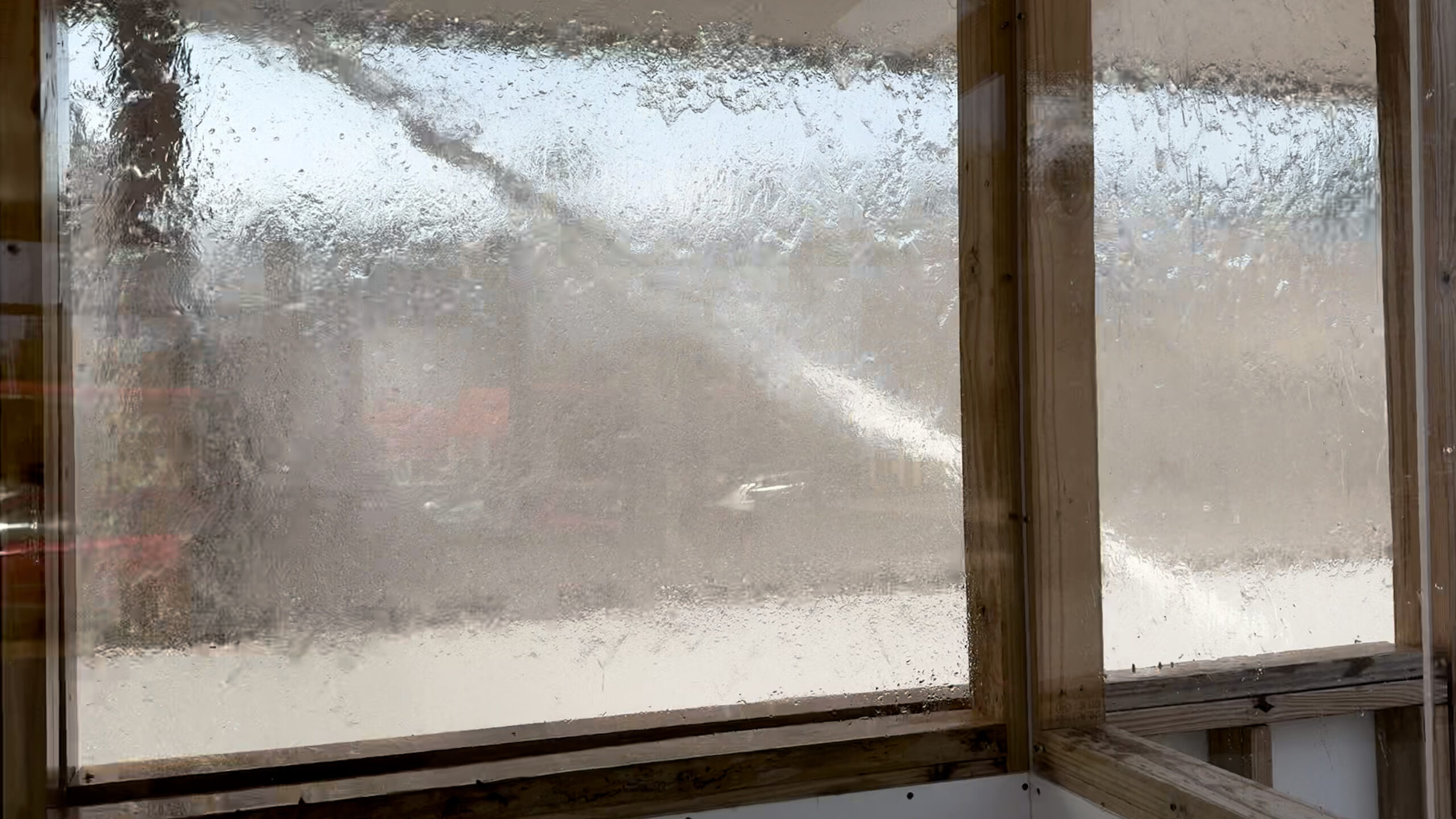
This episode digs into water mapping—how nozzle pattern, stream angle, and minimal movement determine where the water actually lands. Two props and a burn building are used to visualize how to cool spaces faster and push farther with fewer people.
Pete draws on over 30 years in the fire service, including decades with Bridgeport Fire Department and training work through MissionCIT and Fire Training Innovations. His focus is helping low-staffed crews improve water placement and coordination inside tight stairwells.

Pete points out that firefighters often assume a larger stream or higher pressure automatically means better results. In reality, shooting straight down from above usually misses hidden voids, and swinging the nozzle too widely wastes energy and water.
He emphasizes that precise nozzle control from the right position can outperform brute-force flow, especially when manpower is limited.
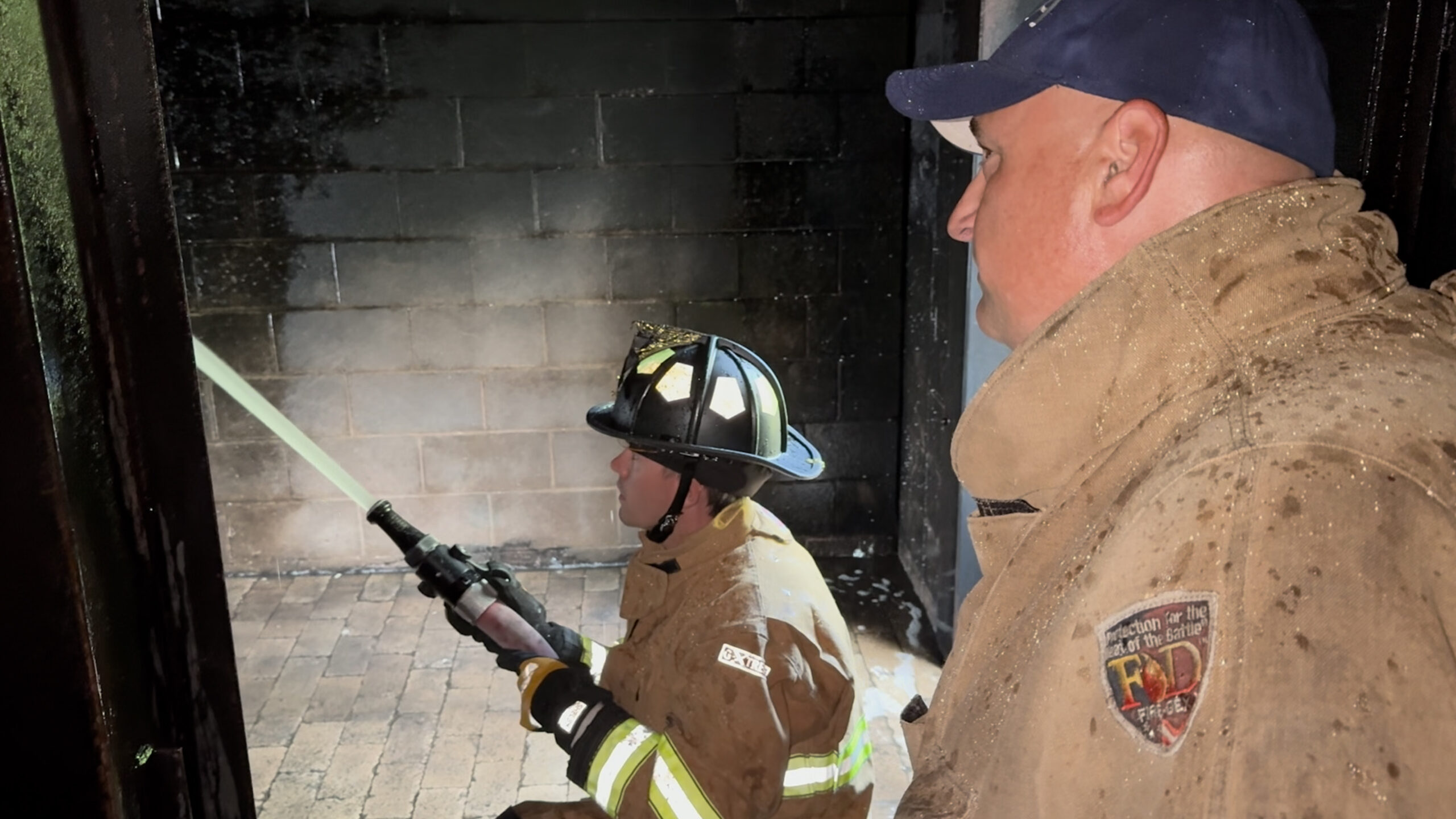
The scenario picks up right after the living-room fire from Episode 9. The crew prepares to push up the stairs toward a second-floor bedroom showing heavy fire.
For this drill they use:
1¾″ handline with 7/8″ smooth-bore tip (~160 gpm)
Two water-mapping props and a burn building for demonstration
Pete’s sequence:
Stage enough hose on the first floor and into the stairwell before climbing.
Use a “position of advantage” in the stairwell or hallway to paint the top of doorframes and ceilings with a tight, controlled stream.
Cool the flow path first, then move into the room for extinguishment and search.
This approach slows fire spread, keeps the stairwell tenable, and allows the interior team to advance faster with less fatigue.
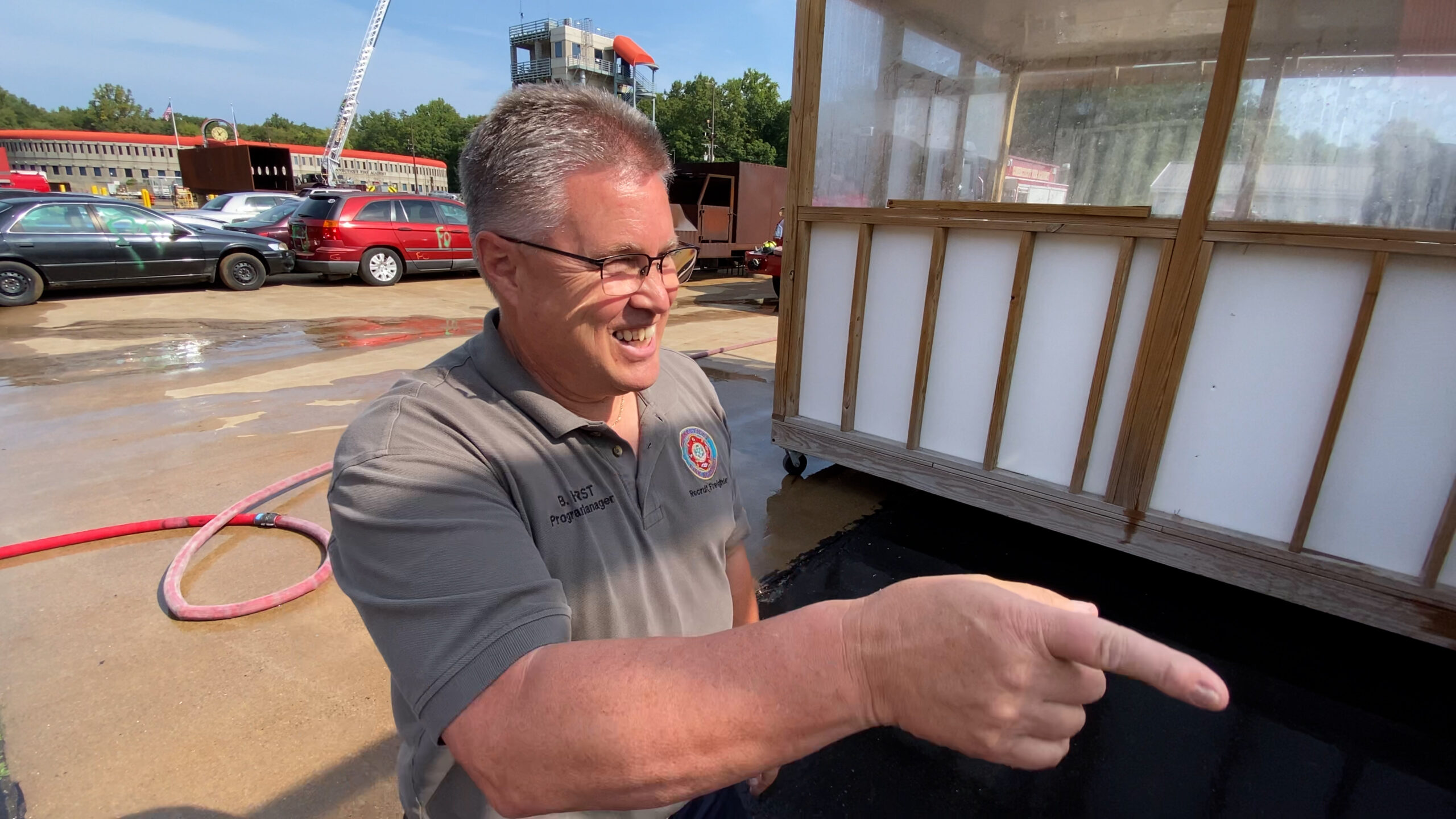
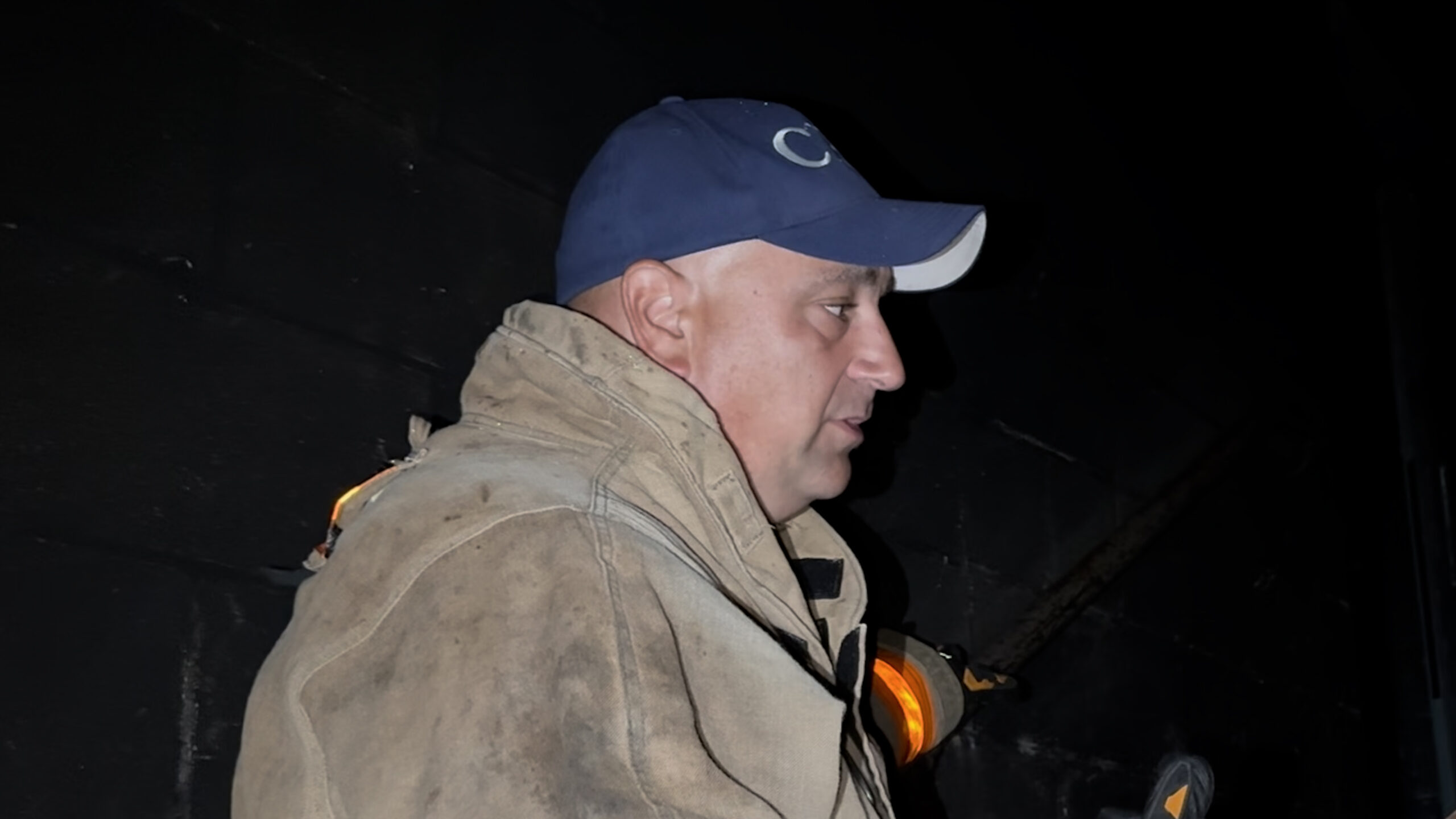
Brian Hurst, Program Manager at the Connecticut Fire Academy, reinforces that success on the second floor begins with controlling the stairwell and common hallway. He explains that managing that environment early provides a safety buffer—giving interior crews more time before conditions deteriorate.
From his standpoint, exterior or stairwell stream use isn’t about replacing the interior push; it’s about buying the crew the conditions they need to move safely and effectively.
1. Which nozzle works best for a second-floor push?
A 7/8″ smooth-bore remains Pete’s preferred choice for its reach and simple operation. Combination nozzles can work too, but only if operators are disciplined to stay on a straight stream and avoid entraining air.
2. How can you avoid pre-staging mistakes?
Get enough hose up the stairwell before you start. Crews that wait until they see the fire to pull more line lose valuable seconds and allow conditions to worsen. Everyone entering should help feed hose forward.
3. What stream tactics improve the stairwell attack?
Minimal, purposeful motion wins. Using the top corners and doorframes to deflect water into the target room cools it faster while protecting search crews advancing behind you.
4. What should the slide-in to the bedroom look like?
Once the hallway is cooled, move in low and controlled. Transition from ceiling-level painting to a smooth sweep down the walls and floor to finish knockdown without overexerting the nozzle operator.
5. Why does stream angle matter?
Angle determines whether water reaches hidden fire. Streams directed upward or from the side fill ceilings, voids, and attic spaces; streams from above often just wet surfaces. Choosing the right angle makes every gallon count.
Pete stresses keeping it simple:
Line: 1¾″ first-due handline
Nozzle: Smooth-bore 7/8″ tip (~160 gpm)
Flow: Steady volume with low reaction force for better mobility
He reminds crews that good stream management, not excessive flow, does the real work.

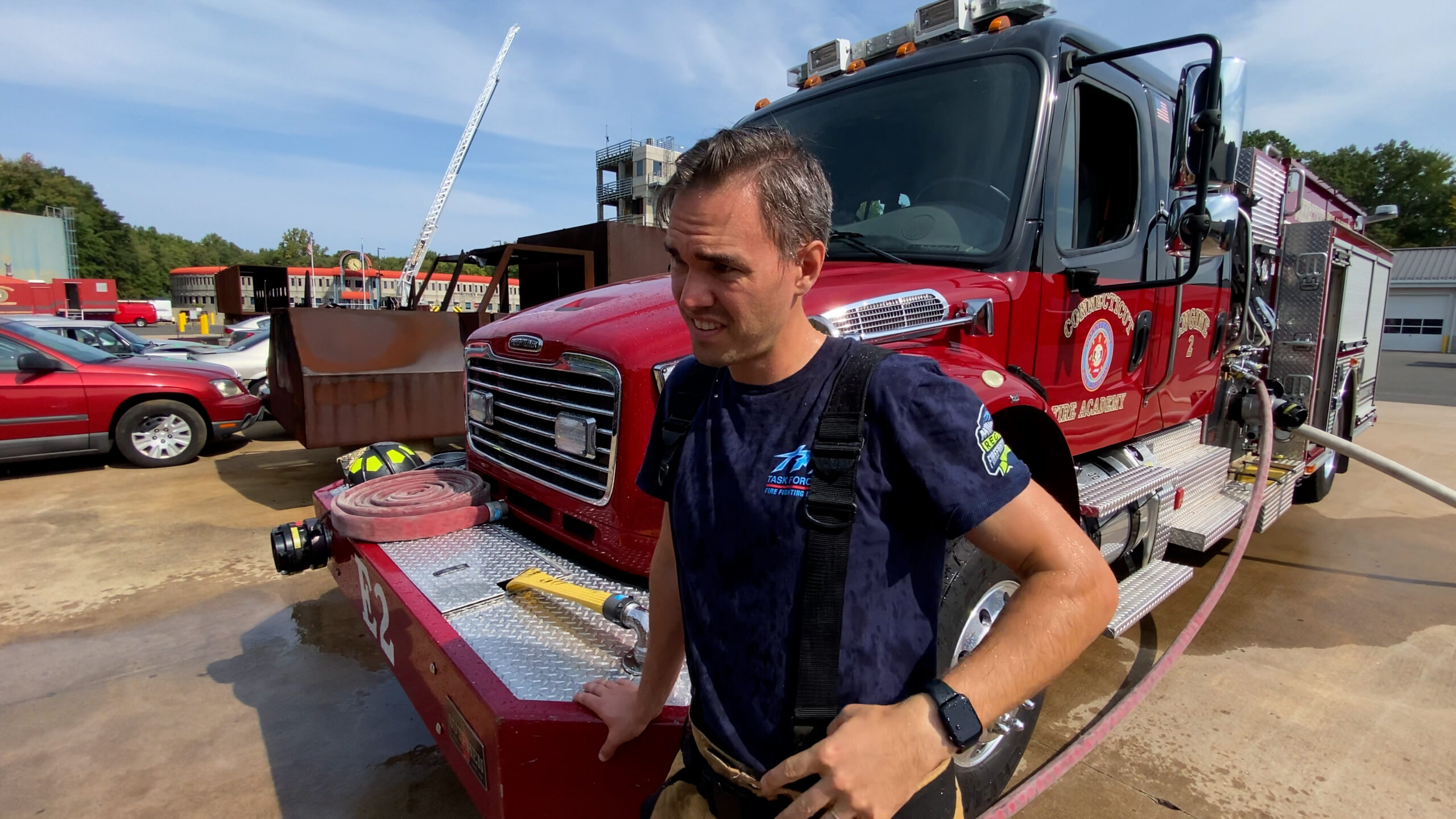

Pete explains that early water-mapping studies once relied on buckets to measure distribution. Modern props now show clearly how a narrow stream, small deflection, and correct angle can reach further into the room with less motion.
He notes that overhead master streams or aerials have limited reach into hidden voids; for interior crews, upward or side-angled application from below cools spaces faster and safer.
Once fire is knocked down, consider easing up on the nozzle workload. Using a combination nozzle or the Vortex pattern for hydraulic ventilation clears smoke quickly, then switching back to a solid stream allows for final overhaul—all at 50 psi operating pressure.
Strategic stream placement beats raw flow.
Stage enough hose before committing to the stairs.
Control the hallway and stairwell to create safe conditions.
Use small, efficient nozzle movements to “map” water effectively.
Train the full sequence—stairwell control, hallway cooling, bedroom slide—to shorten reflex time in real calls.
Check out the FSRI water mapping study here.
No one fights fires like your department. This is your chance to highlight your crew's aggressive tactics and unique responses.

Download the step-by-step checklist your crew can use at the firehouse or in the field.
Be the first to catch new episodes. Get updates straight to your inbox and never miss insights into regional firefighting tactics.


