

**0:01 (00:00:01:03 – 00:00:14:16) Narrator:** You’re out on a call. Pulse racing. Need to break a window now. You got out your halligan thinking that you can clean out this window in a matter of seconds. But the glass is thicker than a pork chop.
0:14 (00:00:14:18 – 00:00:19:27) In fact, this glass is so thick that you can cut what’s called a doggie door into
**0:20 (00:00:20:02 – 00:00:35:27) David Silverberg:** it doesn’t have to even just be hurricane for that level of protection on a window. It can also be for burglar or just protection in general. Do you know what I mean? It doesn’t mean you have to be in a hurricane zone to have impact glass.
**0:36 (00:00:36:00 – 00:00:45:27) Narrator:** If you’re not in a hurricane zone, stay with us, because this is something that every department should know. It’s getting more and more popular in every response district.
0:45 (00:00:45:27 – 00:00:51:18) Schools are buying it to slow down an active shooter and provide an extra layer of security.
0:51 (00:00:51:18 – 00:00:54:28) Businesses are buying it to stop smash and grabs
0:55 (00:00:55:00 – 00:00:57:07) [unclear: transcribed as “valuables and at pharmacies.”]
0:57 (00:00:57:07 – 00:01:07:18) And homeowners are buying it to block sound near airports and highways. In fact, [unclear: transcribed as “the FAA has paid to put it in one of homes already.”]
1:07 (00:01:07:20 – 00:01:22:22) Odds are your department will eventually run into reinforced glass, and when you do, you can dial up the playbook used by these experts in Palm Beach Gardens, Florida. It’s episode 15 of Fully Involved.
**1:22 (00:01:22:24 – 00:01:24:10) David Silverberg:** Give it a push. You see how it swings
1:24 (00:01:24:10 – 00:01:35:26) creating that doggie door controls the glass.
**1:35 (00:01:35:29 – 00:01:44:12) Narrator:** Last episode of fully involved Palm Beach Gardens Fire Rescue showed us how they get more out of a six person response on a typical residential fire.
1:44 (00:01:44:12 – 00:01:50:18) In this bonus episode, the department shows how it gets inside buildings built to survive a hurricane.
1:50 (00:01:50:22 – 00:01:54:16) Training Chief David Silverberg helps get the discussion going.
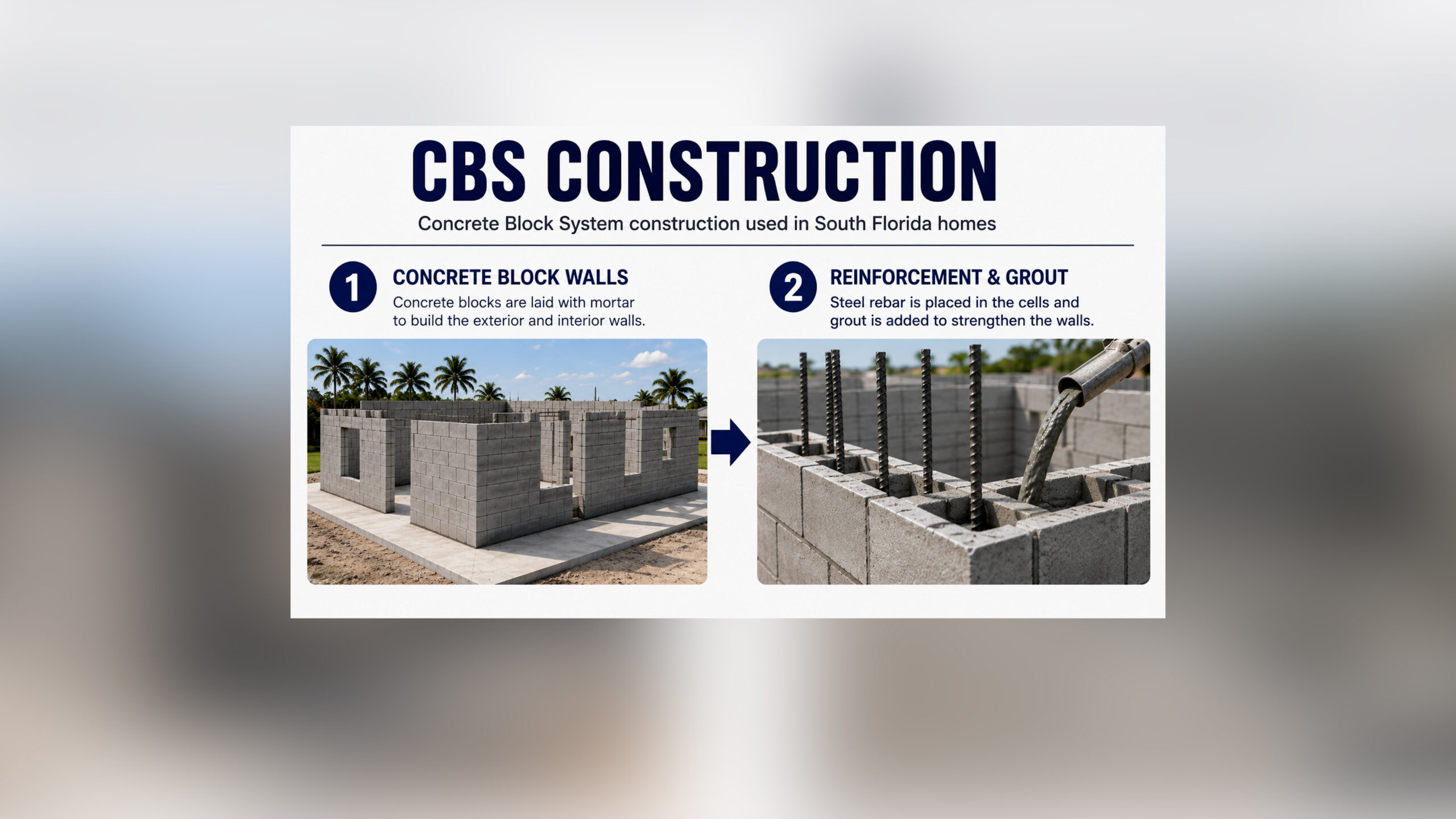
**1:54 (00:01:54:19 – 00:02:11:01) David Silverberg:** as firefighters, we deconstruct buildings, so it’s better we know how things get put together so we know how to break in and take them apart. Right. Well, down in South Florida, because of Andrew in 92, the building codes all got much stronger and stringent with
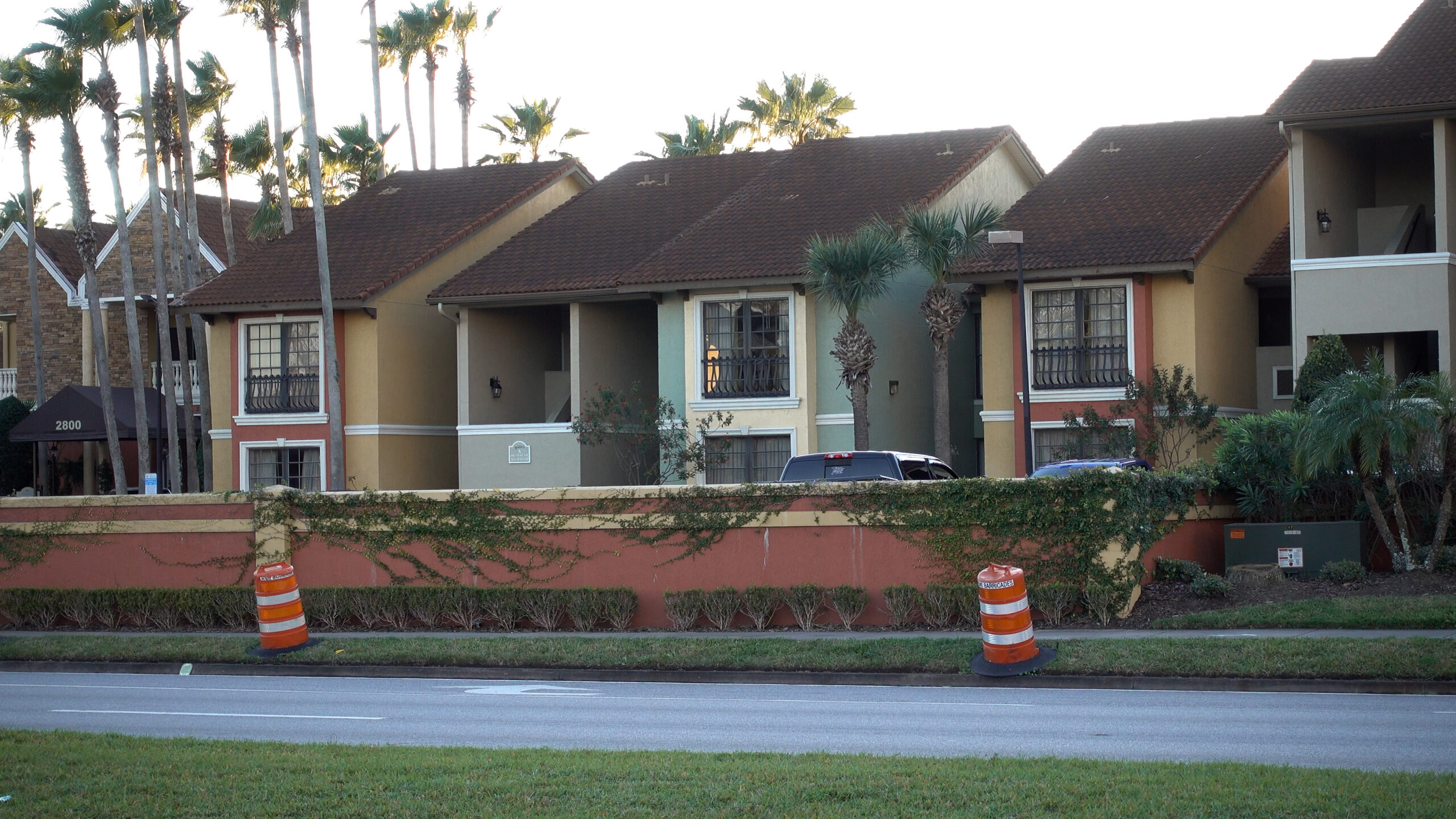
2:11 (00:02:11:04 – 00:02:36:08) The building construction down here most of the time is CBS. We still have frame construction going around on second floors and different heights of things, but most of it’s CBS. The hurricane glass is a much thicker frame framework than standard windows. They’re heavy duty, and they’re fastened every few inches all the way around the frame, into block or to heavy beam if it’s beam construction.
2:36 (00:02:36:10 – 00:02:58:22) That being said, that hurricane glass that is 5/16 to 7/16 thickness, depending on the application, is baked at high heat. Some of it might be tempered. Some of it I’ve seen is not but baked, so that the laminate and the glass adhere together to be like one piece. That makes a very tight building down here in South Florida, more than any place else.
2:58 (00:02:58:27 – 00:03:20:17) We have high heat in the summer. We got high winds on storms, and we want a very tight building, both for energy efficiency and for wind load. The that hurricane and type construction for us as firefighters make it very tough to get into these buildings. The building itself can lie to you on approach because it’s not showing all the heat and smoke that’s on the inside.
3:20 (00:03:20:18 – 00:03:40:19) So the captains have a real challenge in their 360 with that. And then if fire, if you’re firefighting inside a building that you know has hurricane glass, you may have to be more tactful on your attack on that fire, not letting your people get too far in front of a fire or above a fire where you can’t get to them.
3:40 (00:03:40:20 – 00:04:17:04) We operate a lot here with our rescues, working as truck type work with water cans, working ahead of the the hose line or on different floors, different areas of the building. But they have to realize that maybe getting out a window on the second or third floor could be a challenge if it’s hurricane glass. So that makes the buildings we go into a little bit more dangerous than, say, the middle of the country where if I take my halligan, I can break out a whole window very easily and get us out in a matter of a few seconds, to where if I only have a set of irons, it could take me up to five,
4:17 (00:04:17:06 – 00:04:18:21) six, seven minutes
4:18 (00:04:18:24 – 00:04:23:20) to get enough window out for me to get me and my crew out.
**4:23 (00:04:23:20 – 00:04:30:22) Narrator:** Assistant Chief of Operations Andrew Lezza gives an up close look at the glass that gives fire crews issues.
**4:30 (00:04:30:27 – 00:04:35:16) Andrew Lezza:** It’s not like what you see when you know. So. Yeah. So it’s not tempered. It’s a plate glass.
4:35 (00:04:35:18 – 00:04:38:22) So when they when we make a purchase point in here, it’s going to shatter.
4:38 (00:04:38:24 – 00:04:48:00) It’s going to look like a little spiderweb here. And then we’ll cut down and go from there. But otherwise they’ll stay together even when we cut it.
4:48 (00:04:48:00 – 00:05:00:12) Even if we do a doggy door and we cut it, you’ll see the whole thing will stay in. It will stay in one piece, kind of like a windshield off. So if you did a windshield that you do in a glass cut from here down, you can move that whole windshield out and take the windshield out together with one piece would be shattered.
5:00 (00:05:00:15 – 00:05:17:24) Same thing with this, but it’s thicker.
**Ben Lehman:** Where am I seeing these? Is this on? Like, every sliding door? Every window? Or is new construction in Florida all.
**Andrew Lezza:** It’s pretty much standard down here on the coast anyway. Yeah. If you go north of Orlando Saint Augustine area, you won’t have hurricane glass because they haven’t been hit with a hurricane in over 100 years.
5:17 (00:05:17:24 – 00:05:36:25) So they’re not building to the standards we have down here, but also south. You’re in a what they call Miami-Dade standard, and you’ll see hurricane glass, the solid type of construction that we have. And that’s how they build it. You know. What is this. This is a hurricane glass. It’s a lam-, it’s a piece of glass with laminate and other piece of glass in between.
5:36 (00:05:36:25 – 00:05:54:00) So we call it a hurricane glass. It’s most likely any standard new construction down here in South Florida will have some sort of hurricane glass. So this is a slider right here typically. But even the regular windows in the house are hurricane. Yeah.
**Unknown:** How frustrating to have to get through that.
**Andrew Lezza:** It’s not frustrating if you’re training you know how to do.
5:54 (00:05:54:00 – 00:06:08:13) It’s not frustrating. So we this is what we practice on. It’s not as easy as putting a, you know, a head of an axe through where you can just hit it and knock it out and be done with it. It’s where we have to practice and train where we can make a purchase point, get us also make our cuts in it and it’s just another cut.
6:08 (00:06:08:13 – 00:06:19:29) So it’s going to take us a little bit longer. That’s why we have to train on it. It’s not where I’m taking a glass window. I’m smacking Halligan through it, clearing it out so I can dive in and do what I need to do with it. I actually have to be conscious of what I’m doing. I got to make a purchase point.
6:19 (00:06:19:29 – 00:06:32:21) I got to make my cuts precisely and quickly so I can go in and do what I need to do with it. I really want to see the doggie door, because that’s kind of blowing my mind as far as we can do a doggy door on this too. So what we’ll do here is we’ll show you the first point with the Halligan.
6:32 (00:06:32:21 – 00:06:45:24) We’ll cut it with the regular Sawzall we’ll do another purchase point if we need to, and we’ll use it. We have a canine K-9 and we’ll cut it handheld, and then we can do it with an ax. Chip it away. And then we over on this part I can show you the doggie door and then we go upstairs.
6:45 (00:06:45:24 – 00:06:52:18) I’ll show you what we’ll do. Three cuts which will be a bottom, two sides. And then it’ll push in swing.
**6:52 (00:06:52:20 – 00:07:23:21) David Silverberg:** Hurricane frame is a much heavier built frame. And then the way that it’s attached to the structure itself, whether it’s a framed house or concrete block, the fastening screws or whatever, are like within every few inches all the way around the framework because it is meant to hold in place. So not only is the glass and laminate strong, the frame is engineered to that level of strength, and the way it’s fastened to the building is way over any kind of standard window.
7:23 (00:07:23:26 – 00:07:44:22) And with that, it really will hold in place. And when you’re hitting it with a sledgehammer, that glass may pull out of the side of the frame. If I hit the sledgehammer close to the frame, I can have break that glass. And what we do is we call that scoring or softening the glass. And I’ll hit that with a sledgehammer.
7:44 (00:07:44:23 – 00:08:05:08) I could possibly pull that out of the frame, or at the very least, break all the glass so that a saw will work much easier. Yeah. The only saw that works on hurricane glass without having to soften or make a scoring mark on that is like a K12 or a canine with a diamond encrusted blade. Those blades are designed to be able to go up to the glass.
8:05 (00:08:05:12 – 00:08:26:03) This glass is some of it’s tempered. Some of it is not. But it is all high heat baked. So the laminate and the glass from 5/16 to 7/16, it’s all marry together. And with that, it’s a harder glass than raw glass. And if you take and hit that with a sledgehammer, you’ll score it. Break all of the the glass up.
8:26 (00:08:26:03 – 00:08:28:00) And then you saw we’ll have a much easier job.
8:28 (00:08:28:04 – 00:08:57:29) Well, now. And from legacy fire to our now fire that we have the product is burning is much different. It’s all oil-based. We’re hitting flashover in 4 to 7 minutes. [unclear: transcribed as “We’re before and legacy.”] We had 20 minutes to operate. Of course, that’s been gone for a long time. Most of the time, buildings depending on being vent controlled like they are with the hurricane glass and the way the buildings are built down here, you could have had a flash inside that building just prior to our arrival.
8:57 (00:08:57:29 – 00:09:11:18) And what it’s waiting for is another breath. If the building is that tight vent controlled, we have to try to keep that vent control to weaken, find the base of the fire, get in and start changing the environment.
**9:11 (00:09:11:18 – 00:09:12:03) Gordon Voit:** soon as possible?
**9:12 (00:09:12:04 – 00:09:40:09) David Silverberg:** We want to get as much GPMs to the far reach as I can. So as soon as we make a door, if I’m working my way down a hallway, we’re throwing water down downrange to start dropping heat. We’re not just waiting to just get to the base of the fire. We can start changing temperatures as soon as we get in, and sometimes they’ll do that with a smooth bore from the yard, and we can make access and start lowering temperatures even from the outside as we transition into an interior fire attack.
**9:40 (00:09:40:15 – 00:09:45:09) Narrator:** That’s the attack piece. Upstairs. Another crew is trying to reach somebody.
**9:45 (00:09:45:09 – 00:09:52:29) David Silverberg:** On the second floor where they made a VEIS approach on the hurricane glass like that,
9:53 (00:09:53:02 – 00:10:03:06) creating that doggie door controls the glass. I really don’t want to chop out the whole piece of glass, because I’m up on a ladder, and I don’t want that heavy piece coming out and the firefighter losing
10:03 (00:10:03:14 – 00:10:10:09) footing. I don’t know who’s on the other side of that glass, so if it falls inside, I could hurt somebody.
10:10 (00:10:10:11 – 00:10:14:20) Seriously. So if I make a doggie door, I can make it high enough to where
10:14 (00:10:14:20 – 00:10:22:18) I can cut down the three sides across the bottom and back up to where I can roll in on that and control the glass.
10:22 (00:10:22:21 – 00:10:29:18) When I get inside on VEIS, I’m making a beeline for the door because I’m trying to compartmentalize that room.
10:29 (00:10:29:21 – 00:10:54:28) And we’re doing that because we’ve had good information. There’s somebody in that room. That’s what my kid’s room is, and we’re doing that beeline for the door. Well, when I dipped in through the glass, that hurricane glass, because of the shape of the cut, dropped back down to almost closed. I wouldn’t say completely closed, but it’s controlling that that those pressures and that vent control, with just the glass coming back down.
**10:55 (00:10:55:04 – 00:10:56:10) Ben Lehman:** Better than a wide open hole.
**10:56 (00:10:56:11 – 00:11:21:28) David Silverberg:** It’s not wide open. So we’ll show you here too. We also have if it’s not a fire load, we’re just trying to make access. We can also make a left or right swing door. So instead of a flap going in at the bottom, we can cut from the top down the side and back over and swing it in like a door, a left or right swing door to the jamb and dump in that way, and the frame will hold it.
11:22 (00:11:22:04 – 00:11:42:17) Going to be doing now is the guys are going to come up and they’re going to ladder the second floor. So if this is a VEIS assignment for them, coming around and working off a ladder to get into hurricane glass is going to be a challenge. A lot of times we show and training cutting hurricane glass with a K-12.
11:42 (00:11:42:19 – 00:12:02:19) Well, that’s a lot of work. Balancing on the top of the ladder with a K12. It weighs a good amount and negotiate that. And K12 don’t have brakes, right. So they’ll guys will come up. They’ll make a purchase point somewhere up high with a halligan so they can score and break this up and get a Sawzall on here.
12:02 (00:12:02:19 – 00:12:24:15) And they’ll make what we call a doggy door. And they’ll cut high down to the sill all the way across, and then back up to about the same height, and that they can reach up a little bit higher and make a nice doggy door. The fireman or the firefighter will be able to dive in and do perform his VEIS, go straight to the door, control the door and everything. Until that happens
12:24 (00:12:24:15 – 00:12:28:18) this glass will come back and kind of help with the pressures. So what we
12:28 (00:12:28:22 – 00:12:42:19) call that is vent controlled. A lot of our fires get a head start on us, and especially all the product that’s burning right now. It can flash in 5 or 6 minutes where the old days was 20. So when these guys come in, we want to try to vent control the whole building.
12:42 (00:12:42:19 – 00:13:05:19) If we totally took this glass out, if those guys were downstairs fighting fire, it would call the fire up to this window like a chimney. It would actually pull the fire all the way upstairs. So for us to control that vent, making a doggy door, sliding in, then closing the door to compartmentalize this room will help us with that vent control maneuver.
13:05 (00:13:05:23 – 00:13:25:11) Then we can get the down victim come back out. Second, firefighter will be coming up the ladders, and we can lean out on that doggy door and pass the victim out onto the ladder safely. Doing this, cut with the saws all battery powered, very, very light, very maneuverable, and it can get done very quickly.
13:25 (00:13:25:11 – 00:13:42:19) A lot of times people think that once that breaks that they can just go ahead and chop that with an ax. That’s really a problem, because even sinking your axe or your halligan, you can sink your axe so far in it will go in through the laminate and cut it, and you won’t be able to get the head of the tool back out.
13:42 (00:13:42:23 – 00:14:06:15) So you just lost the use of that tool. So you got to be very controlled on your cuts and your tools to get in here. This is not an easy thing to pull, hitting with a sledgehammer to pull out of the jamb. These jambs are very stout. They’re heavy duty. They’re screwed into the jamb every few inches to handle the high pressure hurricane wind load that’s here in South Florida.
**14:06 (00:14:06:18 – 00:14:07:29) Narrator:** Every tool on the
14:08 (00:14:08:05 – 00:14:10:20) truck against the same piece of glass?
14:10 (00:14:10:20 – 00:14:13:20) Chief Silverberg helps narrate the different options.
**14:13 (00:14:13:20 – 00:14:14:02) David Silverberg:** if there were
14:14 (00:14:14:04 – 00:14:15:24) First attempt.
14:15 (00:14:15:27 – 00:14:34:15) I cut right along the jamb using hand tools. He’s going to make a purchase point with a Halligan, and then he’s going to take his ax and show you just how much work it is with an ax, trying to chop down through that glass.
14:34 (00:14:34:17 – 00:14:37:18) All right, Carlos.
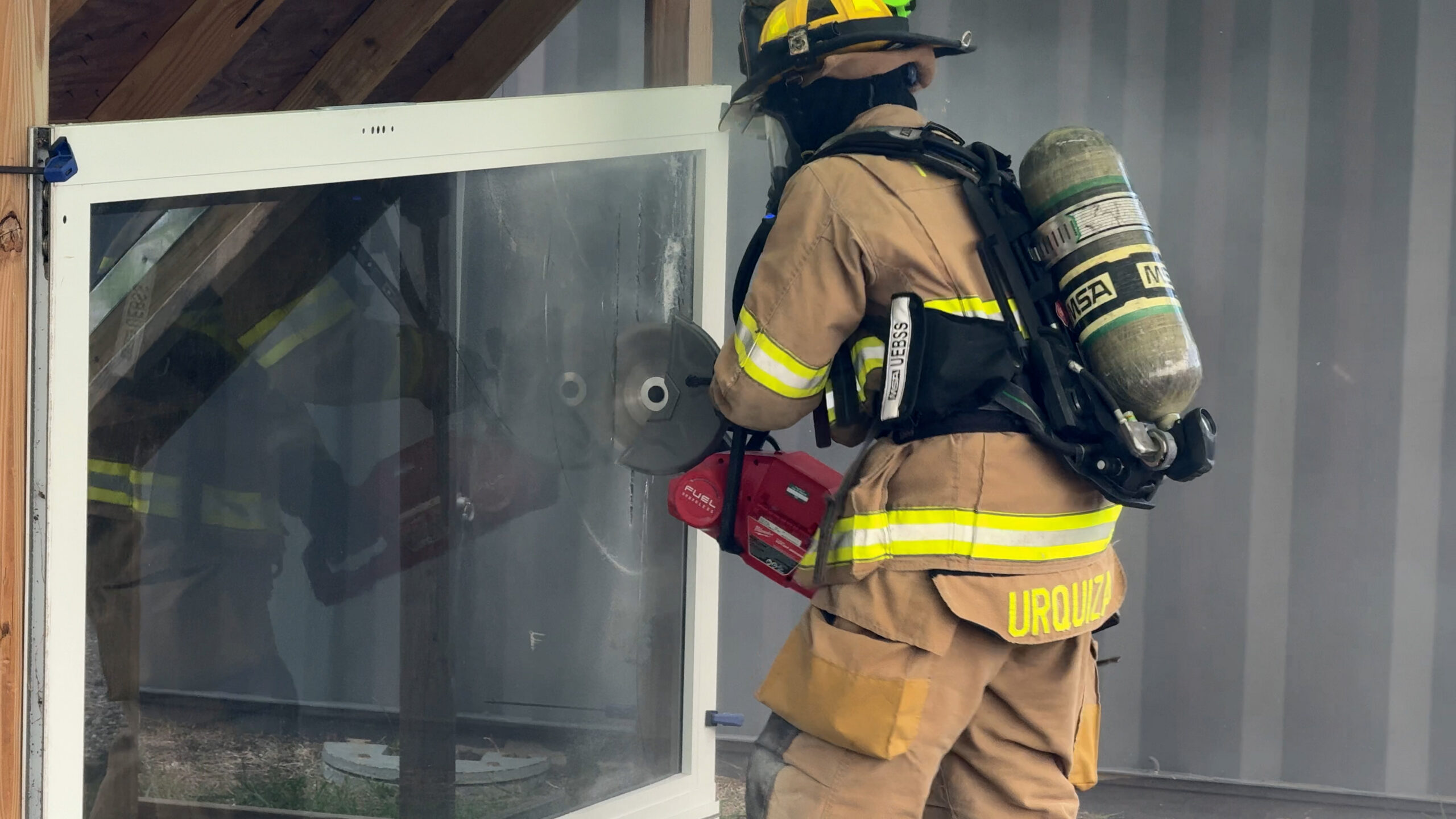
14:37 (00:14:37:21 – 00:15:11:22) Next we’ll try the K12. The K12. We don’t have to actually soften the glass to start. He can go ahead and put the diamond encrusted blade right on the glass and have it go.
15:11 (00:15:11:24 – 00:15:32:20) So now he’ll try. We have a K-9 a smaller, battery powered, diamond encrusted blade that we use, and he’ll be able to do the same thing lighter in weight so you can operate off a ladder with that. Go ahead. Carlos.
15:32 (00:15:32:23 – 00:15:50:14) He doesn’t have to go in very deep. He doesn’t have to bury the blade like we normally do on a K12. Next, he’s going to take the Halligan and he’s going to go ahead and soften the glass, make a purchase point for his chainsaw.
15:50 (00:15:50:17 – 00:16:22:03) What that does is soften the glass up right there. Once that chainsaw gets a purchase point like that, it’ll be able to make its cut all the way down.
16:22 (00:16:22:06 – 00:16:44:06) He didn’t put the blade all the way in because that chainsaw going in, if there were drapes or any kind of window dressing on the inside of that glass, it would get caught up in all the chain and everything. So he was very particular about how far his depth cut the depth of his cut. Now we’ll make another purchase point with a halligan and use the Sawzall.
16:44 (00:16:44:09 – 00:17:12:01) That is a Sawzall with a carbide blade.
17:12 (00:17:12:04 – 00:17:17:13) Is much lighter if you’re working off the top of the ladder.
17:17 (00:17:17:15 – 00:17:26:23) And what he’s going to demonstrate for ya is a flap, a doggy door.
17:26 (00:17:26:25 – 00:17:30:23) Okay, good.
17:30 (00:17:30:25 – 00:18:28:29) Give it a push. You see how it swings in he can swing in, be able to dump in through a window, and he would follow the framework all the way around our last cut. He’ll take the Halligan and make a purchase point again. And he’s going to go ahead and use the Sawzall. But he’s going to make a left swing door, and he’ll make a purchase point close to the frame, and he’ll come out and make a door that will swing into the left.
18:29 (00:18:29:01 – 00:18:48:14) And you can see that even still wants to spring back. That’s not always guaranteed vent control with a door, because sometimes the weight of it will start to tear or whatever. But if it’s not vent control you’re looking for, it’s an easy control of the glass. Being able to make a swinging door out of it.
**18:48 (00:18:48:16 – 00:18:52:25) Narrator:** Getting in is just one part of the equation. How about getting out?
**18:52 (00:18:52:25 – 00:19:04:20) Andrew Lezza:** is on the outside, we have the tools that we need to get in. If we have firefighters on the inside that need to get out. Once again, if you’re in a regular plate glass, you take your halligan, you take your axe, you smack out the glass and you can I’m here.
19:04 (00:19:04:20 – 00:19:23:16) I’m here until the ladder comes up and they get out with us. It’s harder. If I have a halligan than that. I can chip away. I can make my purchase point, chip away, and I can try to cut away. But what we teach them is because how they are installed, we bang away at the frames. So you’re banging away at the frame, and then you remove the entire window from the frame section to peel it back.
19:23 (00:19:23:16 – 00:19:43:03) And that’s how we get out. It’s quicker to do it that way than remove the glass from the seal itself. So that’s where we have problems with it. Also. That’s that’s another concern that we have with all these hurricane resistant glass and hurricane resistant buildings that are, you know, cement poured cement block. It’s not as easy as well insulated.
19:43 (00:19:43:04 – 00:19:43:12) Yeah.
**19:43 (00:19:43:13 – 00:19:44:13) Ben Lehman:** Once you’re inside.
**19:44 (00:19:44:14 – 00:19:57:21) Andrew Lezza:** Once you’re inside doing search, if you get caught in a room, I’m going to a shelter. I’m going to a room because I need the shelter. I need to get out of that house because it’s getting ready to flash. The house is getting ready to collapse. I need to get out. How am I getting out? Well, I’m not going through the walls because it’s poured concrete or it’s a concrete block.
19:57 (00:19:57:22 – 00:20:12:14) Am I gonna do it? I’m gonna go through the window. Well, I’m not going to go through the glass because that’s harder than breaking out the frame. I’m going to push out the frame either with my ax, my halligan, and try to bend that frame out until I can get that window off. Its sill and knock it completely down.
Reinforced glass can turn a fast window operation into a major access and egress problem. In Episode 15, Palm Beach Gardens Fire Rescue Training Chief David Silverberg and Assistant Chief of Operations Andrew Lezza explain how hurricane-resistant glass changes fireground tactics. They break down how the glass and frame are built, why tight buildings can hide heat and smoke, how to cut a controlled “doggie door” opening for VEIS, which saws work best, and why firefighters trying to escape should attack the frame instead of the glass. The goal is simple: know the construction before a routine window becomes a five- to seven-minute problem.
Reinforced glass is not limited to hurricane zones. David Silverberg explains that impact-resistant glass can also be installed for burglary protection and other security needs.
The episode identifies several places where crews may encounter it:
For firefighters, the issue is not just breaking the glass. The entire window assembly is built to stay in place.
Silverberg explains that hurricane windows use a much heavier frame than standard windows. The frame is fastened into concrete block, framed construction, or structural members every few inches.
The glass itself can be about 5/16 to 7/16 inch thick, depending on the application. The layers of glass and laminate are bonded together so they behave more like one piece.
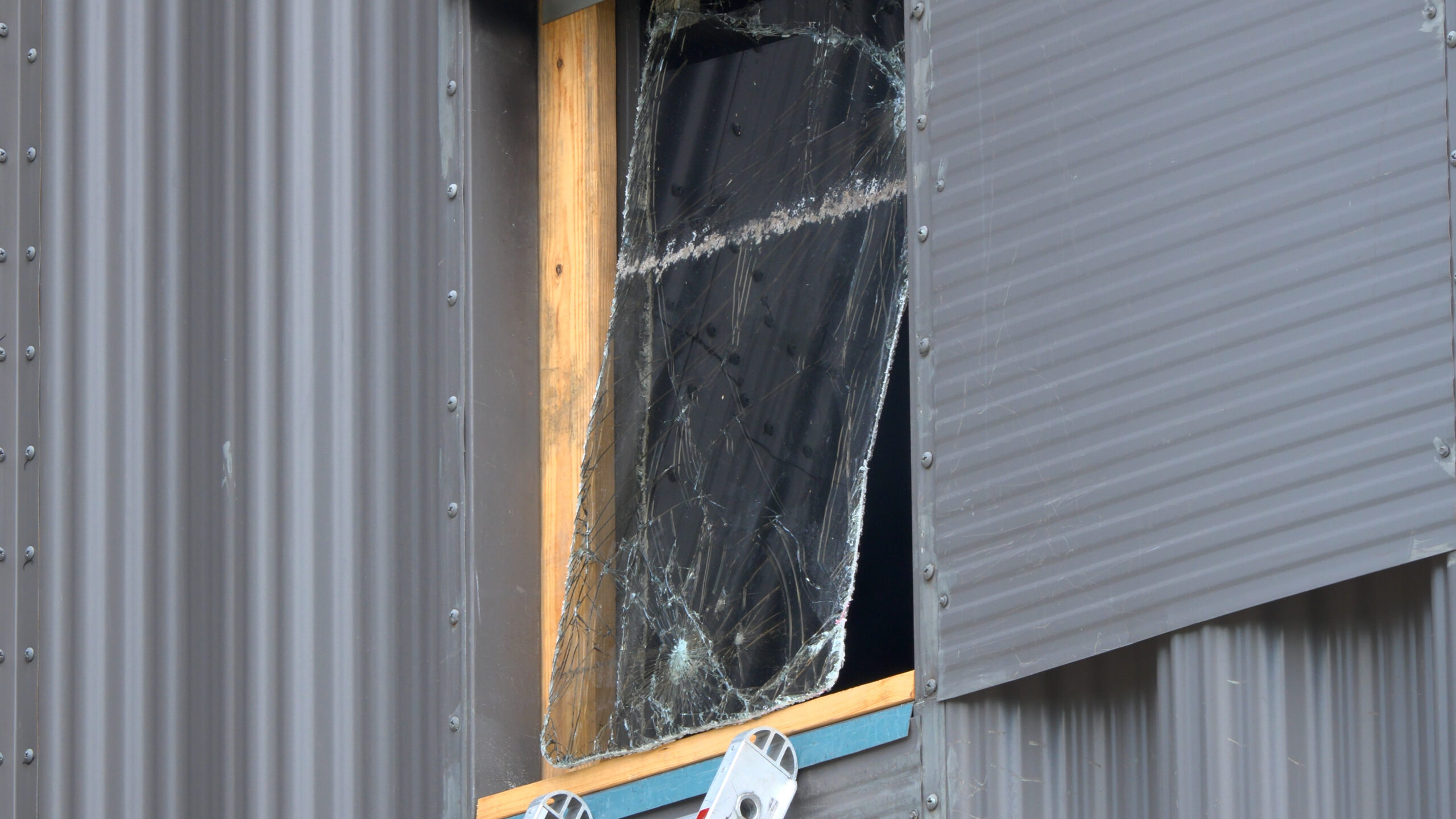
Andrew Lezza compares the result to a windshield. The glass may spiderweb when struck, but the laminate helps hold the broken pieces together.
That means crews cannot expect one hit from an axe or Halligan to clear the opening.
Silverberg contrasts modern fire conditions with older “legacy” fires. In the episode, he says modern contents can produce flashover in roughly 4 to 7 minutes, compared with much longer operating times in older fuel packages.
In a tightly sealed building, the fire may already be vent controlled when crews arrive.
His approach is to keep that ventilation controlled while crews locate the fire and begin changing the interior environment.
The doggie door is a controlled three-sided cut made through reinforced glass.
The basic sequence demonstrated in the episode is:
Because the top stays connected, the firefighter can push the cut section inward instead of removing the entire heavy piece.
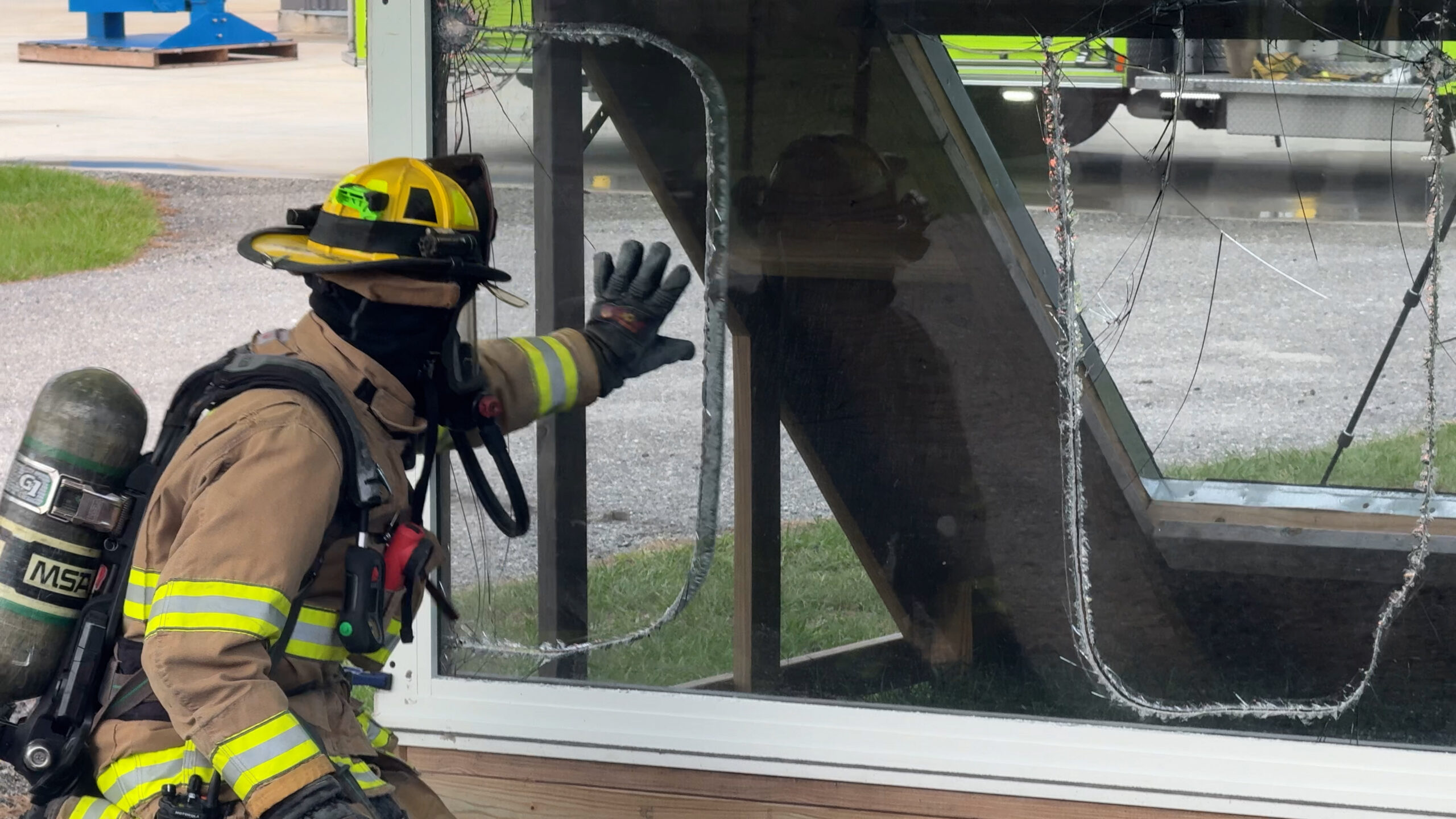
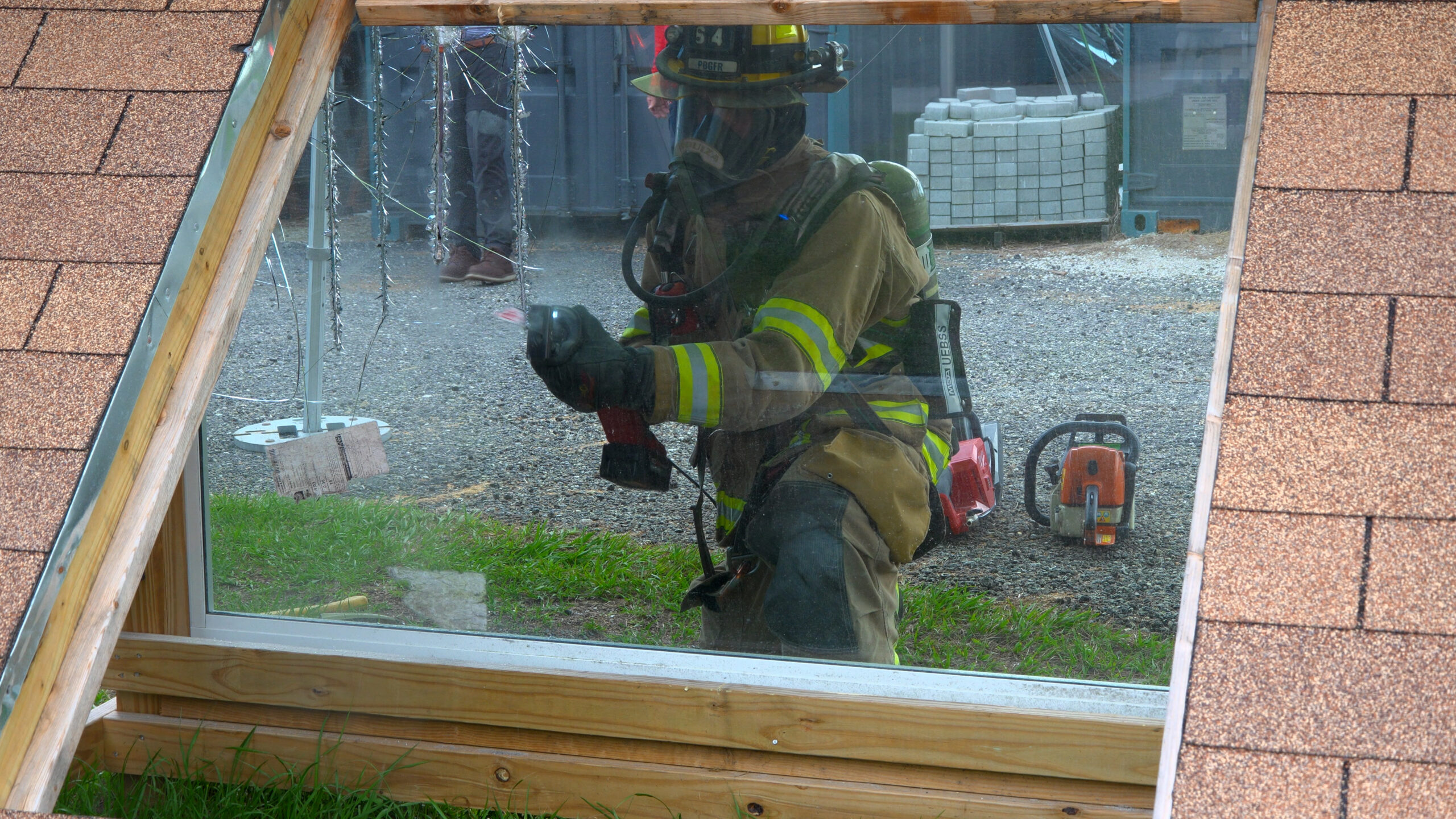
Palm Beach Gardens crews demonstrate several tools against the same reinforced window.
A Halligan can be used to create a purchase point, followed by an axe to begin chopping through the glass.
Silverberg emphasizes how much work this requires.
He also warns that burying an axe or Halligan too deeply can trap the tool in the laminate, leaving the firefighter unable to pull it back out.
Controlled tool use matters.
The K-12 used in the demonstration has a diamond-encrusted blade.
Silverberg says this type of blade can be placed directly on the hurricane glass without first softening or scoring it.
The tradeoff is weight.
Using a K-12 while working from the top of a ladder can be difficult, and Silverberg notes that the saw does not have a brake.
The K-9 is a smaller, battery-powered saw with a diamond-encrusted blade.
It can cut the glass without the same level of preparation and is lighter than the K-12, which makes it easier to manage from a ladder.
Silverberg also notes that the blade does not need to be buried deeply into the window to make the cut.
Before using the chainsaw, the crew makes a purchase point and softens the glass with a Halligan.
Once the chain has a place to start, it can cut down through the glass.
Silverberg warns crews to control the depth of the cut. If the chain goes too far inside, it could catch drapes or other window coverings.
The crew also demonstrates a Sawzall-style reciprocating saw with a carbide blade.
Silverberg highlights its lighter weight and maneuverability, especially when firefighters are working from a ladder.
The reciprocating saw is used in the episode to demonstrate both the doggie-door cut and a side-swinging opening.
Silverberg stresses that completely opening the window could draw fire toward the opening.
In a vent-controlled fire, that new opening can create a flow path.
By cutting the doggie door, entering, and then controlling the interior door, the VEIS firefighter can limit the amount of ventilation created during the search.
Silverberg is careful not to describe the flap as guaranteed vent control. The glass can tear or behave differently depending on its weight and condition.
But compared with removing the whole window, the doggie door can leave a smaller, more controlled opening.
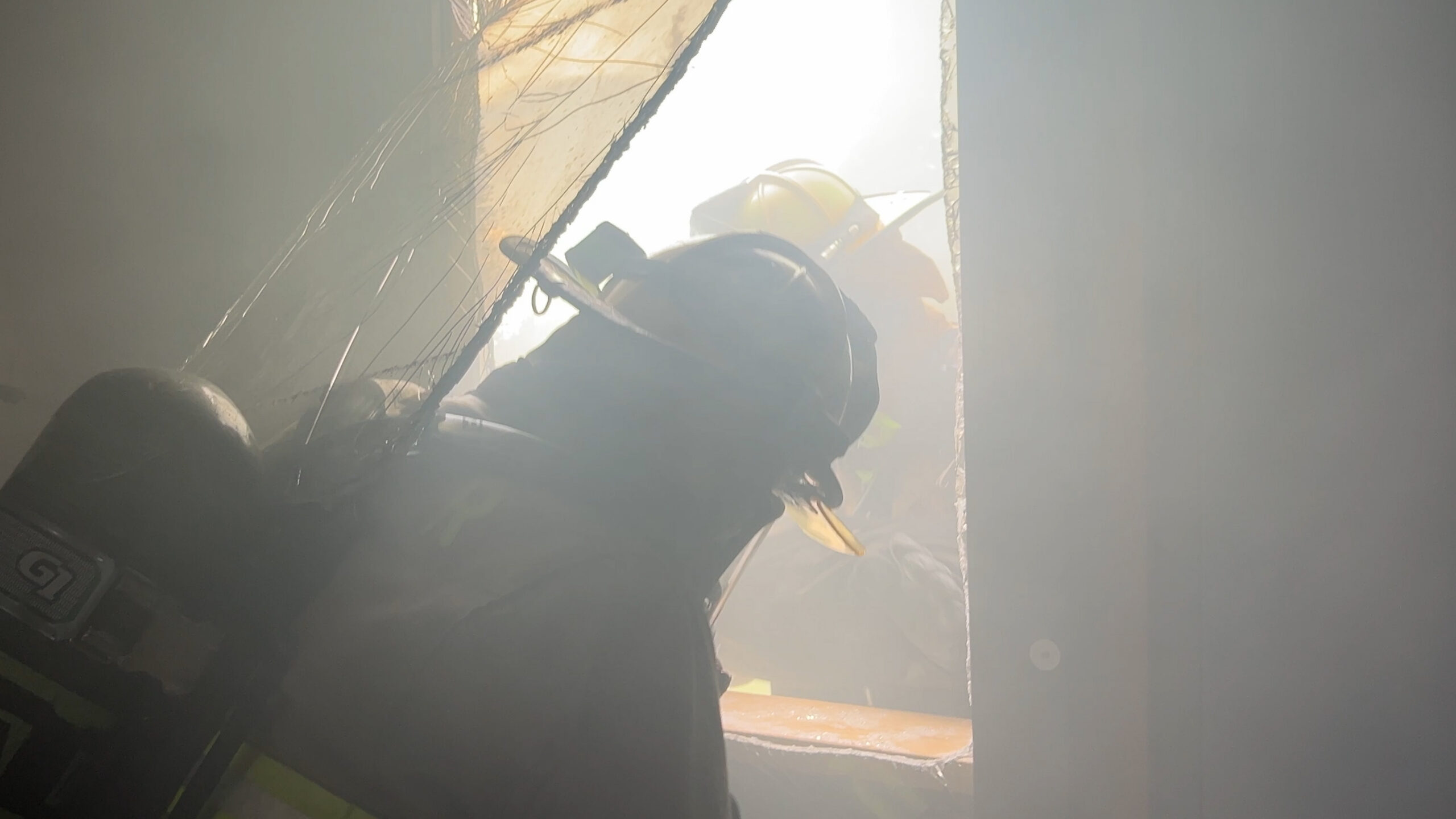
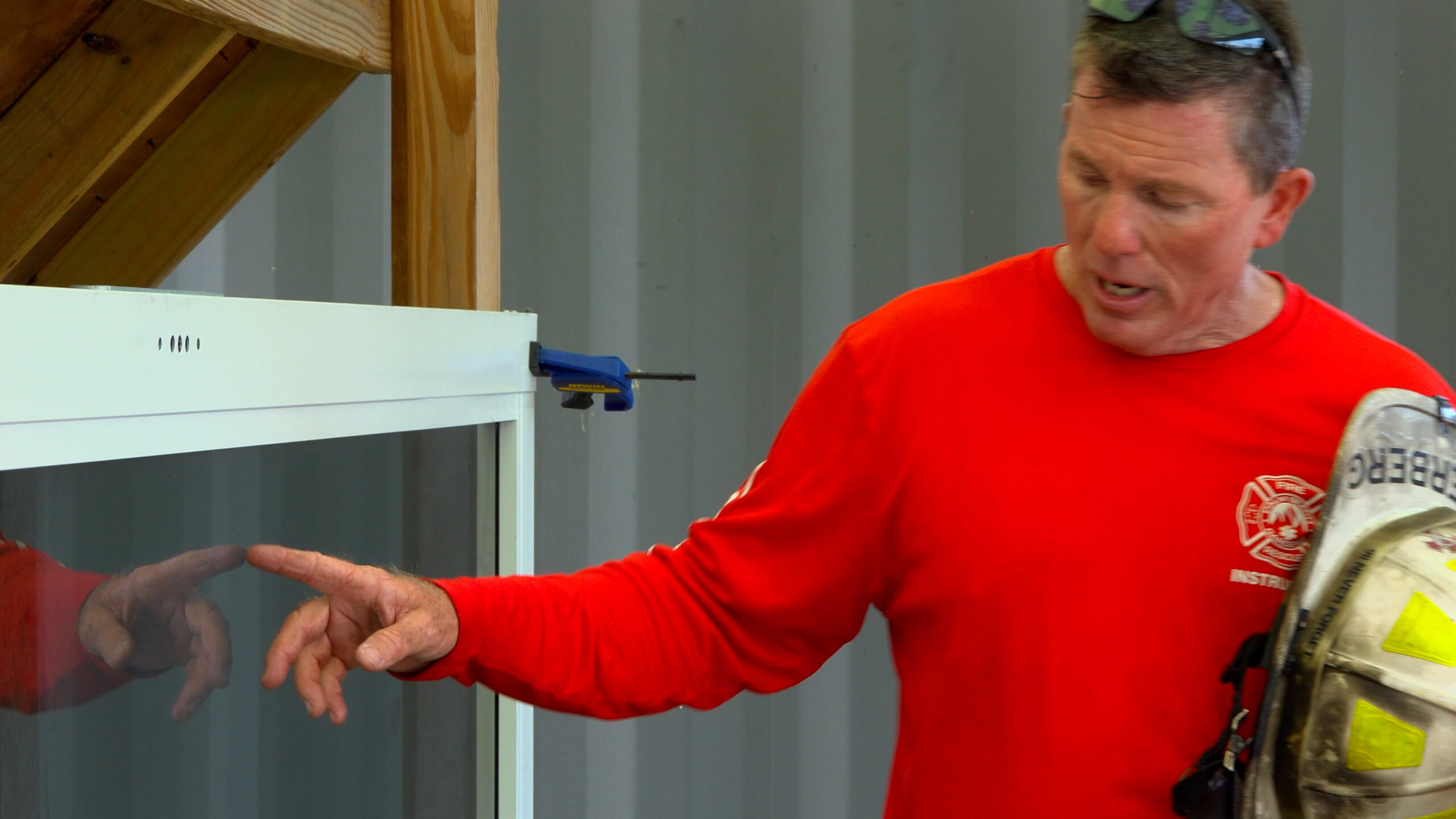
Reinforced glass changes both entry and escape.
Palm Beach Gardens Fire Rescue treats it as a building-construction issue that crews need to recognize before the fire forces them to solve it under pressure. The episode shows how a doggie-door cut can support VEIS, how different saws perform against laminated glass, and why firefighters trapped inside may have better success defeating the window frame than the glass itself.
The biggest lesson is preparation. A window that would normally take seconds to clear can take several minutes when it is built to survive a hurricane.
No one fights fires like your department. This is your chance to highlight your crew's aggressive tactics and unique responses.