

00:00:00:03 – 00:00:02:07
Unknown
On this episode of Fully Involved,
00:00:02:07 – 00:00:05:29
Unknown
If I’m pushing down the hallway, this is the vent point that I’ve created. Yeah.
00:00:05:29 – 00:00:09:06
Unknown
So as I’m pushing down everything that I’m doing
00:00:09:06 – 00:00:10:15
Unknown
with my movement and
00:00:10:15 – 00:00:13:18
Unknown
any type of air entrainment, it is still going to do what?
00:00:13:18 – 00:00:16:21
Unknown
Yeah, it’s going to meet me back in my exhaust point because this is the opening.
00:00:16:21 – 00:00:34:10
Unknown
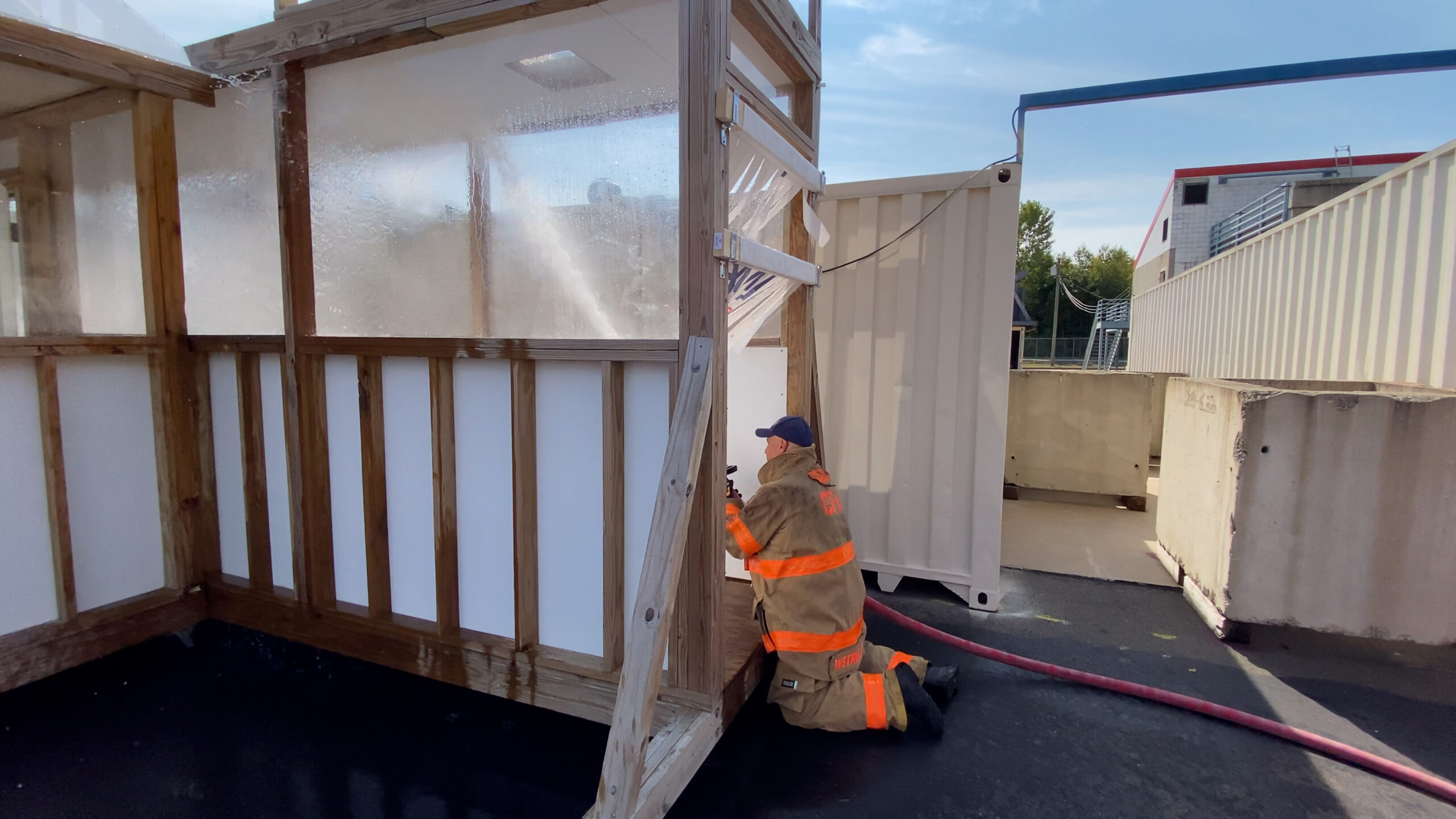
the crews back at Connecticut Fire Academy to look at air and trainmen and ventilation from four different angles a smoothbore versus a fog nozzle in a vent limited situation, and then a smooth bar versus a fog in a partially ventilated environment.
00:00:34:13 – 00:00:38:11
Unknown
Then instructor Pete Morano breaks it down in a tale board talk.
00:00:50:26 – 00:00:59:23
Unknown
The fully involved crew is back for a fourth and final episode at Connecticut Fire Academy, with instructors Pete Murano and Brian Hurst.
00:00:59:23 – 00:01:19:17
Unknown
Episode eight was all about a short staffed push. Episode nine looked at exterior water application. Episode ten showcased water mapping on a second floor push. And now in episode 11, it’s all about air entrainment. How much air you’re pushing with your nozzle and why that matters.
00:01:19:17 – 00:01:21:15
Unknown
because of street.
00:01:21:15 – 00:01:37:24
Unknown
What we’ll do is we’ll do an air entrainment demonstration, will close the hallway off from the room. We’ll open up the door on the other side so we get an air flow going through it, and we’ll demonstrate how much air gets and trained with the use of a straight stream with a variable, fog stream at a 30 degrees.
00:01:37:26 – 00:01:54:07
Unknown
And do the same thing with the smoothbore. You can see the difference just with the streamers that we use behind here. And if they open up and then we’ll close the door and do the same activity. So this is basically a vent limited fire. Now how much air is actually getting entrained with the same nozzle application.
00:01:54:07 – 00:02:03:22
Unknown
Okay. So air and training for event limited fire. Again what am I doing as I’m pushing here? I’m intensifying the fire. Right? I’m pushing the product back on myself.
00:02:03:22 – 00:02:26:23
Unknown
So the best case scenario is remote that point away from the nozzle. But most times we don’t work in that because why there’s reflex time for remote that there’s reflex time for either outside that position. There’s reflex time for top side ventilation. So most of the time we work in the exhaust and while working in the exhaust, that’s where getting that optimal water mapping correctly.
00:02:26:23 – 00:02:34:03
Unknown
And water distributor from a position of vantage is going to go ahead and control that common hallway, control that environment and make our push easier.
00:02:34:03 – 00:02:47:26
Unknown
So Vent Limited is the most common. And what you need depending. Again, just through my experience, just the way we operate. Right. We’re always working in that exhaust. Initially you talk until things are done on scene to obviously create for the vent points.
00:02:48:01 – 00:02:51:11
Unknown
Yeah, unless a window exists, unless a window fails. Right.
00:02:51:11 – 00:03:01:01
Unknown
But we know those days are few and far between because the windows now the construction of the windows are, you know, the old single pane windows are used to take these to pop with a hose stream. That doesn’t happen anymore. Yeah. So you should
00:03:01:01 – 00:03:05:05
Unknown
have your vented fire attack where you pushing all the fuel and fumes away from you.
00:03:05:09 – 00:03:16:12
Unknown
That’s only happening primarily happening with coordination, right? You need that vent point to do that. Other than that you’re working in the exhaust. So if you’re making that turbulent environment in the exhaust where it’s all coming back at you. Yeah,
00:03:16:12 – 00:03:18:27
Unknown
don’t we just slow the room down?
00:03:18:27 – 00:03:22:10
Unknown
vantage. Open up.
00:03:44:13 – 00:03:54:00
Unknown
that remote vent point. Obviously the nozzle pattern, if we go for that full width right. Are we pushing one a bit more air. So well
00:03:54:00 – 00:04:01:23
Unknown
okay. So that’s truly understanding that that limited is to how we’re going to be effective as nozzle people, how we’re going to be saved from the fire.
00:04:02:00 – 00:04:05:02
Unknown
Then it’s time to see how the fog nozzle moves. Air
00:04:05:02 – 00:04:06:01
Unknown
they
00:04:06:01 – 00:04:20:13
Unknown
right away I’m straight I’m right. Straight stream. Make sure I’m right to fight. Okay. Being in the vent, working the exhaust again. This is where it would be critical not to be in that fog, because then we’re going to push and we’re working in the exhaust. And when we feel the effects of such.
00:04:20:13 – 00:04:26:06
Unknown
in straight stream mode. Same results as the smoothbore low movement from the flaps.
00:04:32:08 – 00:04:32:15
Unknown
Or.
00:04:32:15 – 00:04:38:07
Unknown
But when Murano goes to the fog pattern, there’s a noticeable difference in the flap movement.
00:04:38:08 – 00:04:53:02
Unknown
is okay if I hit. All right. Now you feel the air rush over for the work and the exhaust. All right, so this is why we not want to do this. I can feel the effects on me right now. What do you got? All right, that’s the data frame.
00:04:53:02 – 00:04:54:15
Unknown
And it’s going to show up. So
00:04:54:15 – 00:05:09:00
Unknown
So if we’re working so with that limited what that means for us as the nozzle person if I’m going down this hallway was a good fire. We’re working in the exhaust, right? Does that make sense? If I’m pushing down the hallway, this is the vent point that I’ve created. Yeah. So
00:05:09:00 – 00:05:16:20
Unknown
as I’m pushing down everything that I’m doing with my movement and any type of air entrainment, it is still going to do what?
00:05:16:22 – 00:05:19:27
Unknown
Yeah, it’s going to meet me back in my exhaust point because this is the opening.
00:05:19:27 – 00:05:39:10
Unknown
Yeah. Right. Yeah. If I have a remote, that point. Right. That’s just good old basic coordinated fire attack at that point. Right. So I’m pushing everything out that way as I’m doing. So I’m making a tenable position by cooling the common hallway, by using the reach of the stream from position of advantage and cooling the areas as I move.
00:05:39:12 – 00:05:51:21
Unknown
You can see the difference with the working of the stream whipping the stream around, right? Yeah. Did I get water moving? Of course. But what did I also get? Minimal air entrainment with a smoothbore. But when I stopped and I
00:05:51:21 – 00:05:58:04
Unknown
just did the movement, the slow, methodical movements with the hose line, what did I end up getting right?
00:05:58:11 – 00:06:03:21
Unknown
I got water distributed where actually I wanted it to be, and I did it a lot quicker and efficient.
00:06:03:21 – 00:06:09:05
Unknown
work very well for what I draw. Finally, going back to what I said. Yeah.
00:06:09:05 – 00:06:14:01
Unknown
Now you’re going to see air. You’re going to feel. You should probably see that you start to move a little bit because we have that point.
00:06:14:03 – 00:06:35:10
Unknown
So now with that, that point away from us, we’re going to start to now push right. So now you’ll see the stream difference with air and train. So now if I move air.
00:06:35:12 – 00:06:36:08
Unknown
Blowing air.
00:06:48:06 – 00:07:03:01
Unknown
So again you can see the difference right there just with air and train. And that’s what this movement on okay. So we’ll show you fog and how it’s going to make a little bit of a difference. But just as we talked about from the nozzle person’s approach just easier on the nozzle person.
00:07:03:05 – 00:07:13:00
Unknown
Right. If we had to make a long hallway and keep pushing through this place more and more and more of this, we are going to get a little tired. Right. And what were we doing? We were in training a little bit more air.
00:07:13:00 – 00:07:20:29
Unknown
So now we’ll watch with the best point there. And then we might.
00:07:21:02 – 00:07:42:07
Unknown
Come on now I’ll get more of what I get more of my push air. Now I’ll start passing. Right. Look at that. What again? We’re going to move air that is there. Frame okay. So again if we didn’t have that best point ahead of us. Right. This is why body screens worked very well for what I call ventilation.
00:07:42:09 – 00:07:45:14
Unknown
Doing exactly what we want to drill. All right. Moving air.
00:07:45:14 – 00:07:49:23
Unknown
Finally, going back to what I said. Yeah.
00:07:49:23 – 00:07:58:03
Unknown
Okay, then. Very good for your ventilation under those conditions. Or if we were always working in the push. But usually the case is that’s not what it’s going to be.
00:07:58:06 – 00:08:00:05
Unknown
Right. So we’re creating too much turbulence. Well
00:08:00:05 – 00:08:06:18
Unknown
Well, what if you wanted to move a large amount of air when hydraulically ventilating, but on a smooth bore nozzle?
00:08:07:27 – 00:08:12:07
Unknown
That’s where the vortex comes in. It’s an adjustable, smooth, more.
00:08:12:07 – 00:08:18:12
Unknown
So he’s in a smooth bore pattern right now.
00:08:18:15 – 00:08:41:07
Unknown
Obvious air entrainment being pushed through a vented fire. When he goes to Vortex pattern. You’re gonna get that much more, air entrainment. You can tell by the ribbons. And I think it’s really comparable to a fog nozzle but it’s at smooth bore flows, smooth bore pressures.
00:08:41:15 – 00:08:45:04
Unknown
Now, captain morale ties it all together with a tail board. Talk.
00:08:45:04 – 00:09:03:02
Unknown
right, we want we want reach. Yeah. Right. So fog a fog or a variable stream pattern is going to do well from the outside of some exposure line if we’re trying to stop that radiant heat. You know, if we’re trying to stop explosions from catching on fire, but to truly get that wrap because at that point, one gallon and you want to get there.
00:09:03:04 – 00:09:06:17
Unknown
So we got to have that solid stream to get it where it needs to be.
00:09:06:17 – 00:09:12:05
Unknown
That’s just my opinion, right? Yeah. Yes. Yes. That’s just my opinion based on experience.
00:09:12:07 – 00:09:26:21
Unknown
But applications will vary based on building construction based on tactics around the country. But for, for northeast firefighting, you will find it. Most, most shops are going to use smoothbore or a variation of a straight stream on a fog nozzle,
00:09:26:21 – 00:09:38:14
Unknown
Everything from position advantage, the side of the hallway to application of the water to movement of the stream is exactly the same. Yeah. And you can see where if we’re if we’re coining it as residential structure firefighting.
00:09:38:17 – 00:09:53:21
Unknown
This works. This works because think about your normal residential side structure from the front from the front door hallway. I can reach most of that first floor with a good position of advantage for my house on the right. Not saying I want to stay there, but I’m slowing it down so I can reset it to figure out what’s going on.
00:09:53:21 – 00:10:10:28
Unknown
Where’s the fire coming from? What’s the extension? How severe is it? Right? A lot of times we don’t know that. You just take the door and you get that small box. There’s a lot of energy coming out of that box, okay? You’re getting turbulent smoke. You’re getting turbulent. Push, push, push. A lot of times we miss what is truly burning and what’s going on, right?
00:10:11:01 – 00:10:30:08
Unknown
A significant foam mattress burning in a small bedroom is going to look like the end of the world for us, where that’s all it is, because that’s all we’re seeing now. If I cool, those fire gases start to deflect that stream into that room, I’m going to slow the process of that flow path down. We’re going to have an easier time working in the exhaust, getting to the point of origin
00:10:30:08 – 00:10:38:29
Unknown
Want to take your residential attack to the next level? Schedule a demo at Ft.com slash demo so you can perform at your best.
In Episode 11 of Fully Involved, the crew returns to the Connecticut Fire Academy for the final training in this four-part series with instructors Pete Morotto and Brian Hurst. The focus of this episode is one of the most overlooked factors on the fireground: air entrainment and its impact on ventilation.
The team demonstrates how different nozzle patterns influence airflow and fire behavior, comparing a smooth bore and a fog nozzle in both vent-limited and partially ventilated environments. Even small differences in nozzle motion and stream type can dramatically affect the conditions inside a hallway and either help or hinder interior operations.
Pete and Brian help firefighters understand the science behind how nozzle movement interacts with air. They show how the coordination between attack and ventilation directly affects whether a crew is controlling the fire or feeding it.

Pete explains that many firefighters underestimate how much air their nozzle stream moves. It is easy to assume that more pressure or a wider pattern means better cooling, but in a vent-limited fire, that turbulence can intensify the fire instead of suppressing it.
He reminds crews that most residential fires start in vent-limited conditions, where windows remain intact and ventilation is not yet established. Unless the crew coordinates vent points or a window fails, they are usually operating inside the exhaust. This means every nozzle motion has an impact on how smoke, heat, and air behave.
More motion equals more air movement, which can increase danger for interior crews.
The instructors demonstrate the difference between a fog and a smooth bore nozzle under two ventilation setups.
Vent-Limited Fire: Doors are closed, creating little to no exhaust openings.
Partially Ventilated Fire: Openings allow limited airflow through the structure.
When operating with a combination nozzle in the fog pattern setting, the team observes how ribbons placed behind the stream move heavily toward the nozzle, showing strong air movement back into the exhaust. Switching to a smooth bore or ensuring your combination nozzle is in straight stream mode dramatically reduces air entrainment while improving reach and water distribution.
Pete emphasizes that crews often work in the exhaust early in an attack, which makes it essential to understand how their stream affects air flow. Controlling air is just as important as controlling water.
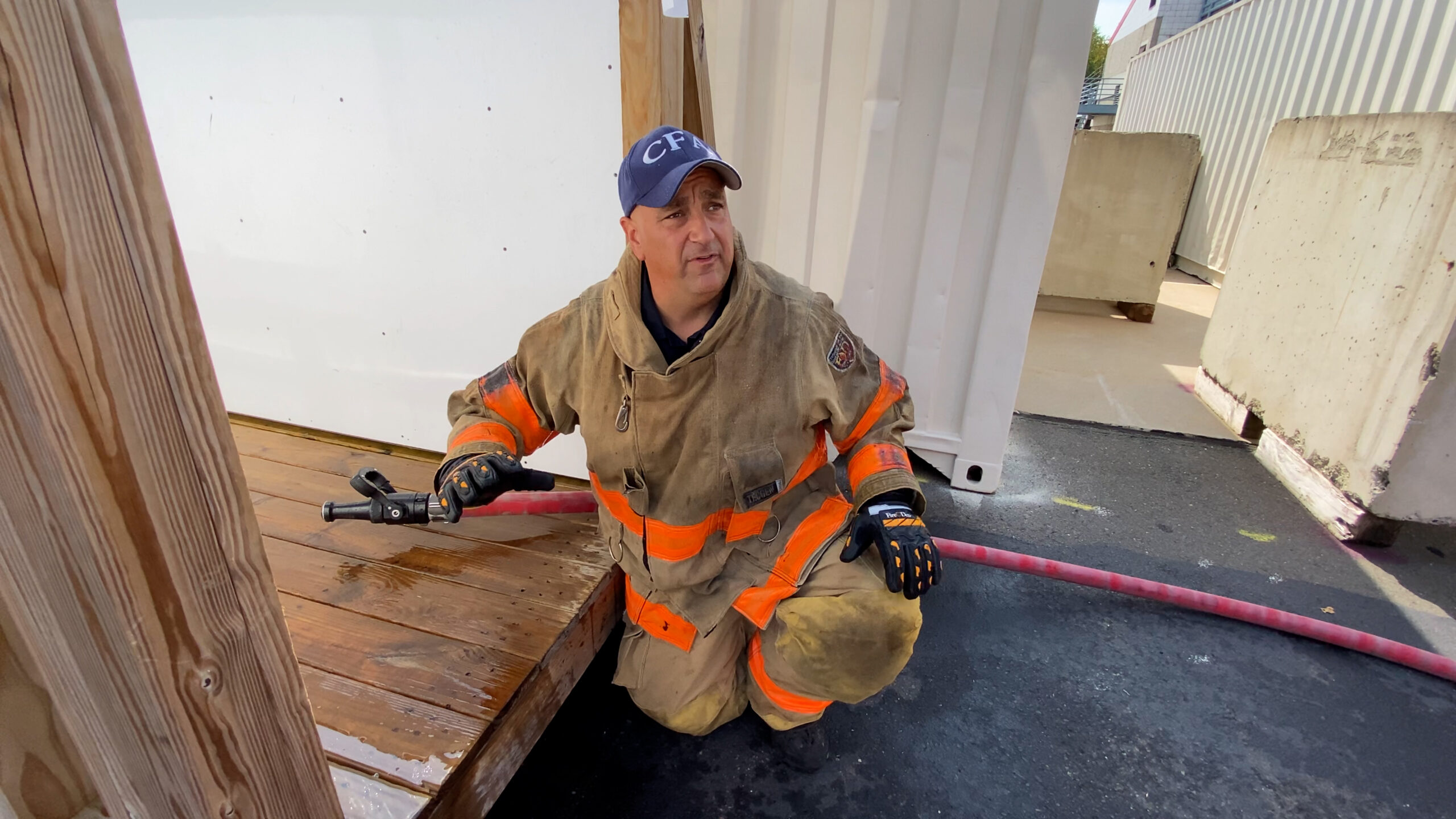
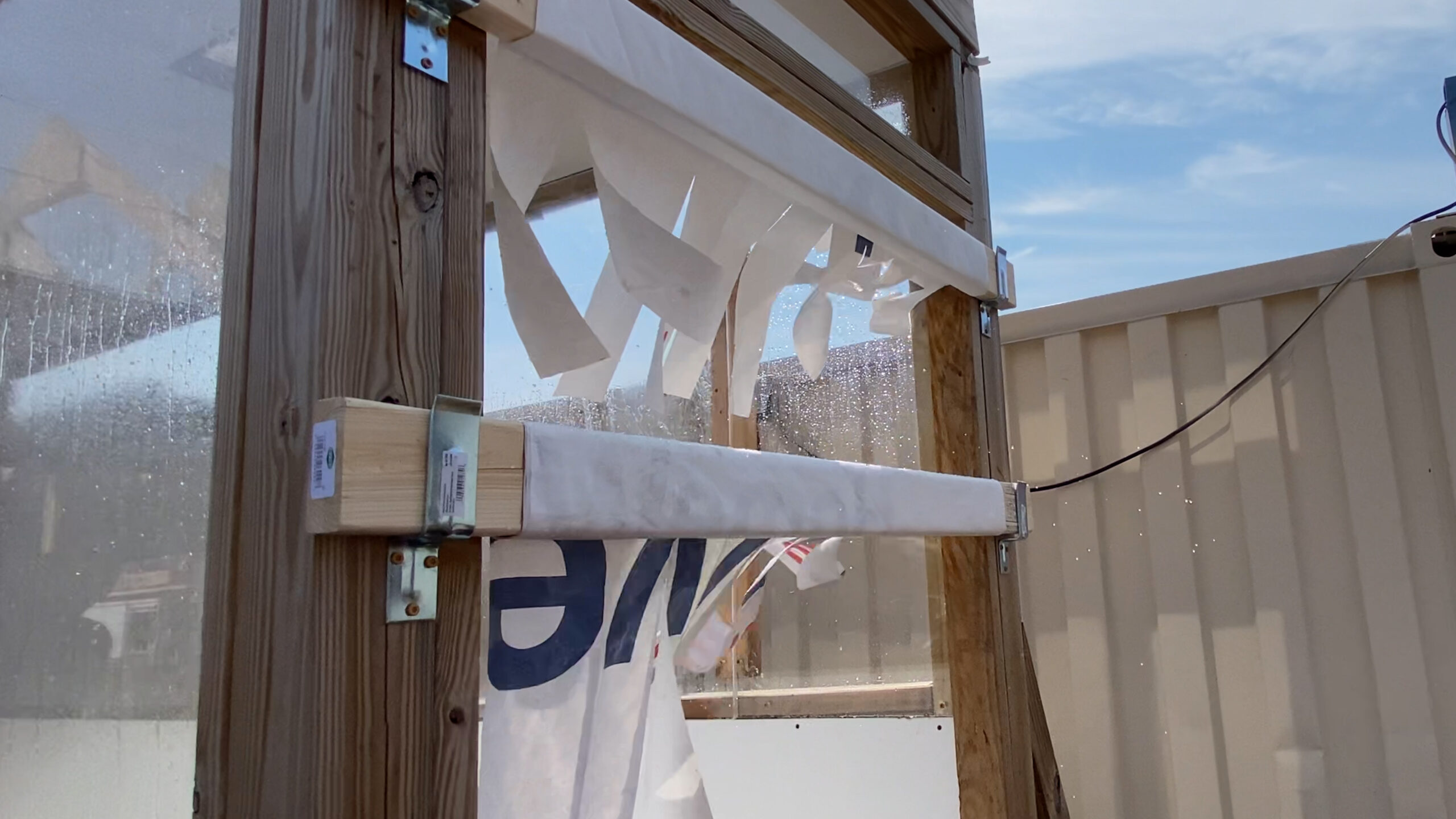
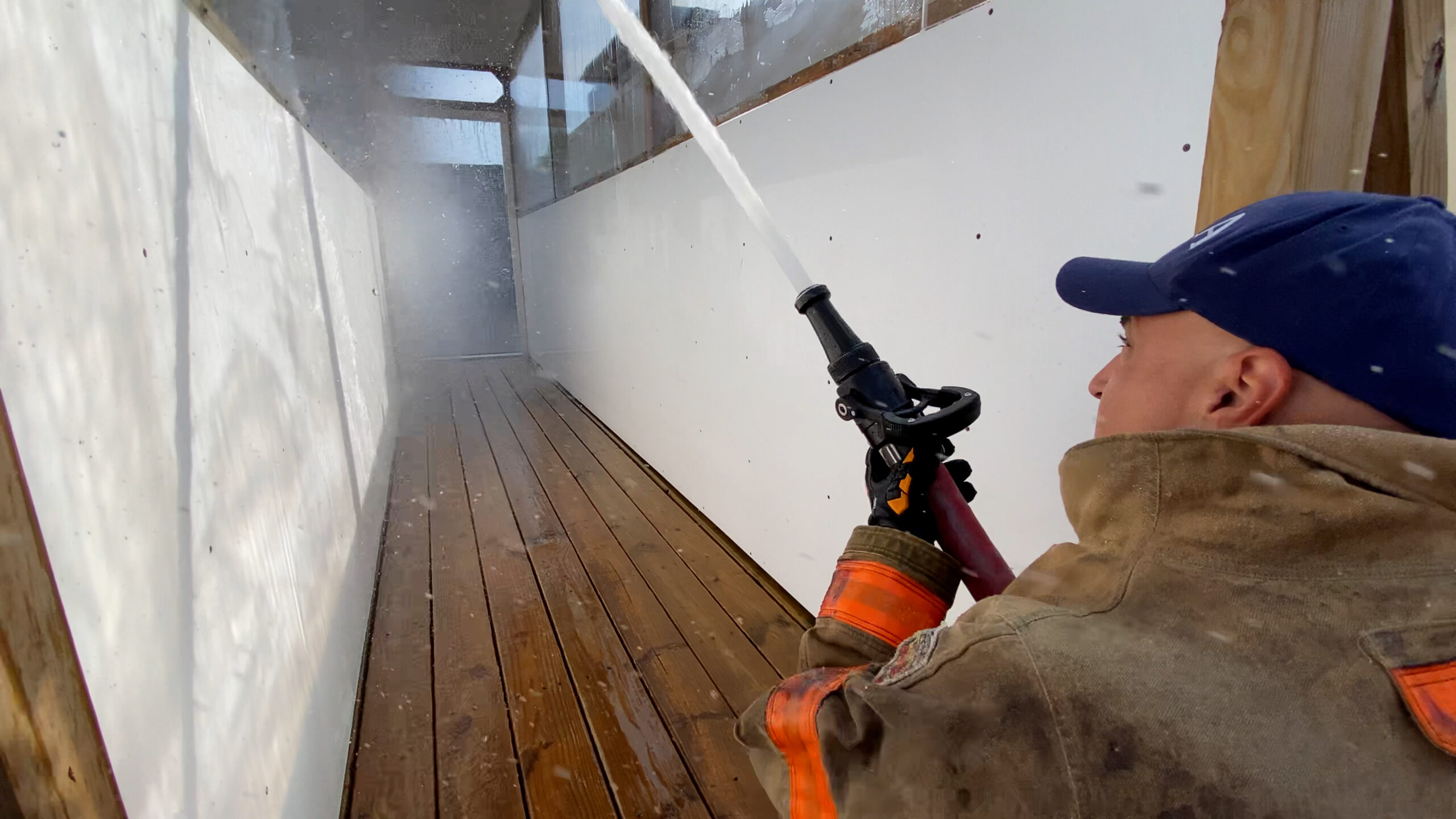
Pete reinforces that most interior attacks take place inside the exhaust path, not at the vent opening. Because of that, the goal is not to move air quickly but to slow down the environment.
He points out that a smooth bore or straight stream creates less turbulence and less fatigue for the nozzle operator. Coordinating ventilation early and using a calm, deliberate approach allows interior crews to maintain tenable conditions and better control of the flow path.
Pete breaks his instruction into three core principles:
Position of Advantage – Choose a spot that gives reach into the target area without overexposing the crew.
Stream Selection – Use a smooth bore or straight stream to control where the water and air go.
Controlled Movement – Avoid fast whipping or sweeping motions. Small, deliberate adjustments produce faster cooling with less turbulence.
When nozzle operators stay disciplined, they can cool the hallway, control the flow path, and reduce the workload on the line.
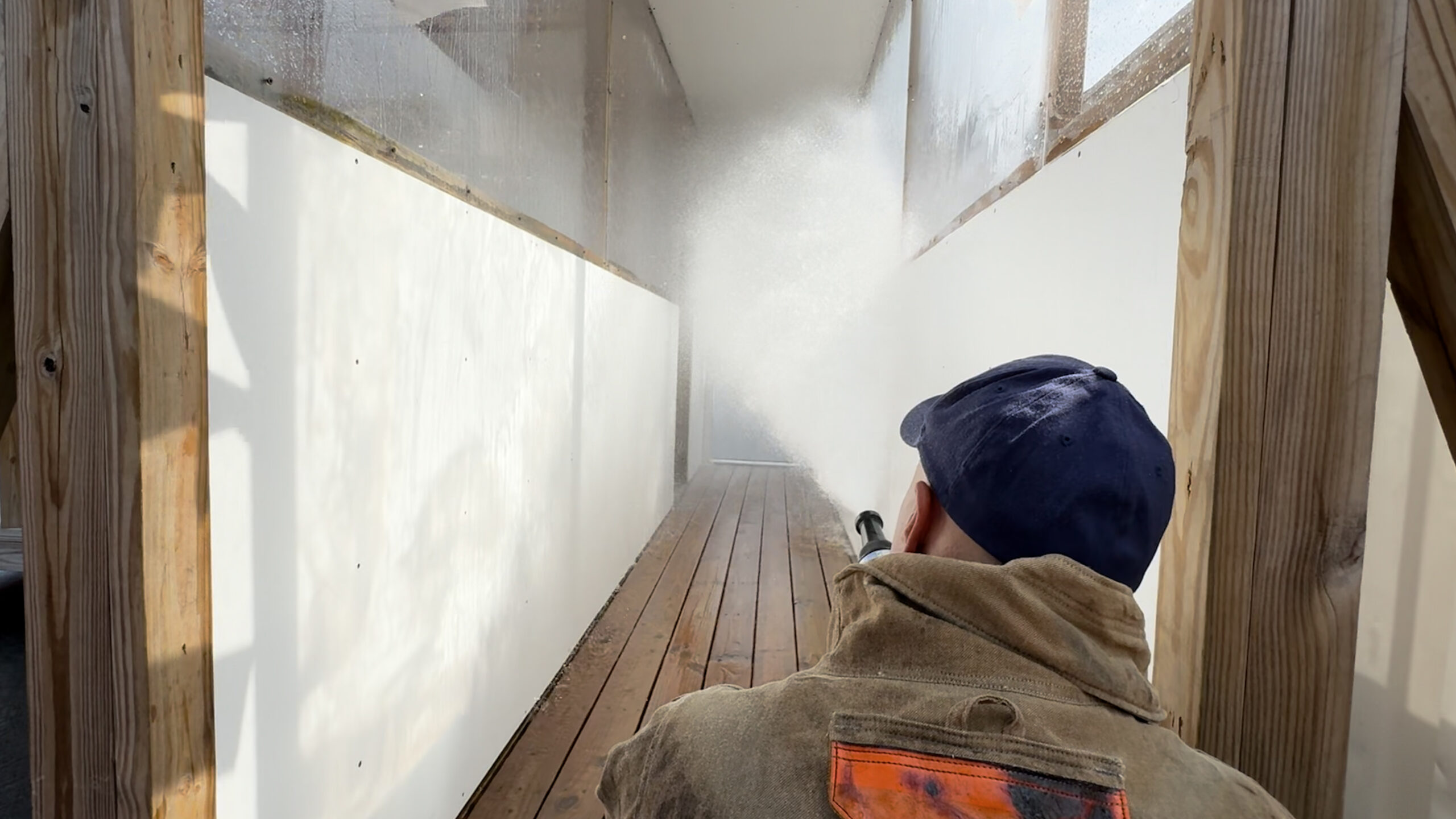

Pete stresses keeping it simple:
Line: 1¾″ first-due handline
Nozzle: Smooth-bore 7/8″ tip (~160 gpm) or fog nozzle flowing a straight stream
Flow: Steady volume with low reaction force for better mobility
He reminds crews that good stream management, not excessive flow, does the real work.
Pete explains that because modern buildings are tightly sealed and use stronger window materials, truly vented fires are rare. Most of the time, interior crews are working in a vent-limited environment.
He encourages firefighters to remember three key points:
Coordinate ventilation when possible.
Treat air movement as a tactical tool that must be controlled.
Keep nozzle motions small and intentional to reduce entrainment and maintain visibility.
Once the main body of fire is knocked down and conditions have stabilized, fog or Vortex patterns can be used to move smoke and heat out of the structure through hydraulic ventilation. This technique should always be performed with a remote vent point so that air is drawn away from the crew rather than back toward them.
Most interior operations begin in vent-limited conditions.
Excessive nozzle movement creates turbulence that pushes heat and smoke toward crews.
Smooth bore and straight streams help maintain control of air and water.
Stream discipline and ventilation coordination are the foundation of a safe and efficient attack.
Smart air management turns a chaotic environment into a manageable one.
No one fights fires like your department. This is your chance to highlight your crew's aggressive tactics and unique responses.

Download the step-by-step checklist your crew can use at the firehouse or in the field.
Be the first to catch new episodes. Get updates straight to your inbox and never miss insights into regional firefighting tactics.


