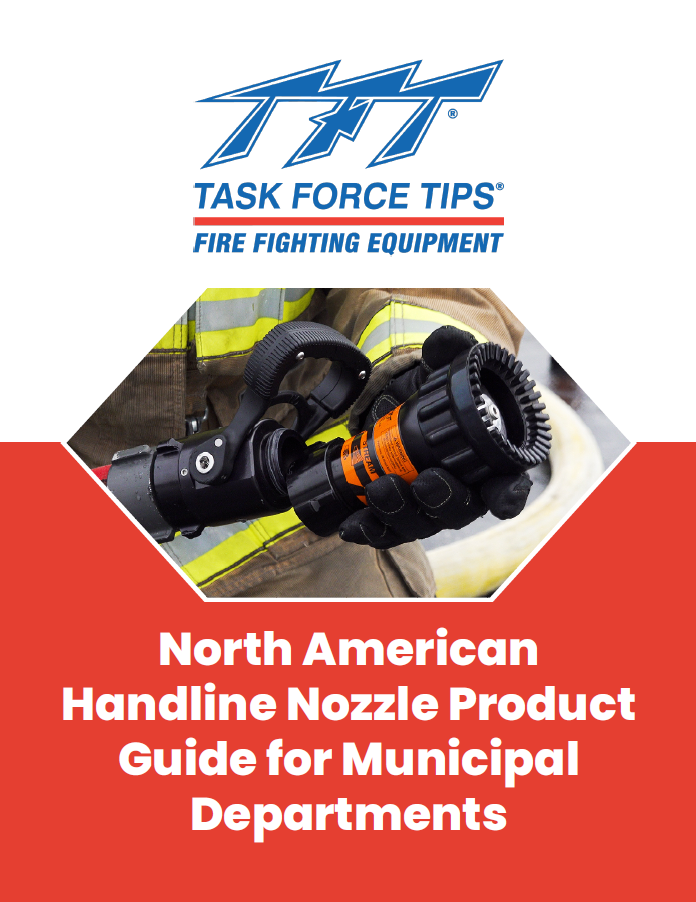
North American Handline Nozzle Product Guide for Municipal Departments

The Complete Resource for Those Who Want Clarity Before Buying

Selecting the right handline nozzle is one of the most important choices a department can make for both safety and performance. This guide brings together insights from across the municipal fire service and presents clear, unbiased answers to your most critical questions.

Section 1: Determining Flow Rate

The first step in nozzle selection is defining your department’s target flow rate. Flow rate, measured in gallons per minute (GPM), has a predetermined Pump Discharge Pressure (PDP) and directly impacts nozzle performance, use, and operations. Getting this right ensures that your crews operate efficiently and consistently under real fireground conditions.

1.1 Defining the Target Flow Rate

Your target flow rate needs to account for hazards in your response area, water supply, personnel, and equipment, at a minimum.

  • Required GPM: Account for hazards in your response area and the minimum standard from NFPA 1710 calling for 300gpm from two handlines, each of which has a minimum flow rate of 100gpm. Use local data and proven operational experience to reinforce your decision.
  • Operating Pressure: Assume you’ve decided on the required GPM above. Higher operating pressure results in higher exit velocity, meaning you get a farther-reaching stream. The resulting trade-off is a higher nozzle reaction, which the operator should be trained to manage. It’s not impossible, but it should be accounted for. Lower operating pressure, by contrast, results in lower nozzle reaction. This is more manageable for the operator but may come at the cost of hose kinks and a slightly reduced stream reach. These trade-offs, too, can be mitigated with proper training and familiarization.
  • Hose Size and Length: Account for friction loss based on hose diameter, line length, and likely layout. A thorough selection of nozzle flow/pressure and hose size/length work in unison under a predetermined PDP to deliver the fire streams needed for responses in your jurisdiction.

Once established, your target flow becomes the standard for training and operational reference. Every firefighter should know what flow their handline produces at standard pressure.

1.2 Target Nozzle Pressure: Comparing High and Low PSI

Nozzle pressure has a direct influence on reach, reaction force, and stream performance. Departments in North America typically operate 50, 75, or 100psi nozzles for handline operations. All options have valid tactical applications.

Feature
100 PSI
75 PSI
50 PSI

Stream Performance

Strong reach and penetration.

Solid reach with less velocity.

Shorter reach; smoother handling.

Nozzle Reaction

Highest reaction; more fatigue.

Noticeably reduced reaction.

Lowest reaction; easiest to control.

Hose Line Impact

Stiffer line; minimal kinks.

Balanced feel; generally kink-free.

Higher kink risk if hose is not low-pressure rated.

Eductor Use

Compatible but consider 70psi appliance loss.

Compatible but consider 70psi appliance loss.

Compatible but consider 70psi appliance loss.

Training Note: Changes in PDP will be required for varying nozzle operating pressures. These system changes require appropriate training for the driver/operator and handline crew including but not limited to nozzle-handling and hose line management techniques.

Section 2: Nozzle Type Options

The three principal handline nozzle types are fixed, selectable, and automatic. Fixed nozzles can be combination or smooth bore. Each type performs differently depending on your water supply and operational priorities.

2.1 Fixed Combination

An adjustable pattern spray nozzle that discharges a constant discharge rate throughout the range of patterns from a stream stream to a wide spray at a designed nozzle pressure.
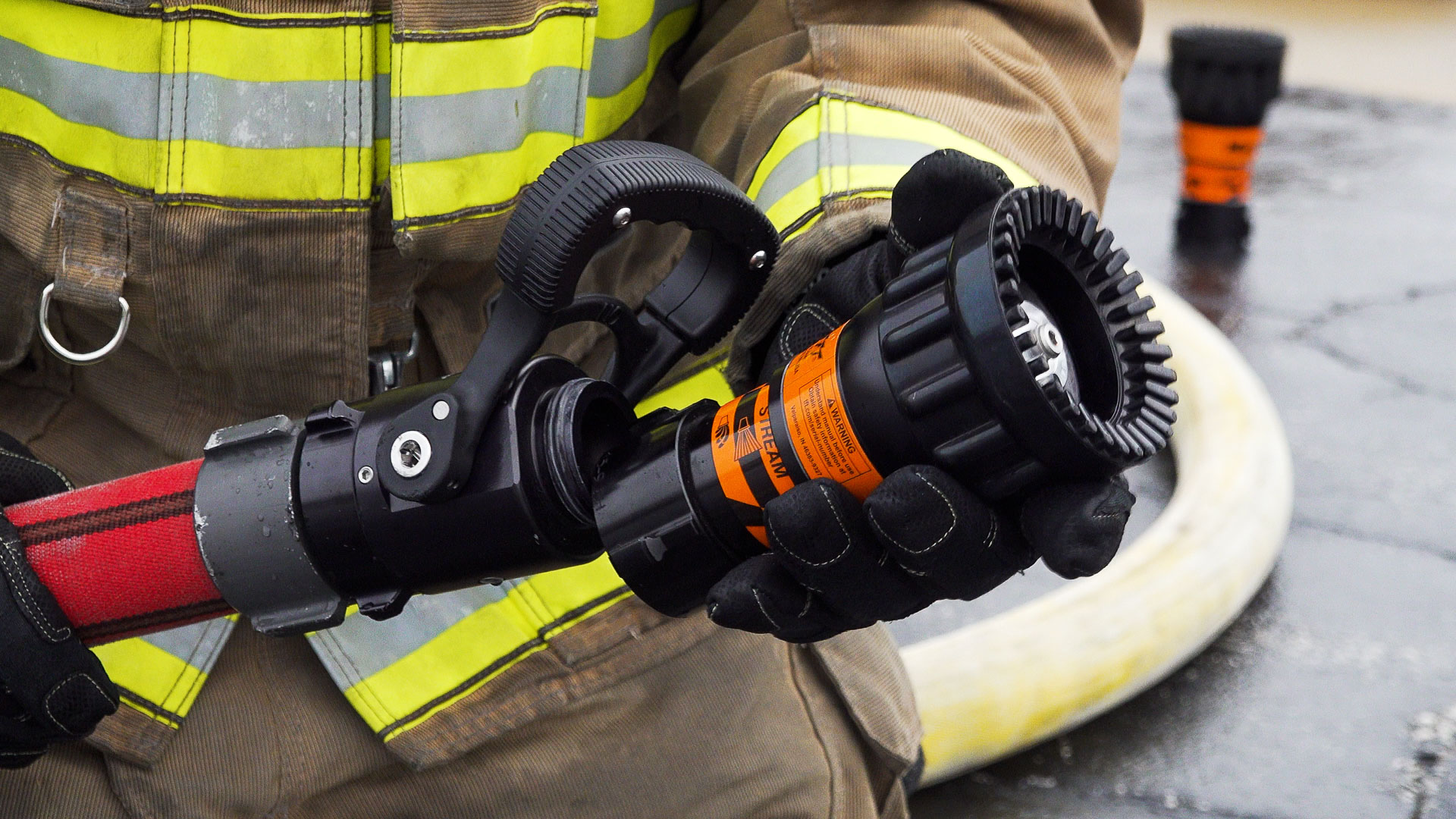
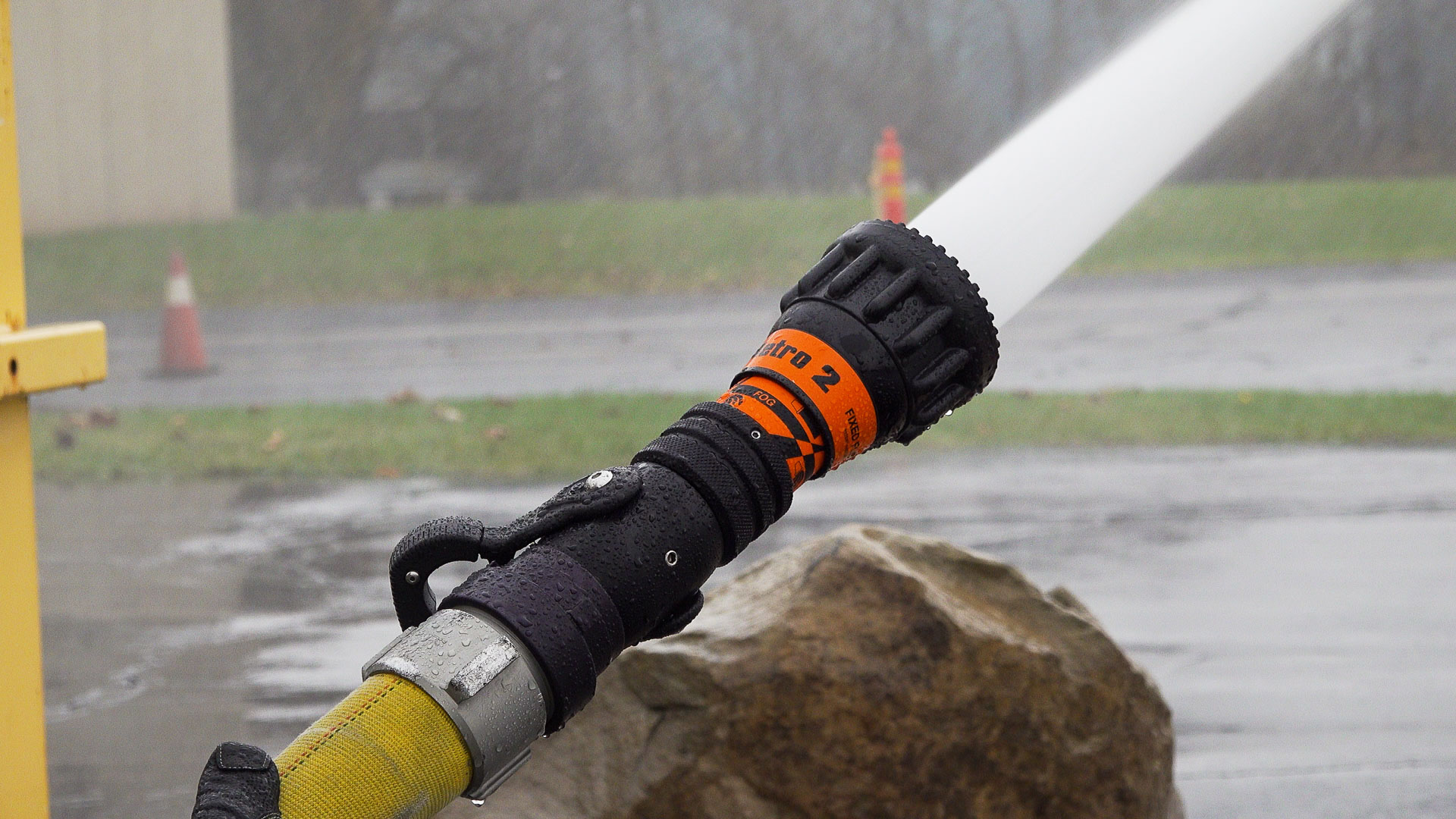
  • Mechanism: Fixed baffle seated in a barrel cone with a shaper guide capable of varying stream patterns.
  • Performance: Simple operations require single flow & single pressure. Overpumping increases reaction force; underpumping weakens stream reach and increases likelihood of hose kinks.
  • Pros: Single PDP, simple operation, minimal communication with pump operator
  • Cons: Increasing flow is possible but limited due to resulting increases in nozzle reaction with minimal gain in flow. Increasing flow in this example typically requires a second line. Decreasing flow can be done by gating the valve which can negatively impact stream reach.
  • Best Use: Environments with stable water supply (i.e. hydrants) and adequate staffing if/when additional lines are required.

2.2 Fixed Smooth Bore

An adjustable pattern spray nozzle that discharges a constant discharge rate throughout the range of patterns from a stream stream to a wide spray at a designed nozzle pressure.
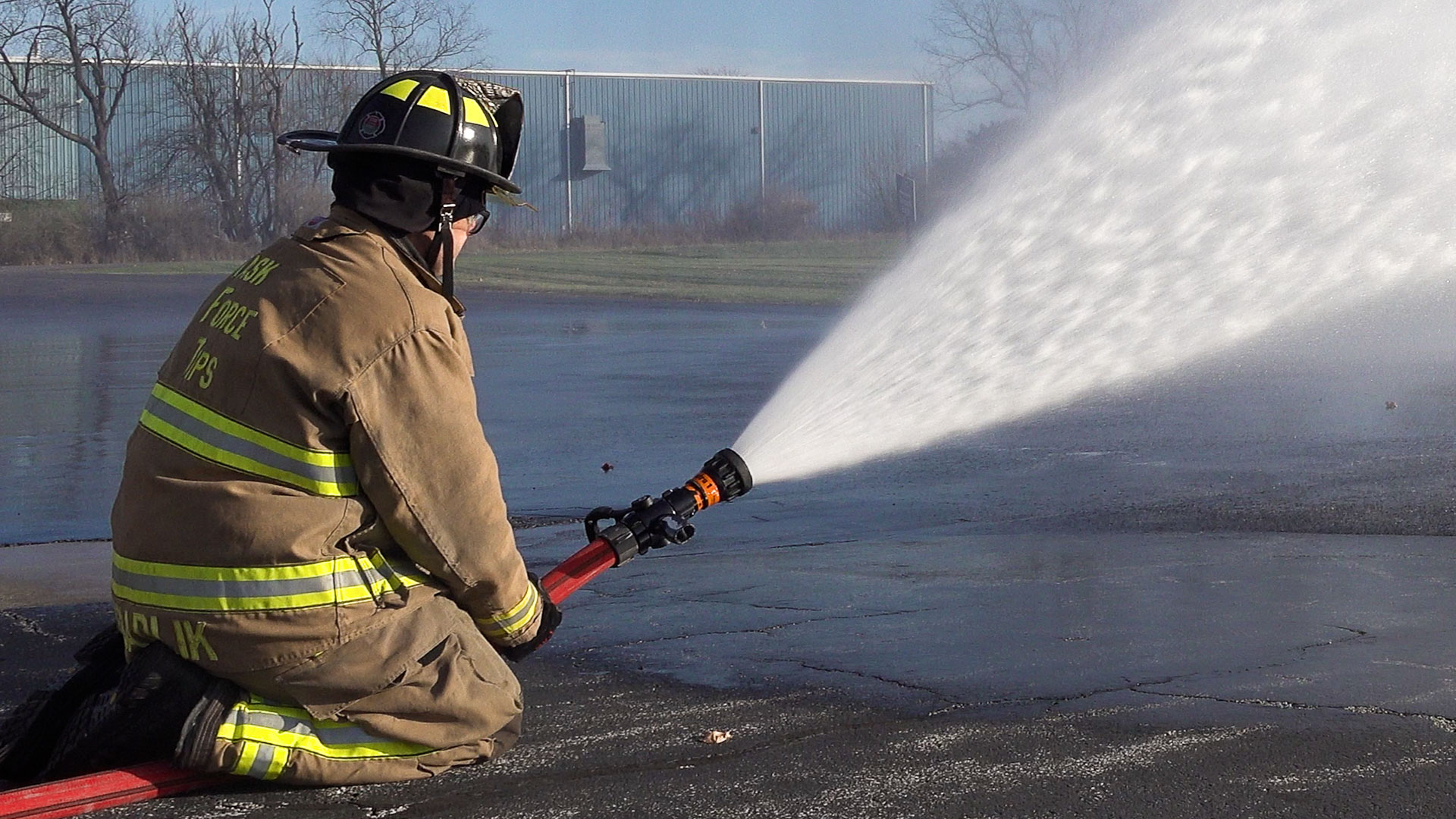
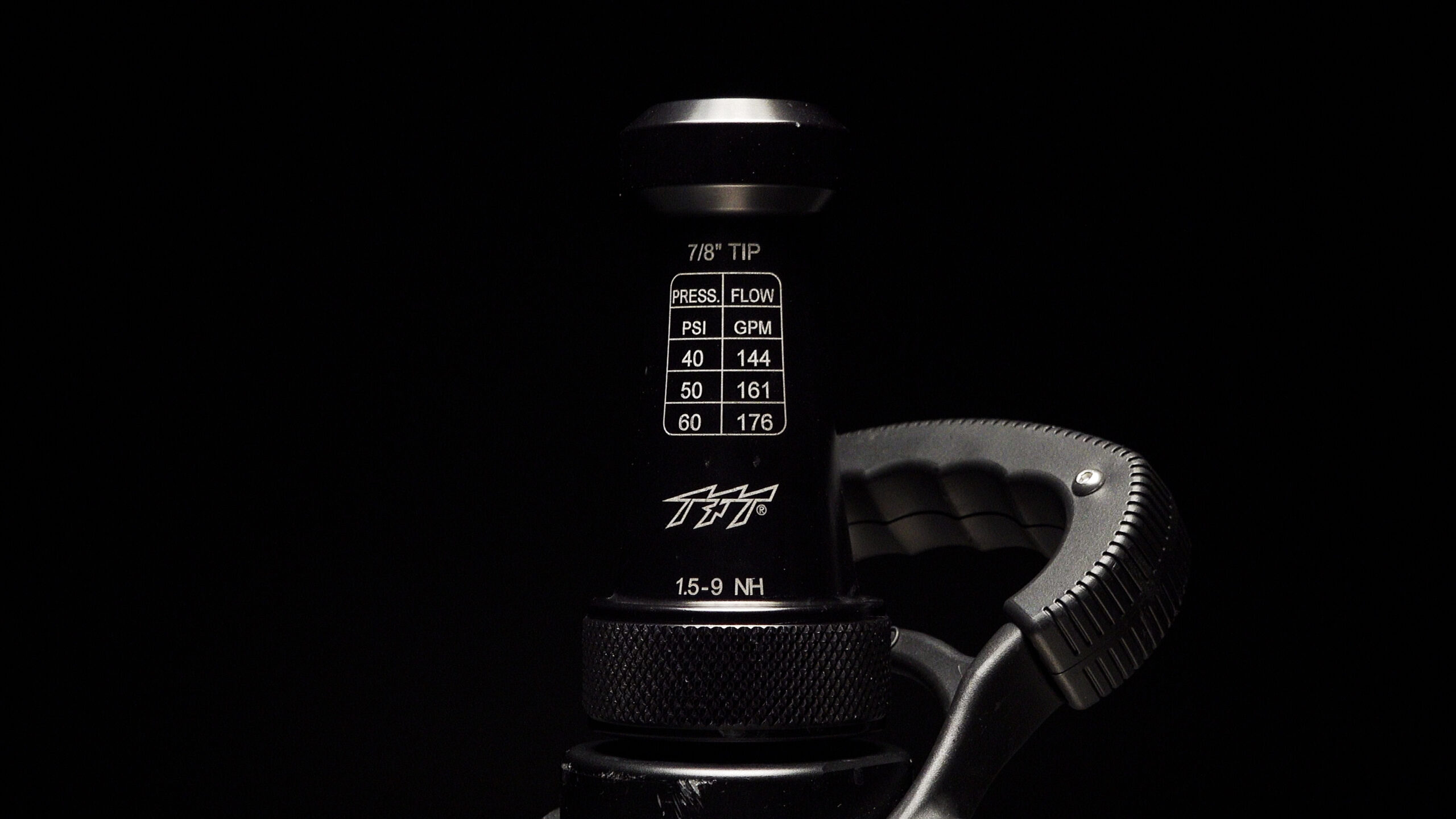
  • Mechanism: Fixed baffle seated in a barrel cone with a shaper guide capable of varying stream patterns.
  • Performance: Simple operations require single flow & single pressure. Overpumping increases reaction force; underpumping weakens stream reach and increases likelihood of hose kinks.
  • Pros: Single PDP, simple operation, minimal communication with pump operator
  • Cons: Increasing flow is possible but limited due to resulting increases in nozzle reaction with minimal gain in flow. Increasing flow in this example typically requires a second line. Decreasing flow can be done by gating the valve which can negatively impact stream reach.
  • Best Use: Environments with stable water supply (i.e. hydrants) and adequate staffing if/when additional lines are required.

2.3 Selectable

A constant discharge rate spray nozzle with a feature that allows manual adjustment of the orifice to affect a predetermined discharge rate while the nozzle is flowing.
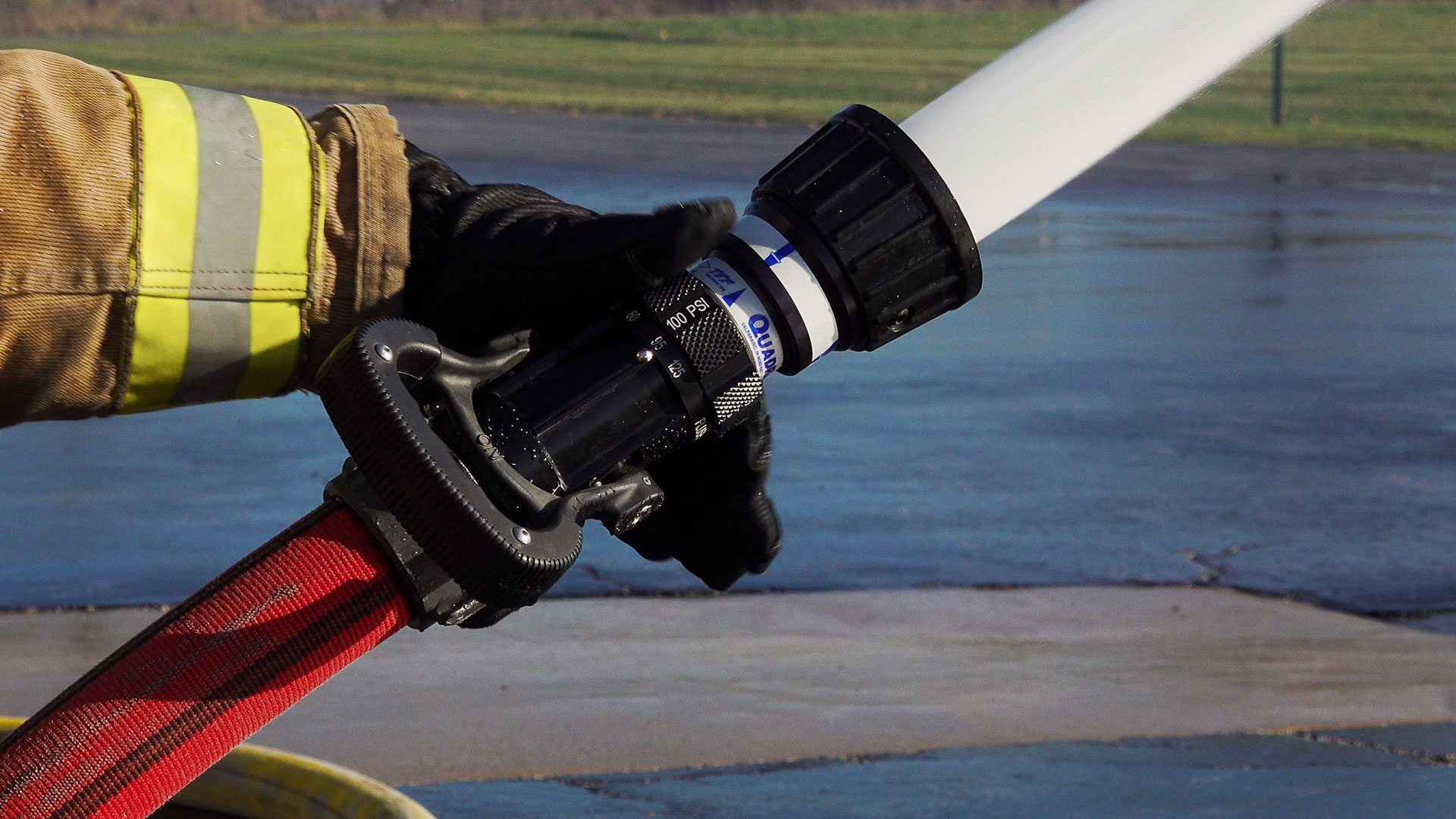
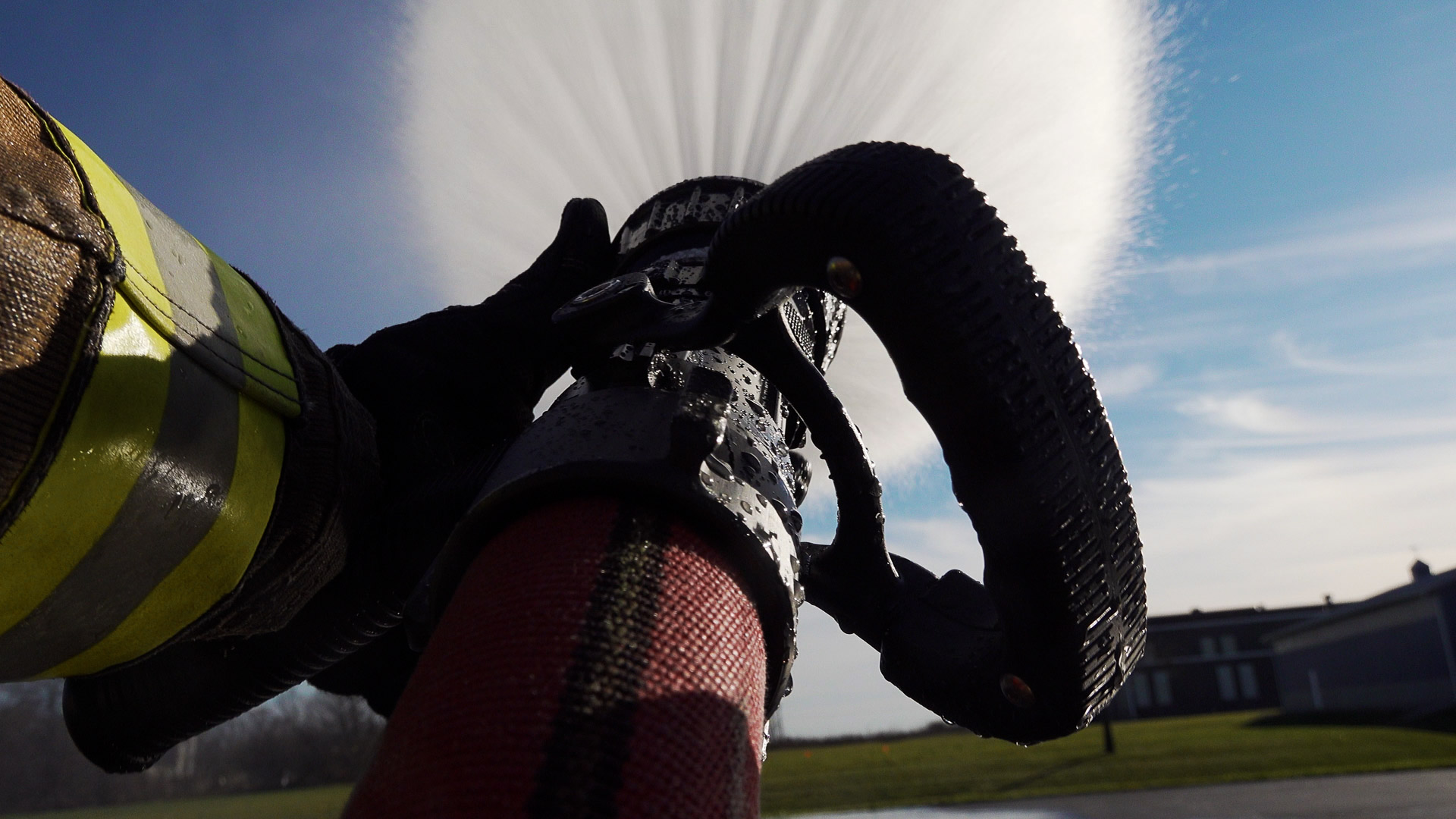
  • Mechanism: Adjustable baffle controlled by an external gallonage indicator ring changes the orifice size to allow for a select variety of flow rates at a single rated pressure.
  • Performance: Ensures select flow rates are maintained for a variety of water supply operations. Each flow rate requires a specific PDP.
  • Pros: Versatile; adjustable to conditions.
  • Cons: Requires communication with the pump operator; accidental setting changes are possible.
  • Best Use: Operations with variable water supply or diverse fire scenarios. Especially effective in rural and WUI environments.

2.4 Automatic

An adjustable-pattern spray nozzle in which the pressure remains relatively constant through a range of discharge rates.
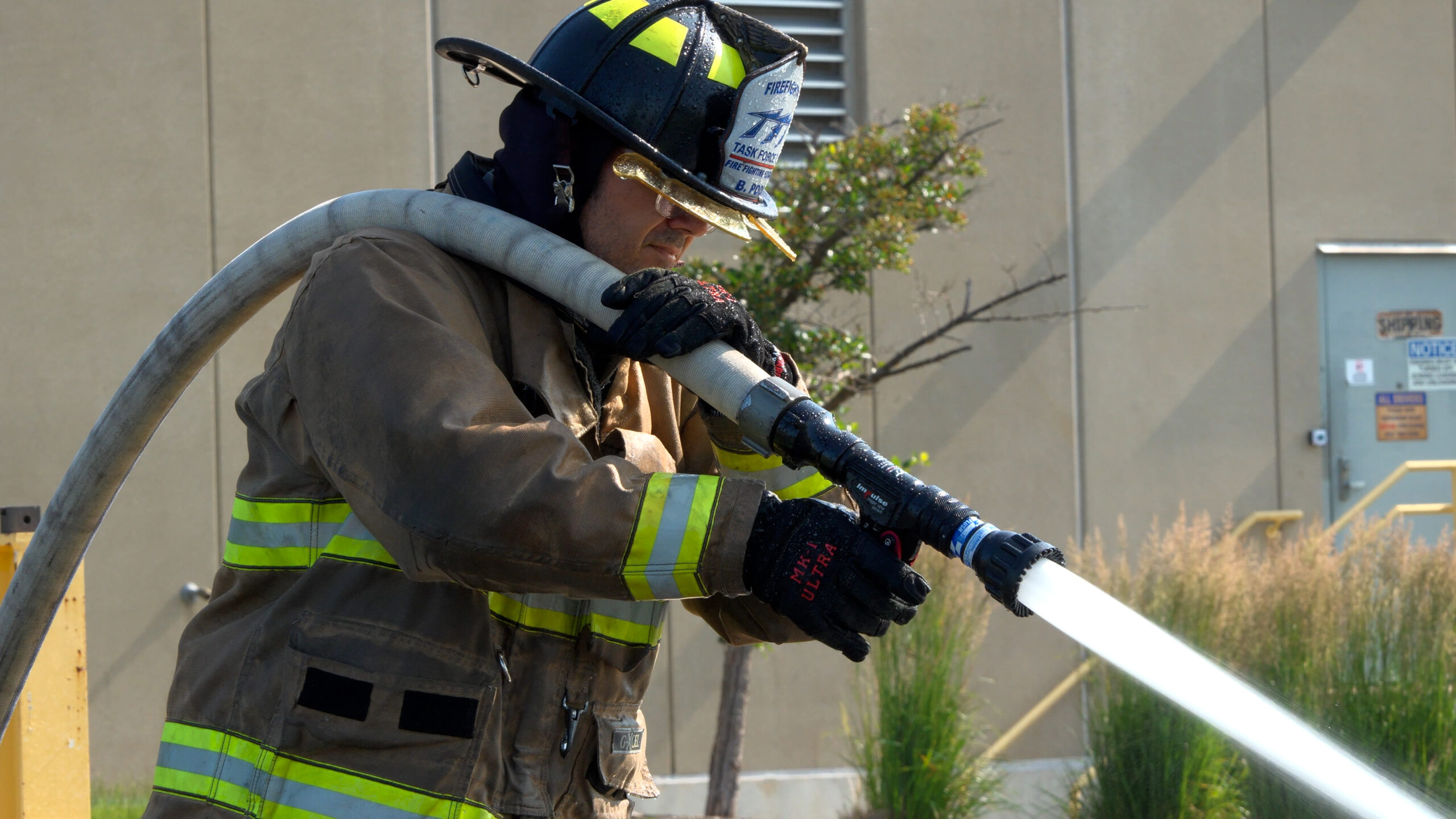
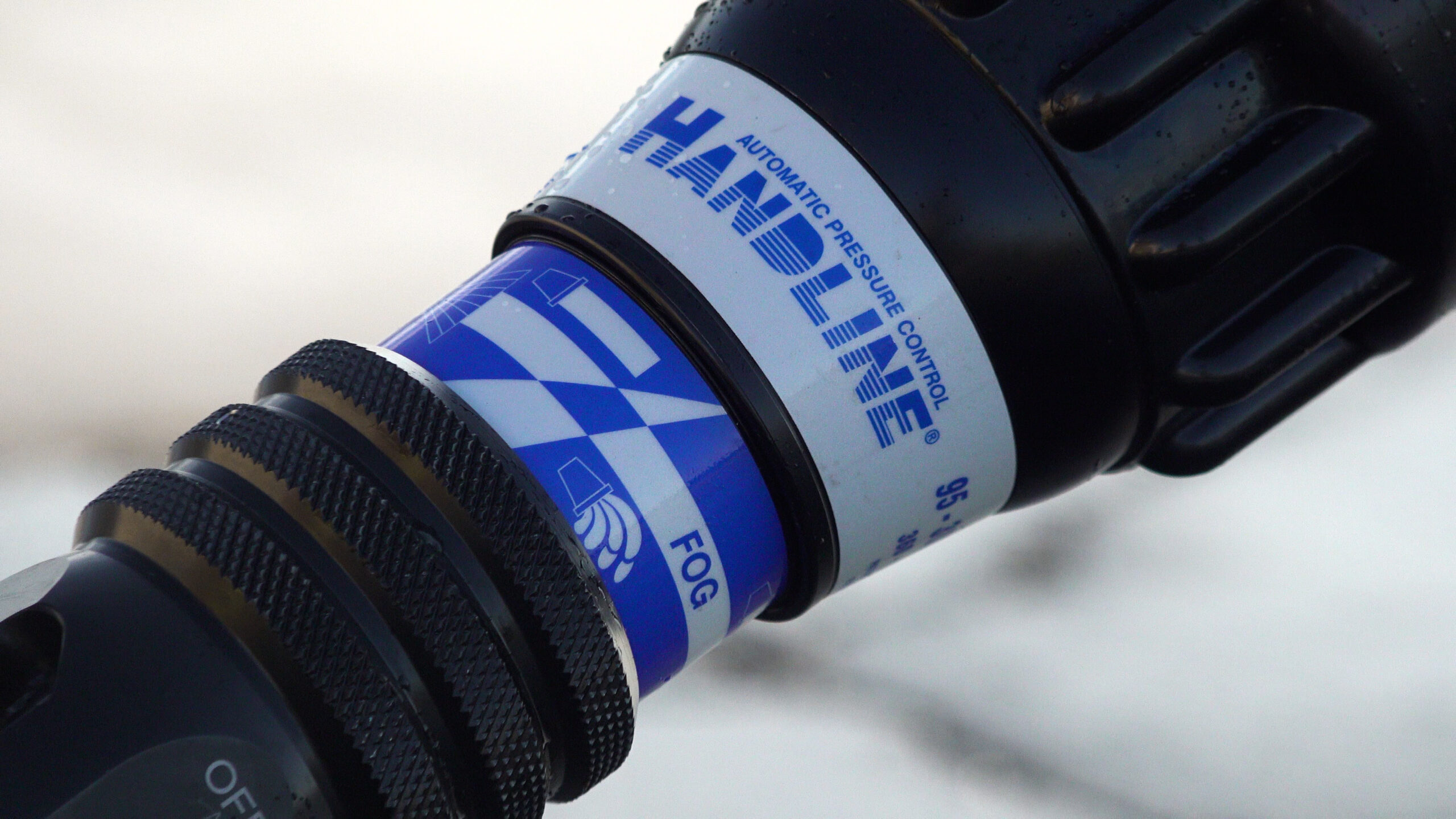
  • Mechanism: Spring-loaded baffle set to the minimum flow rating and capable of mechanically expanding the orifice due to hydraulic increases in volume. This mechanical expansion maintains constant pressure throughout a wide range of flows.
  • Performance: A nozzle that is capable of flow rates effective for small garbage fires to fully involved structure fires all while maintaining a constant pressure delivery and an effective fire stream.
  • Pros: Capable of a maximum flow rate for 1-3/4” hose and gateable for lower volume without losing stream reach effectiveness.
  • Cons: Without careful pumping operations, this nozzle can drain a tank faster than a selectable set to 95gpm, as an example. Stream quality can be a misleading visual indicator of poor pumping operations.
  • Best Use: Operations with a stable water supply (i.e. hydrants or drop tanks) where flow rate may need to change dramatically from call to call. 70-200gpm is a common flow range.

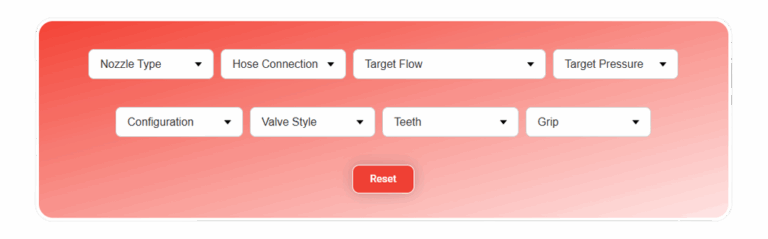
The NozzleAtor™

The Ultimate Handline Nozzle Configurator for Municipal Firefighters in North America.
Section 3: Considerations

3.1 Fog (Combination) vs. Smooth Bore

Feature
Smooth Bore
Fog (Combination) Nozzle

Patterns

Solid stream only.

Straight stream and fog.

Distribution

Preferred for water mapping tactics.

Straight stream effective for mapping; fog adds versatility.

Fire Attack Use

Penetrating, long reach stream.

Fog and straight stream used across multiple fire phases.

Advantages

Simple, durable, effective at low pressures.

Multi-mode flexibility; suitable for overhaul and ventilation.

Disadvantages

No fog option; requires correct flow for best reach.

More moving parts; requires correct rated pressure.

3.2 Fog Tooth Design Options

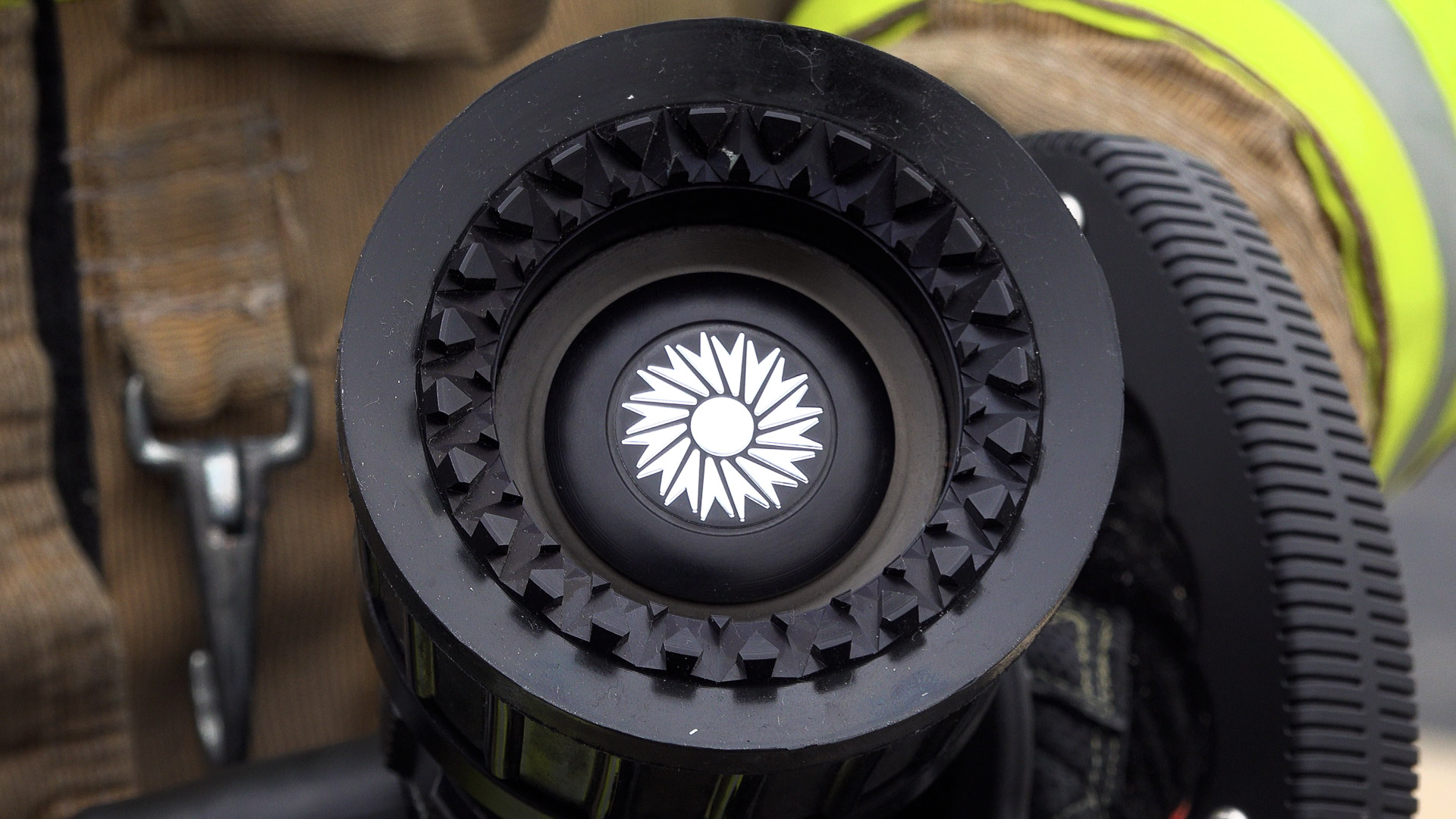
  • Fixed Rubber Teeth: Full fog pattern with positive pressure that pushes fuels away from the operator; integrated bumper design adds durability.
  • Fixed Metal Teeth: Full fog with positive pressure like Fixed Rubber Teeth.
  • Spinning Metal Teeth: Typically, a wider full fog pattern compared to rubber or metal teeth above. Fog pattern creates negative pressure drawing fuels in towards the nozzle. It is important to have durable teeth material that maintains fog pattern integrity.

3.3 Shut Off Valve Style: Ball Valve vs. Slide Valve

The choice between a ball valve and a slide valve dictates stream quality when the operator gates the flow. Ball valves are available on all two-piece nozzles and a few one-piece nozzles. slide valves are only available on one-piece nozzles.

Feature
Ball Valve
Slide Valve

Mechanism

Rotating ball controls flow.

Sliding mechanism regulates flow.

Friction Loss

Low when fully open.

Slightly higher by design.

Gating/Control

Not ideal. Causes turbulence.

Allows smooth control with no turbulence.

Tactical Use

Best for full-open operation.

Suited for pulsing and controlled flow.

Maintenance

Simple design, easy upkeep.

More complex; requires detailed service.

3.4 One-Piece vs. Two-Piece

  • Two-Piece: Allows removal of nozzle tip while charged. Excellent for high-rise, break-and-extend operations, and excessive debris removal.
  • One-Piece: Integrated design is less susceptible to unthreading over time due to a single connection point with the hose.

3.5 Pistol Grip vs. No Pistol Grip

The decision to use a pistol grip is often based on department preference, training culture, and the types of fires most commonly encountered. Each configuration influences nozzle control, ergonomics, and crew coordination on the fireground.

Feature
Pistol Grip
No Pistol Grip

Operational Choice

Commonly used worldwide and considered one of the most familiar nozzle configurations. Originally designed to allow a single firefighter to handle the line more easily.

Preferred by departments emphasizing “back to basics” or “nozzle forward” nozzle management. Based on the traditional belief that a charged handline requires at least two firefighters for safe, effective operation.

Nozzle Position (Associated Technique)

The pistol grip naturally brings the nozzle close to the firefighter’s torso, a stance often referred to as the “six-shooter” position.

Promotes extending the nozzle roughly an arm’s length from the operator, typically using a two-handed grip with the hose supported under the armpit or across the hip.

Reaction Force Management

This position depends heavily on upper-body strength, transferring nozzle reaction primarily to the biceps, shoulders, and forearms. Sustained operation can lead to quicker fatigue and decreased precision over time.

The “hip grip” technique allows the operator to anchor the line against the body, using skeletal support rather than muscle. This approach provides better endurance and efficiency during long-duration or high-flow operations.

Safety Margin

Minimal hose buffer during withdrawal.

2–3 ft buffer offers better control during retreat.

Section 4: Top Products for Each Type and Hose Connection

Once your department has determined its target flow, nozzle pressure, and preferred operating style, the next step is identifying proven equipment that aligns with those choices.

The table below lists commonly used nozzles in the North American municipal service. These represent the standard, field-tested options for each hose size and nozzle category

4.1 Recommended Nozzle Models by Type and Hose Size

Nozzle Type
1-inch
1.5-inch
2.5-inch

Fixed Flow

QuadraFog® (if for brush trucks or water supply conservation) OR Ultimatic® (if for booster line)

Metro™

Metro™

Selectable Flow

QuadraFog®

ThunderFog®

ThunderFog®

Automatic

Ultimatic®

Mid-Matic™

Handline™

Smooth Bore

FSS, F140, HVO, Vortex®

FSS, J140, H2VO, Vortex®

4.2 Understanding the Top Nozzle Brands

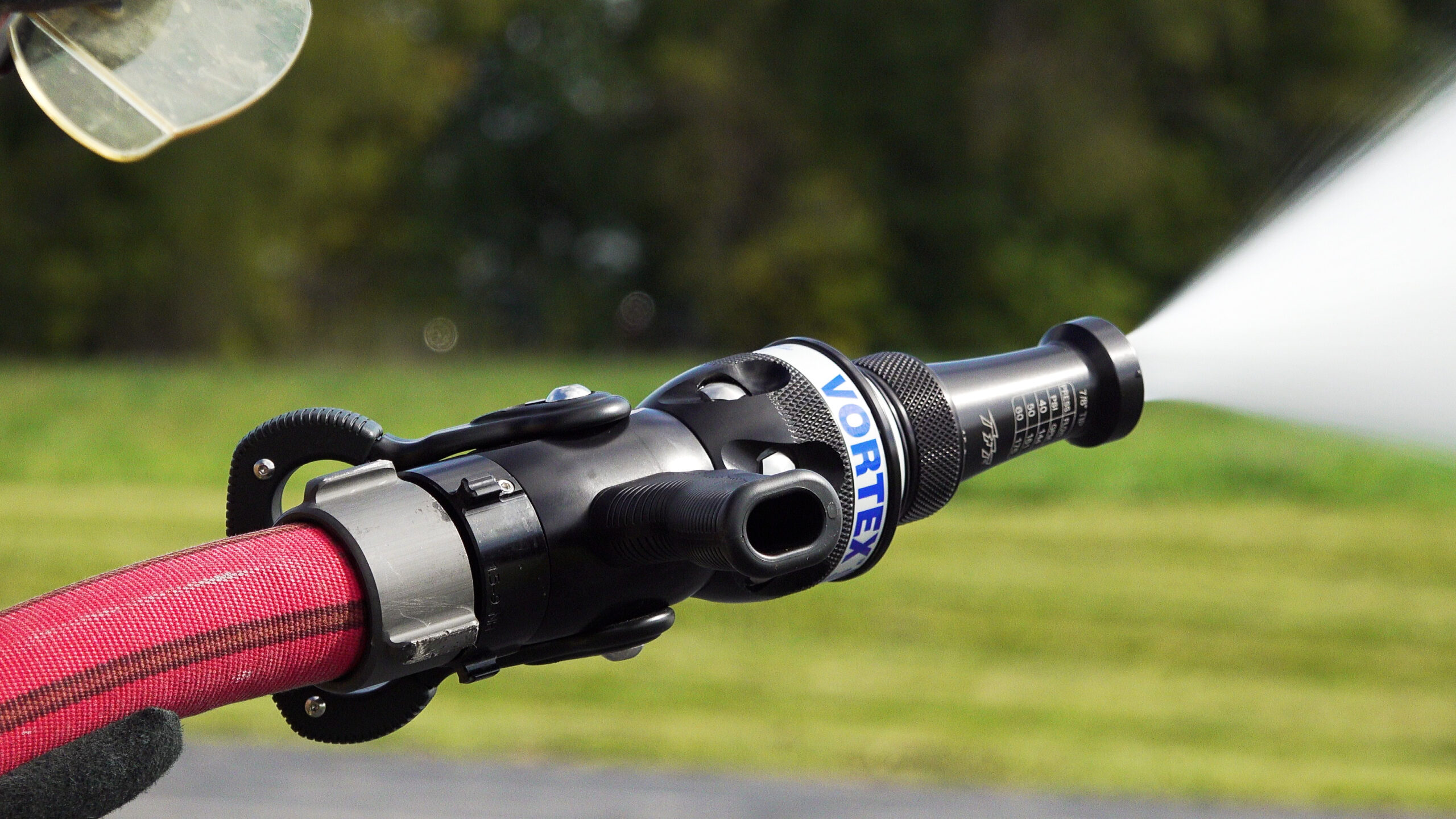
  • Vortex® Smooth Bore: The Vortex is often chosen by departments that like the performance of a smooth bore but may prefer using a dispersed pattern for tactics such as hydraulic ventilation. Installed directly behind the smooth bore, it uses internal fins to introduce a controlled spin that creates a narrow, broken stream with no reduction of flow volume. This allows crews to maintain full flow while choosing between a solid stream for reach or a softer pattern for cooling, exposure protection, or post-knockdown work. It keeps operations simple for departments that prefer smooth bore handling but want added versatility in one setup.
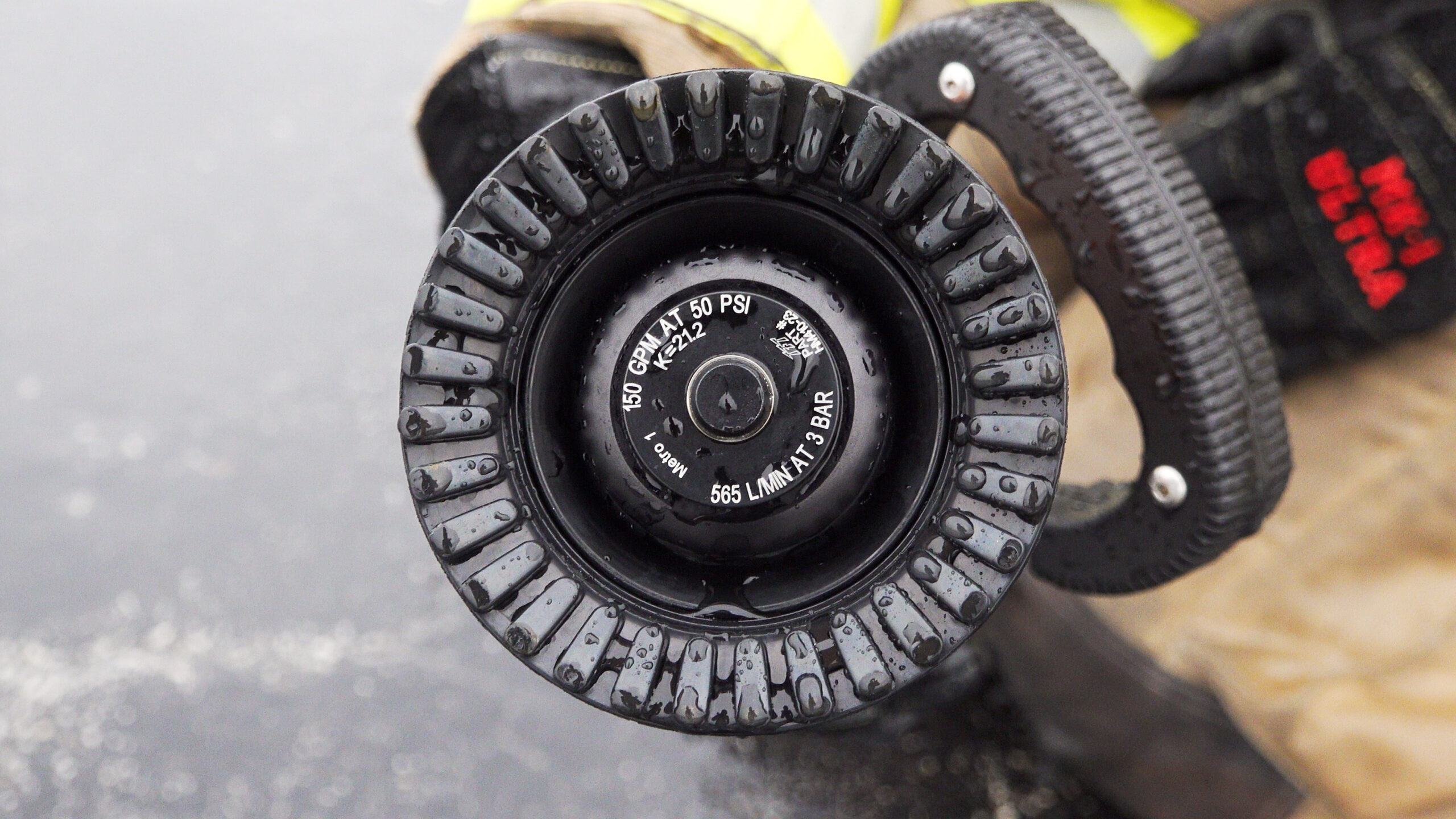
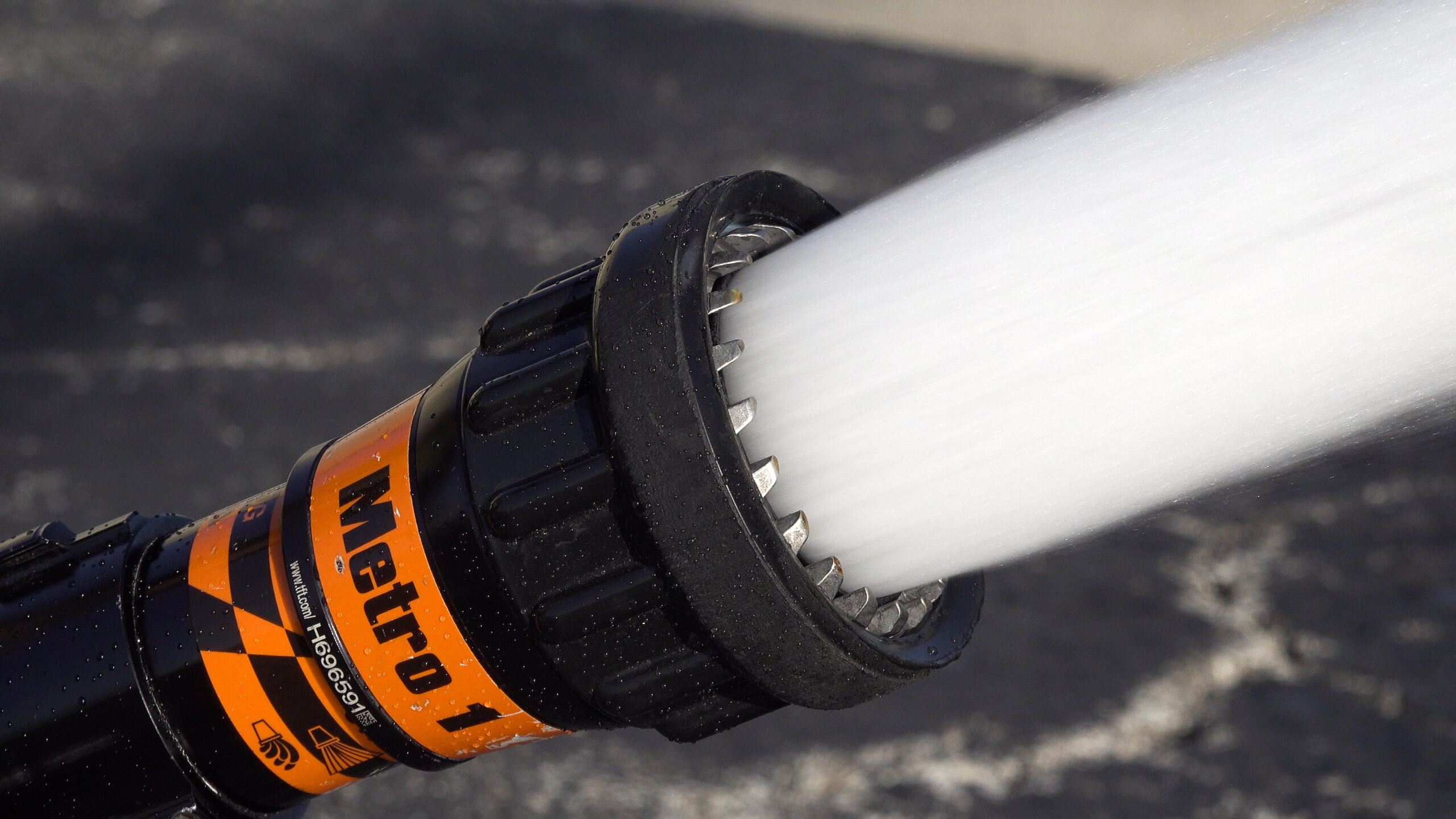
  • Metro™ Fixed Combination Nozzle: Metro is the standard fixed combination option for municipal use. It delivers one rated flow at a chosen pressure and is valued for its consistency and rugged construction. For crews who want predictable performance with minimal adjustment, Metro remains the go-to fixed combination handline nozzle. This nozzle uses a flow disk to determine baffle orifice that can be easily changed if flow and pressure requirements change over time.
  • Ultimatic® Automatic Nozzle: Ultimatic is often selected for 1-inch booster lines and front bumper lines. It maintains constant pressure through a wide flow range, ensuring consistent reach even with limited supply. Departments use it when a lightweight, quick-attack nozzle is needed for vehicle fires, small structure incidents, or rural response where mobility and steady performance are priorities.
  • QuadraFog® Selectable Nozzle: QuadraFog is the primary choice for departments using 1-inch lines on brush trucks or in areas where conserving water is essential. Its selectable-flow design allows crews to choose from several flow rates up to 125gpm, giving control over water use while maintaining effective stream performance. It provides the simplicity needed for wildland or rural operations where pressure and supply may vary but quick adaptability remains critical.
  • ThunderFog® Selectable Nozzle: ThunderFog follows the same operational concept as QuadraFog but is built for departments looking for target flows up to 250gpm. It allows the same flow control and stream options, making it a dependable choice where crews prefer selectable performance in a more robust configuration.
  • Mid-Matic™ Automatic Nozzle: Mid-Matic represents the common mid-range automatic nozzle for 1.5-inch lines. It automatically adjusts to maintain rated pressure and produces a stable stream even when supply fluctuates, intentionally or unintentionally. It is a reliable, general-purpose option for interior and exterior suppression work.
  • Handline™ Automatic Nozzle: Handline is an automatic nozzle most often used on 2.5-inch lines for flows up to 300gpm. It provides smooth, pressure-regulated operation through a wide flow range, giving dependable reach and stream integrity under varying supply conditions. Departments that regularly operate larger handlines often specify the Handline as their standard automatic model.

Section 5: Applying This Guide

The information presented reflects widely accepted North American fire service practices and is intended to support clear, fact-based purchasing and operational decisions. When properly matched to your department’s needs, any of the nozzle types discussed can provide safe, consistent, and effective service on the fireground.

For departments seeking hands-on evaluation, schedule a demo or contact your regional rep to arrange testing with your existing hose setups and pump configurations. Field experience remains the most reliable way to verify that a nozzle’s handling, flow, and reaction align with your operational expectations.
  •  
cover

Want a printable version?

Download the printable guide your crew can use to compare nozzles and choose the right setup.